

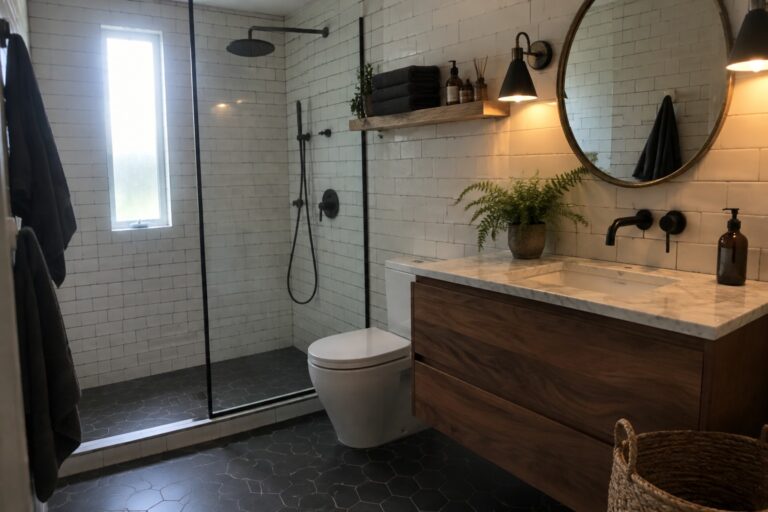
Bathrooms can feel flat when every surface is pale and smooth, but dark grout gives classic tile a little more depth and definition.
I find that the contrast works best when it suits the room’s light and scale, since a bold grid can feel crisp in a bright bathroom but heavier in a small one.
The tile still does the practical work of protecting walls and floors, while grout color changes how prominent the pattern feels day to day.
Wood, warm metals, and soft lighting can keep the look from feeling stark, especially in bathrooms that get little natural light.
I’d save ideas that balance strong contrast with useful storage and easy-to-clean finishes, then adapt the details to the way the room is used.
Use Dark Grout With Classic Tile
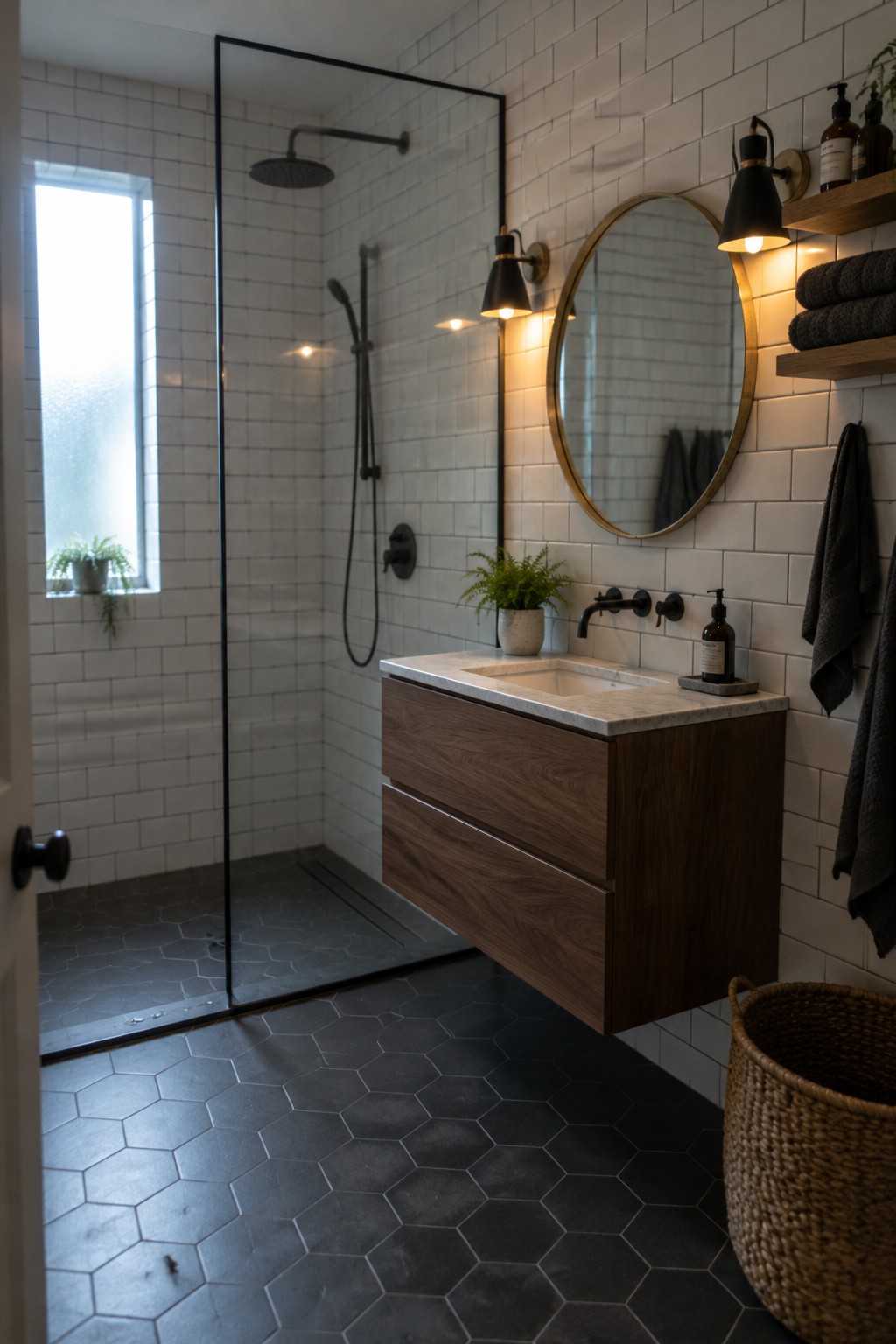
Dark grout gives classic white tile a little more definition and keeps the wall from looking too plain. It also ties in naturally with dark fixtures, as seen in this shower.
This idea works well in bathrooms where you want a traditional tile shape to feel a bit moodier. Use a grout color that contrasts with the tile, but test a sample first since grout can look different once it dries.
Use Dark Grout to Define Classic Tile
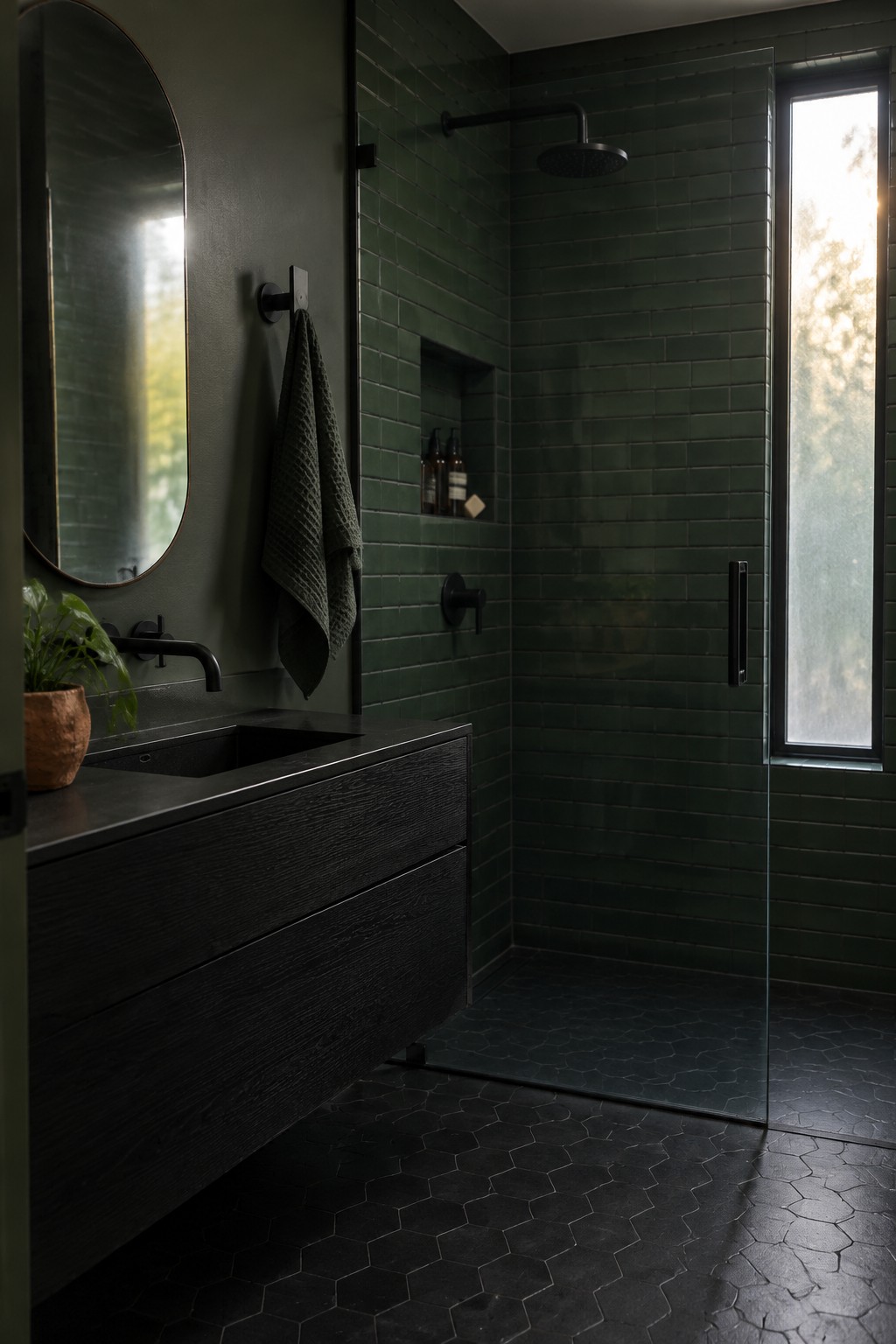
Dark grout gives simple wall tile a stronger pattern and helps a moody bathroom feel cohesive. Here, deep green tiles and nearly black grout keep the shower wall from looking too plain.
This approach works well with classic rectangular tile, especially in a smaller shower where the grid can add interest without extra decoration. Choose a grout color that sits close to the tile shade for a subtle look, or go darker to make each tile stand out more.
Use Dark Tile Across the Shower
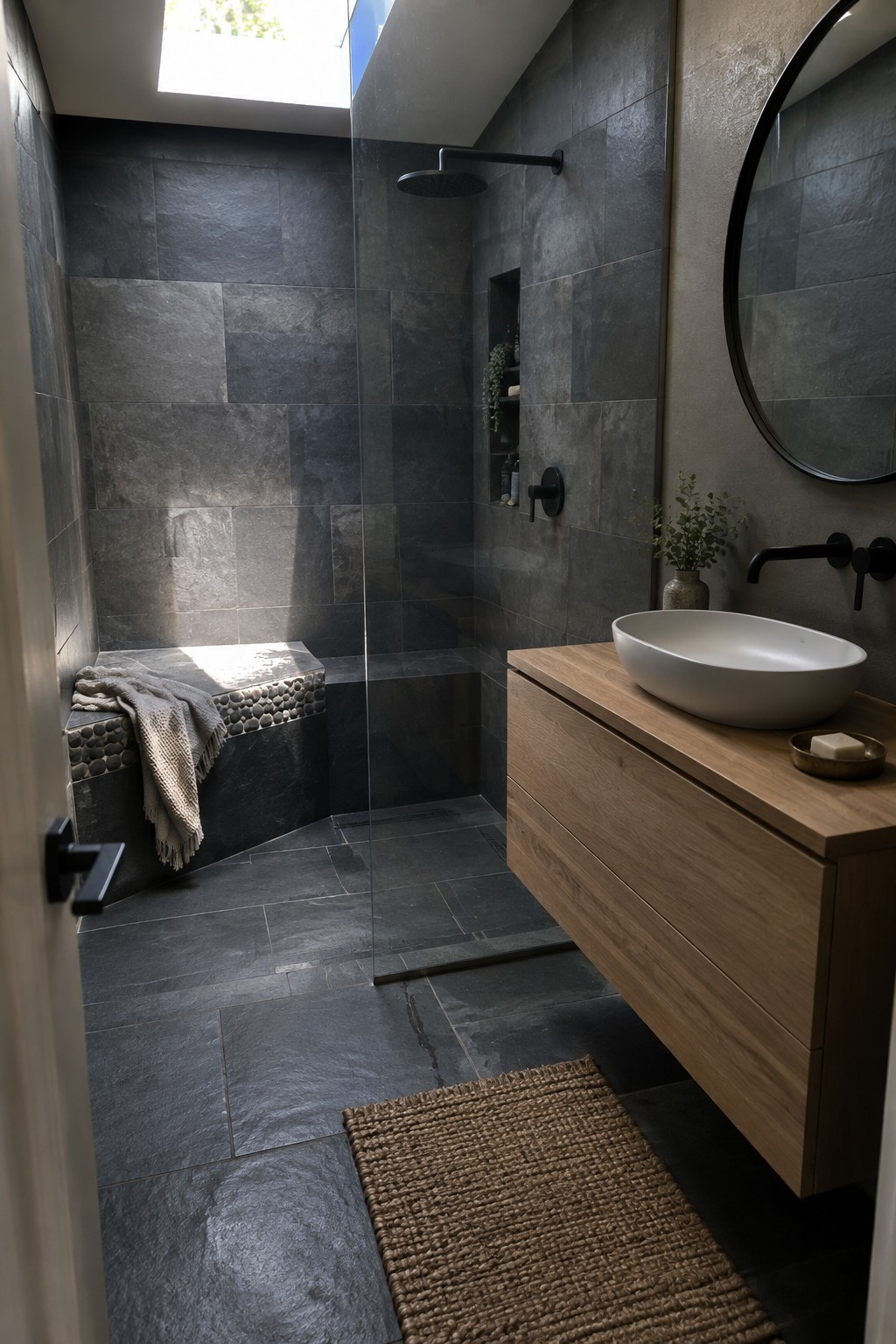
Dark stone-look tile gives this shower a consistent, moody feel, and the dark grout keeps the joints from breaking up the surface. It’s a practical way to make a walk-in shower feel like one considered area rather than a patchwork of finishes.
This idea works best when the room has enough light to keep the tile’s texture visible. Try it on the shower walls and floor, then keep other finishes simple. In a smaller or dim bathroom, use dark tile on fewer surfaces so the room doesn’t feel too closed in.
Use Dark Tile On Every Wall
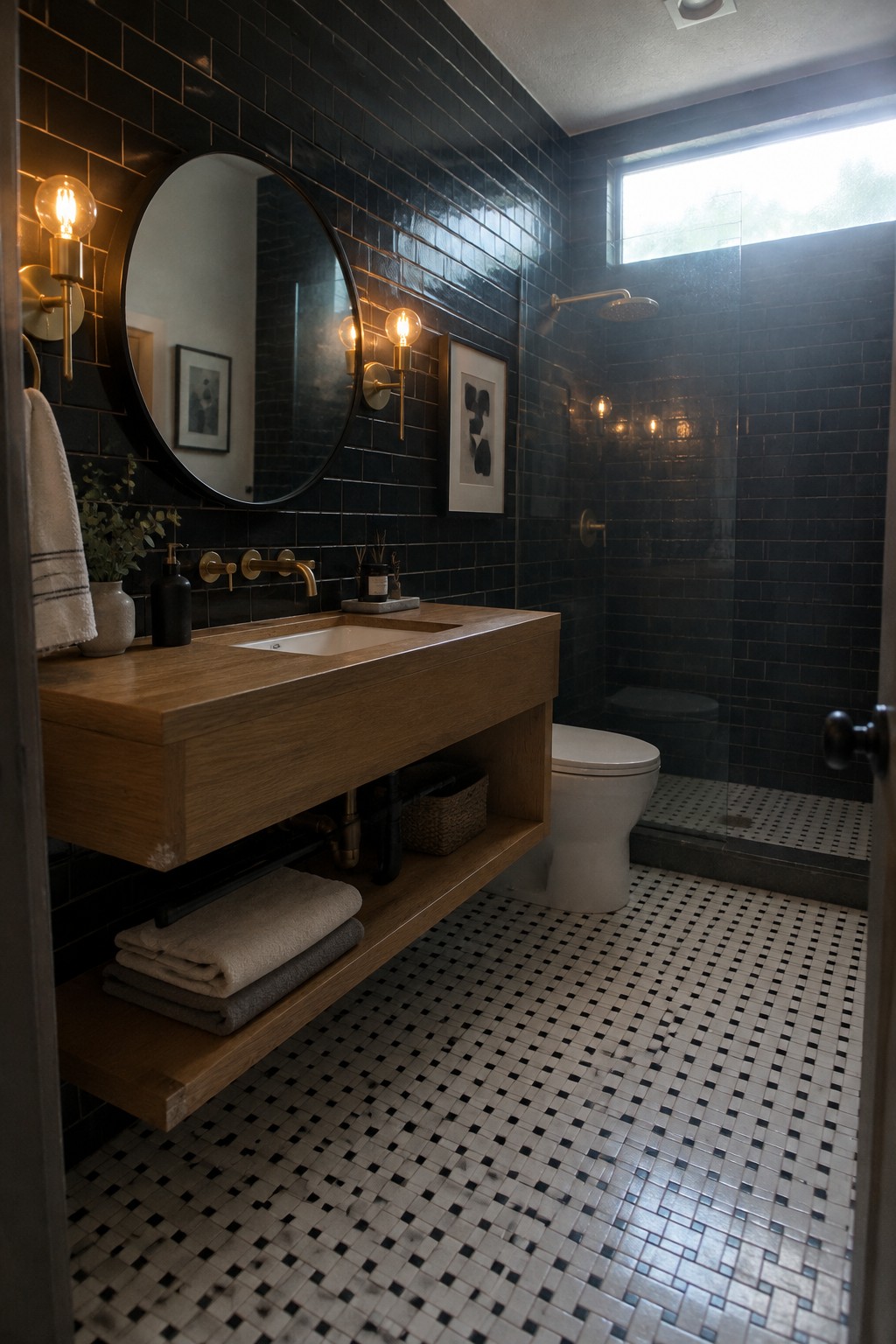
Dark grout helps black wall tile read as one continuous surface, giving a small bathroom a settled, cohesive look. The glossy rectangular tiles here catch a little light without losing their moody feel.
This approach works well in a bathroom with good natural or layered lighting. If the room gets little daylight, consider using dark tile on one wall instead, or add brighter task lighting near the mirror.
Let Classic Tile Set the Bathroom’s Tone
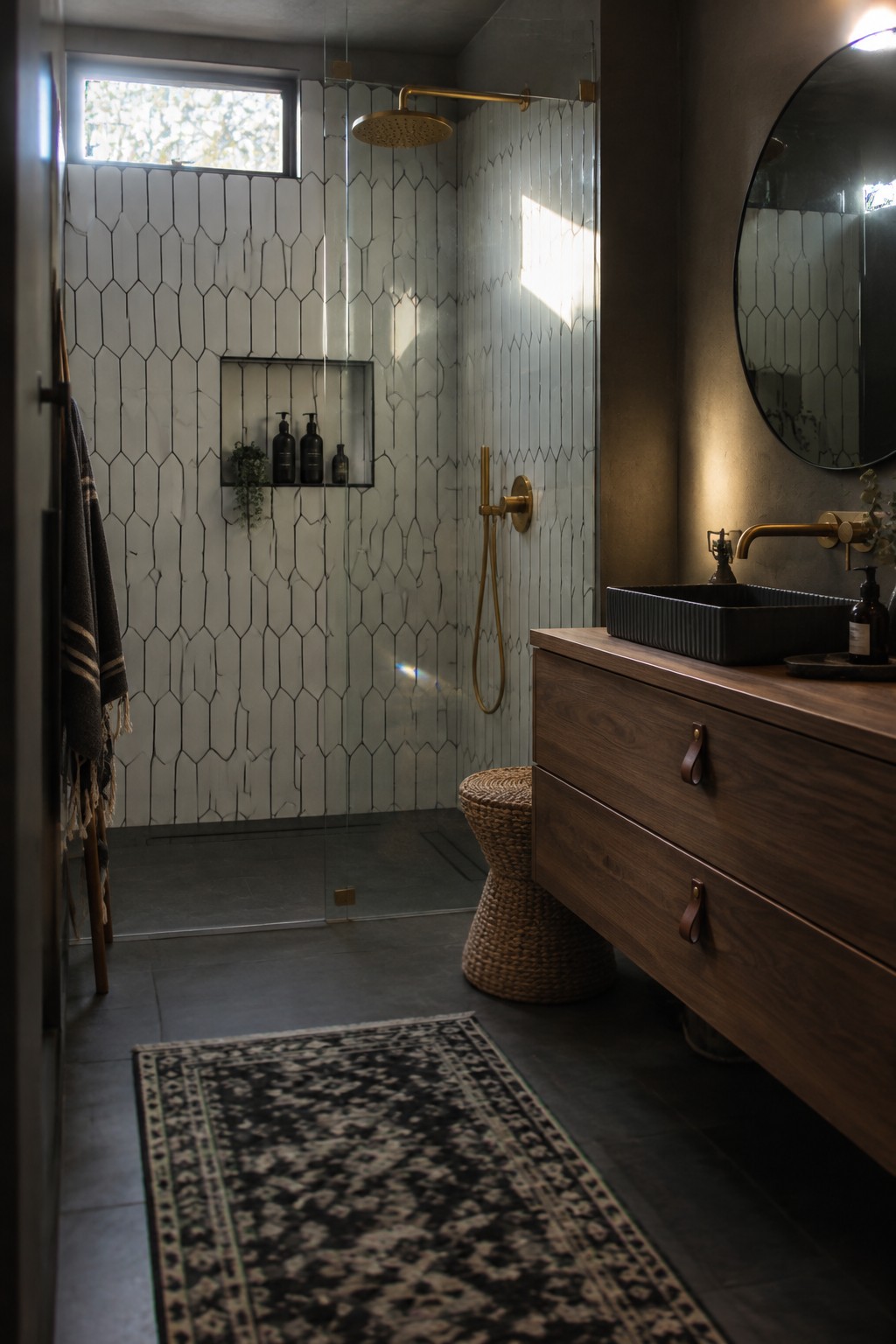
Dark grout gives classic white tile a clear outline, making the pattern stand out without changing the tile itself. It’s a practical way to bring more character to a bathroom while keeping the walls light.
For a similar look, use dark grout with a simple tile shape and repeat it across the shower walls. Keep in mind that grout lines become a strong feature, so a busy tile pattern may feel like too much in a small space.
Use Dark Mosaic Tile on the Floor
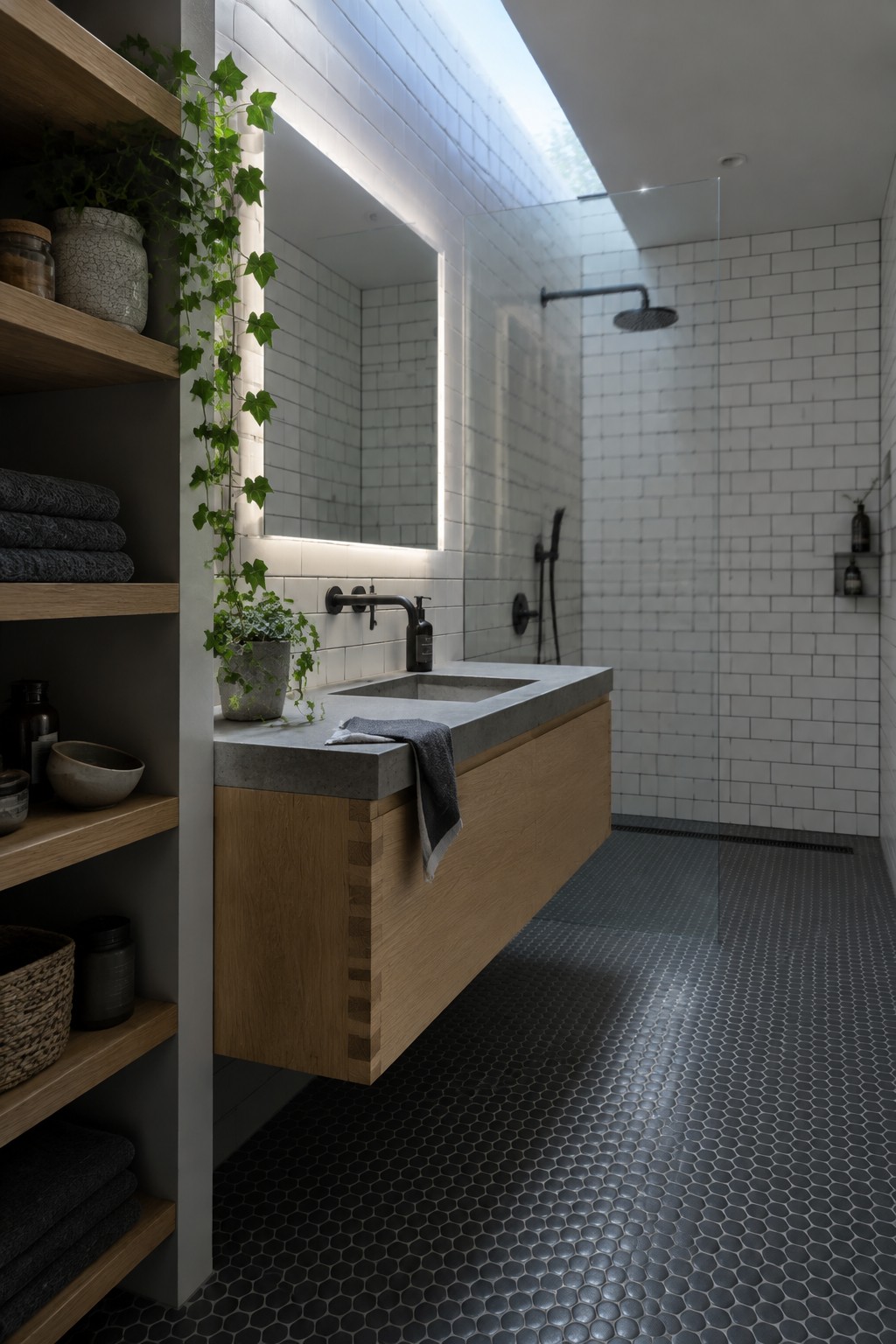
Dark grout helps small floor tiles read as a clear pattern instead of a busy scatter. In a bathroom with classic white wall tile, a dark mosaic floor also gives the room a little contrast without changing the look of the walls.
This works well in a shower or a narrow bathroom where smaller tiles can follow the floor’s slope. Choose grout that suits the tile color, and check that the tile has a slip-resistant finish for wet areas.
Try Classic Tile in a Herringbone Pattern
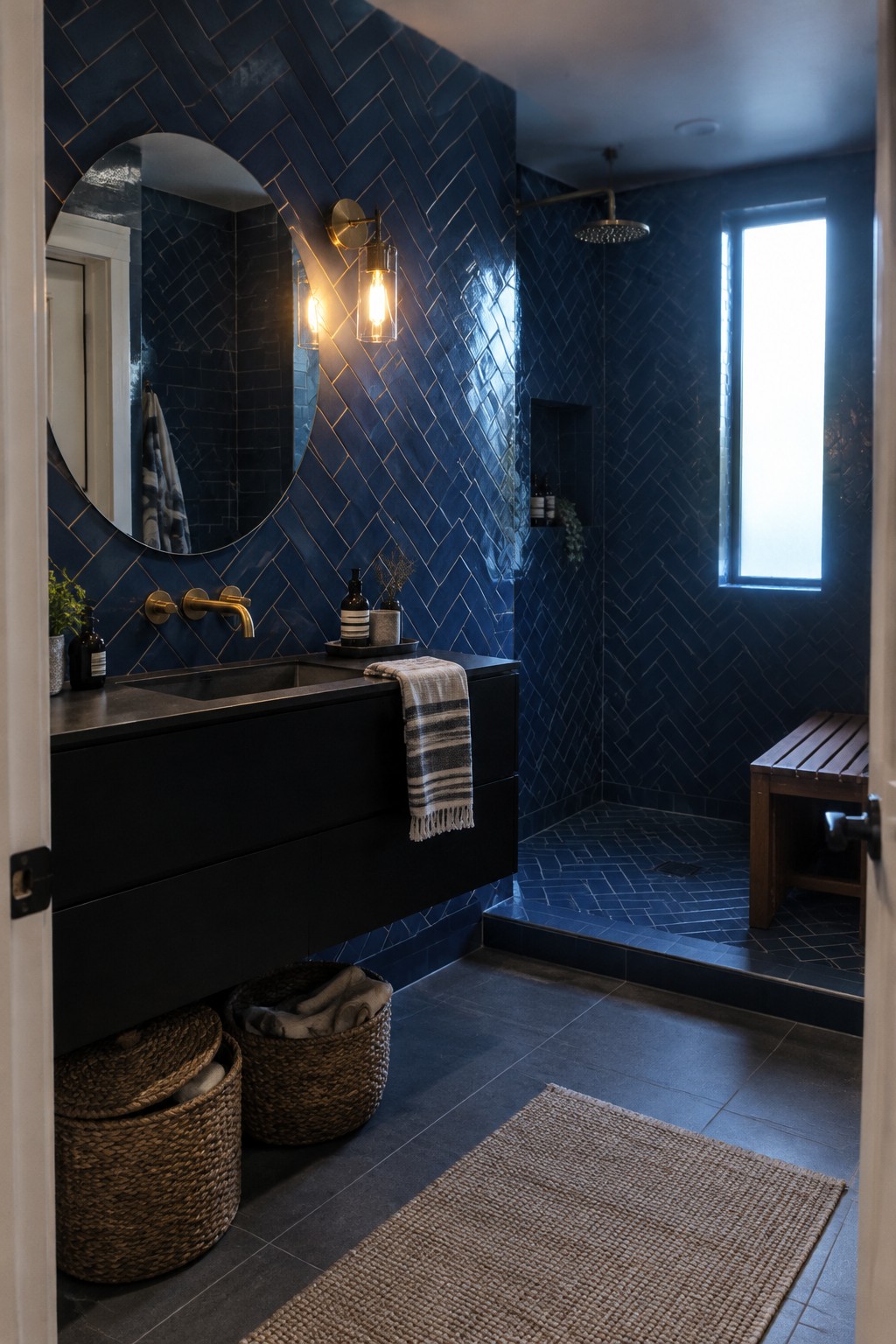
A herringbone layout gives classic tile a little more movement while keeping the bathroom’s overall look simple. Dark grout makes the pattern easy to see, so the tile can stand on its own without much extra decoration.
This approach works well on a shower wall or around a vanity, especially in a smaller bathroom where a clear tile pattern can add interest. Use it on one main surface if you want the room to feel less busy.
Choose Dark Grout for a Classic Tile Look
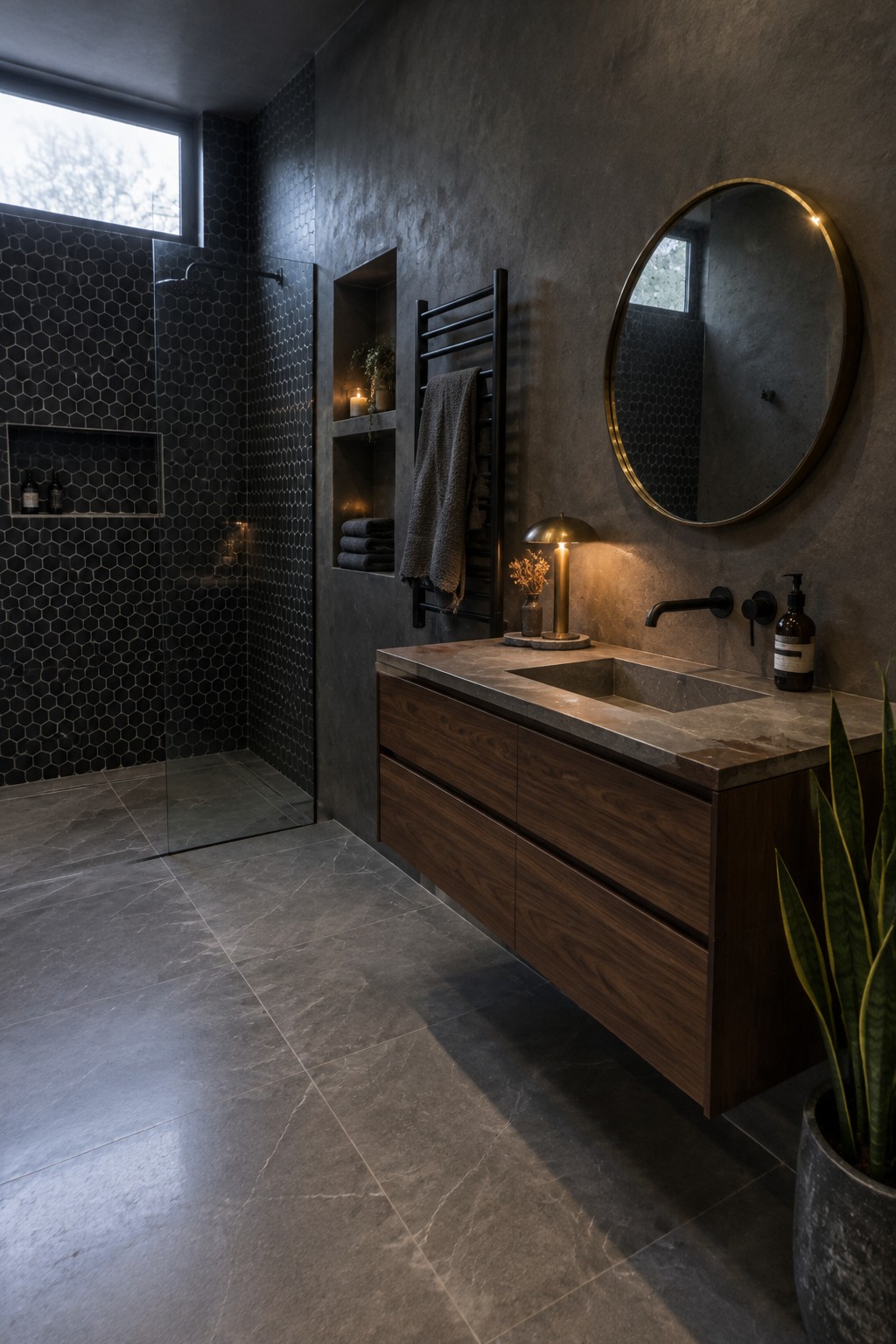
Dark grout gives small classic tiles a clearer, more defined pattern. In a moody bathroom, it helps the tile read as a surface with its own character rather than fading into the background.
Use it on a shower wall or a recessed shelf, as seen with the black hexagonal tile here. Keep in mind that grout lines will stand out, so careful tile placement and even spacing matter.
Add a Dark Tile Vanity Wall
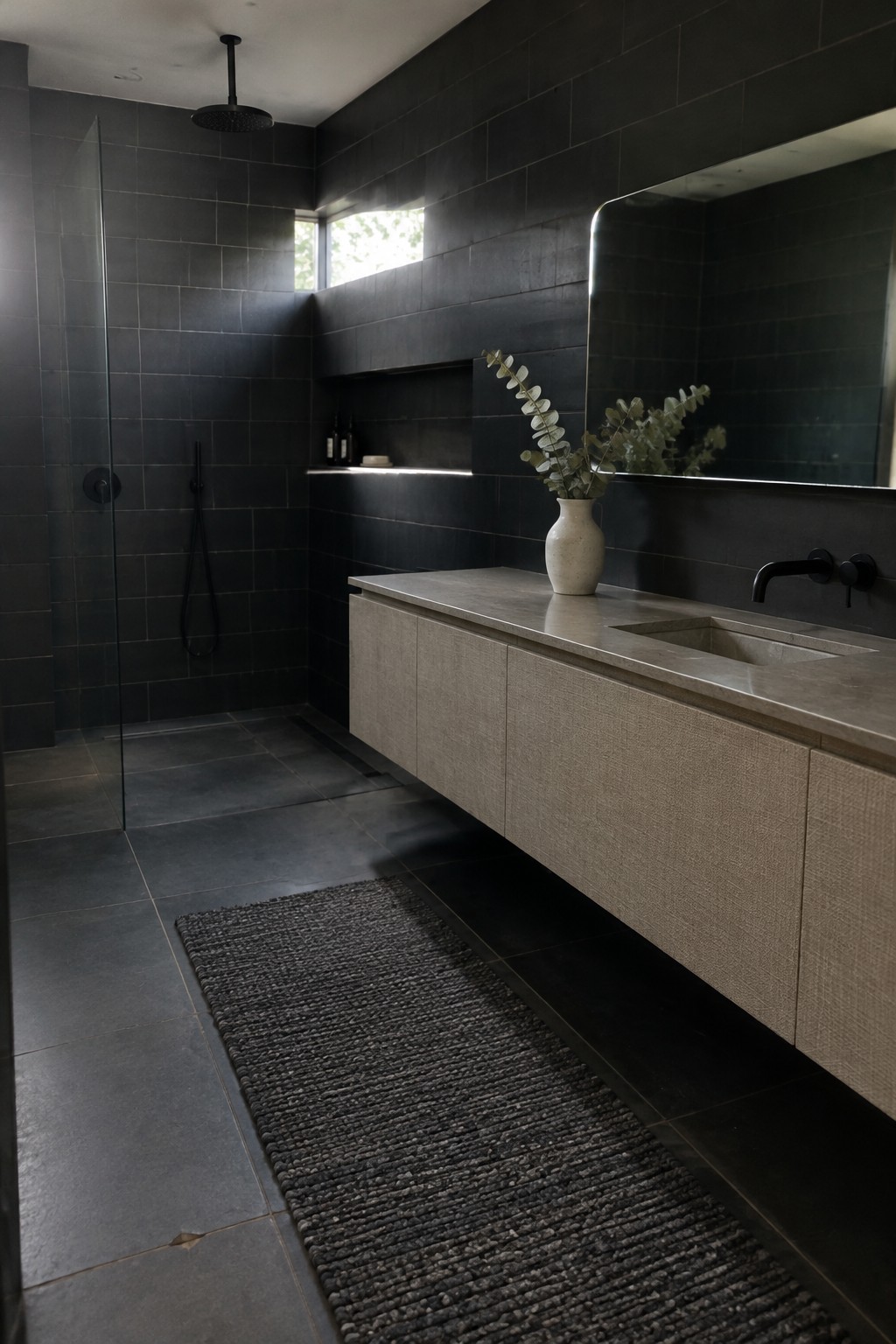
Dark grout helps the classic rectangular tiles read clearly, giving a bathroom wall a tidy, patterned look. In this room, the charcoal tile carries across the shower and vanity wall, so the finish feels consistent rather than busy.
For a similar effect, use the same tile and grout across connected areas, especially in a long bathroom. Keep the vanity or countertop lighter if you want a bit of contrast, and test grout samples first since dark shades can look different under bathroom lighting.
Try a Dark Tile Floor
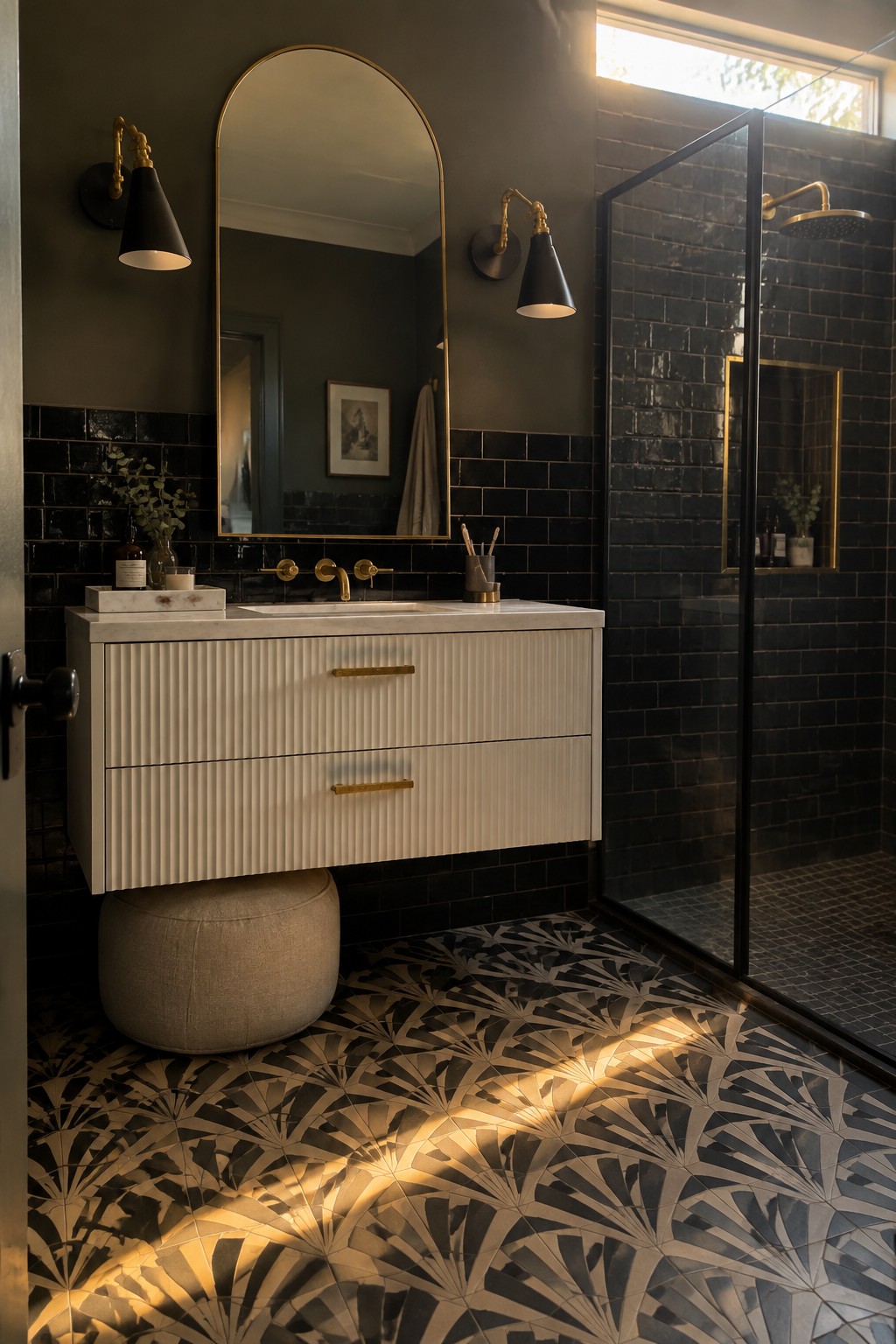
A patterned floor can bring character to a moody bathroom while leaving the walls simple. Here, the dark geometric tiles give the room its main decorative detail, and the pale vanity keeps the pattern from taking over.
This idea works well in a small bathroom where you want one clear focal point. Choose a floor pattern that is easy to live with, and keep nearby finishes fairly quiet so the shapes remain easy to see.
Use Classic Tile for a Moody Bathroom
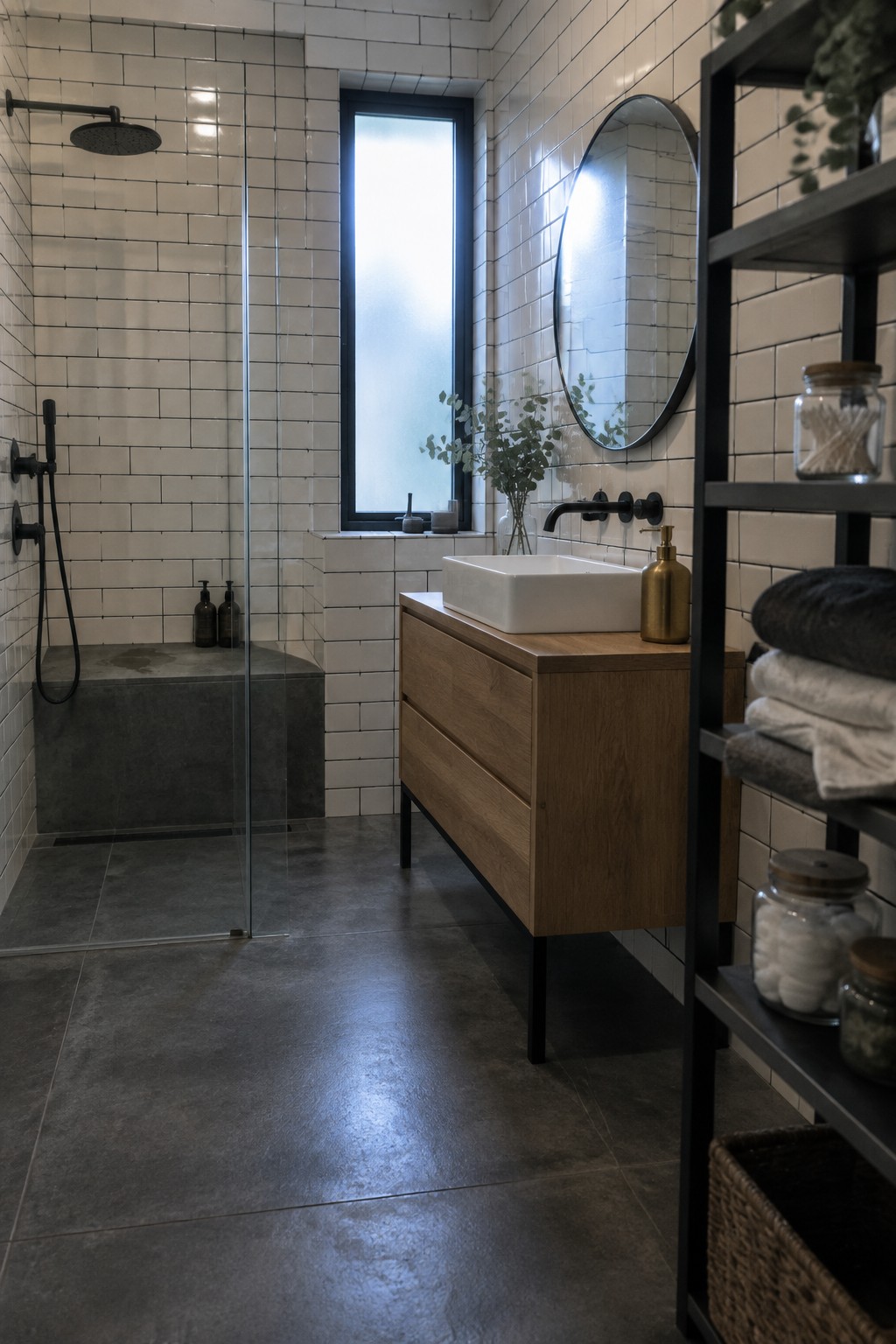
Classic white wall tile takes on a moodier look when the grout lines are dark. The contrast makes the tile pattern easier to see, while a charcoal floor carries that deeper tone through the room.
This approach works well in a bathroom with simple finishes, such as a wood vanity and dark fixtures. Keep the grout color consistent, and consider sealing it so it is easier to clean.
Use Patterned Floor Tile in a Moody Bathroom
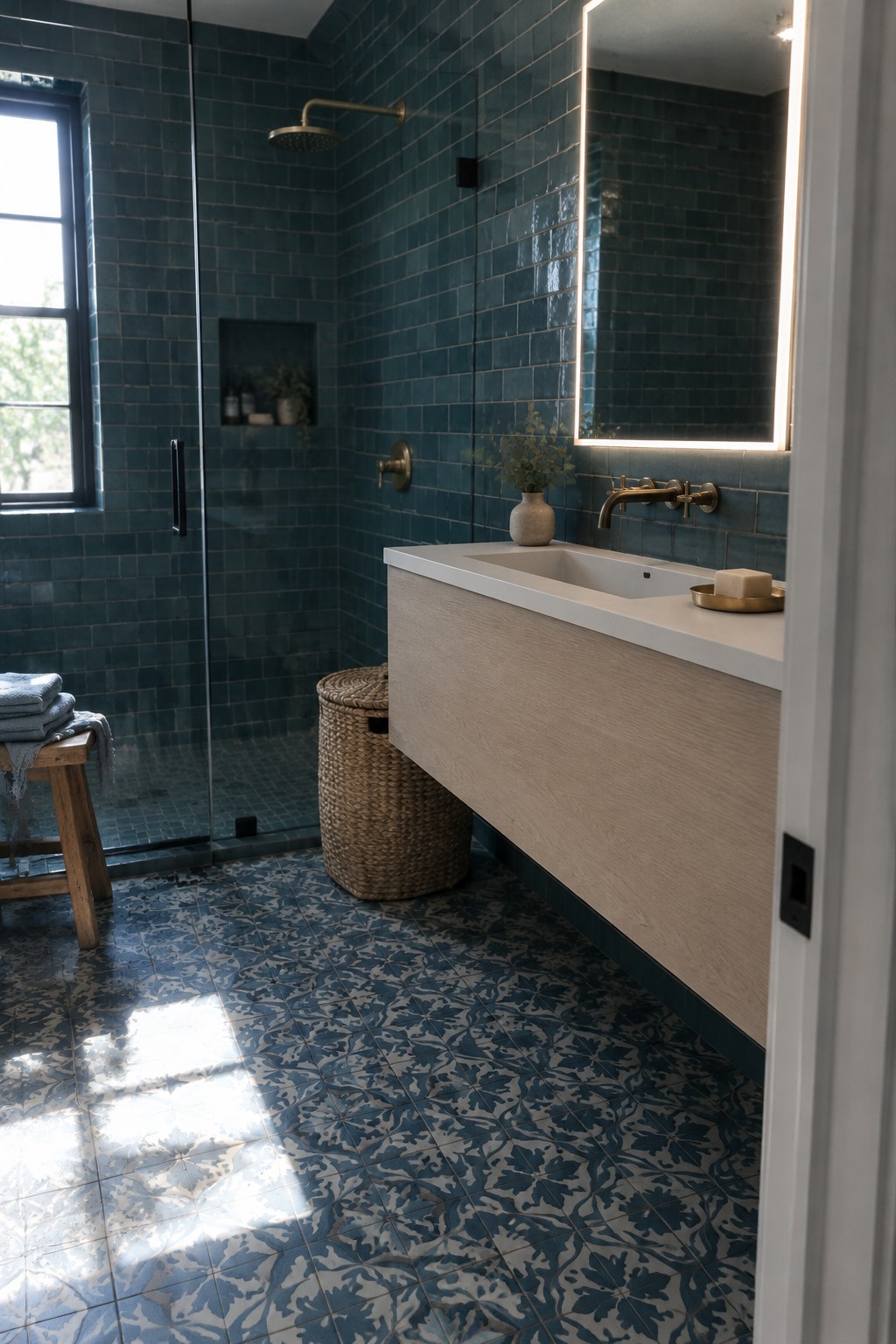
Patterned floor tile gives a bathroom a classic look while letting dark wall tile stay simple. The blue-and-white floor here stands out against the deep teal walls, so the room feels detailed without needing extra decoration.
This approach works well in bathrooms with plenty of wall tile, especially when you want the floor to break up a darker palette. Keep the pattern to one surface and choose a grout color that suits the tile, so the floor remains easy to read.
Use Dark Stone Tile Across the Bathroom
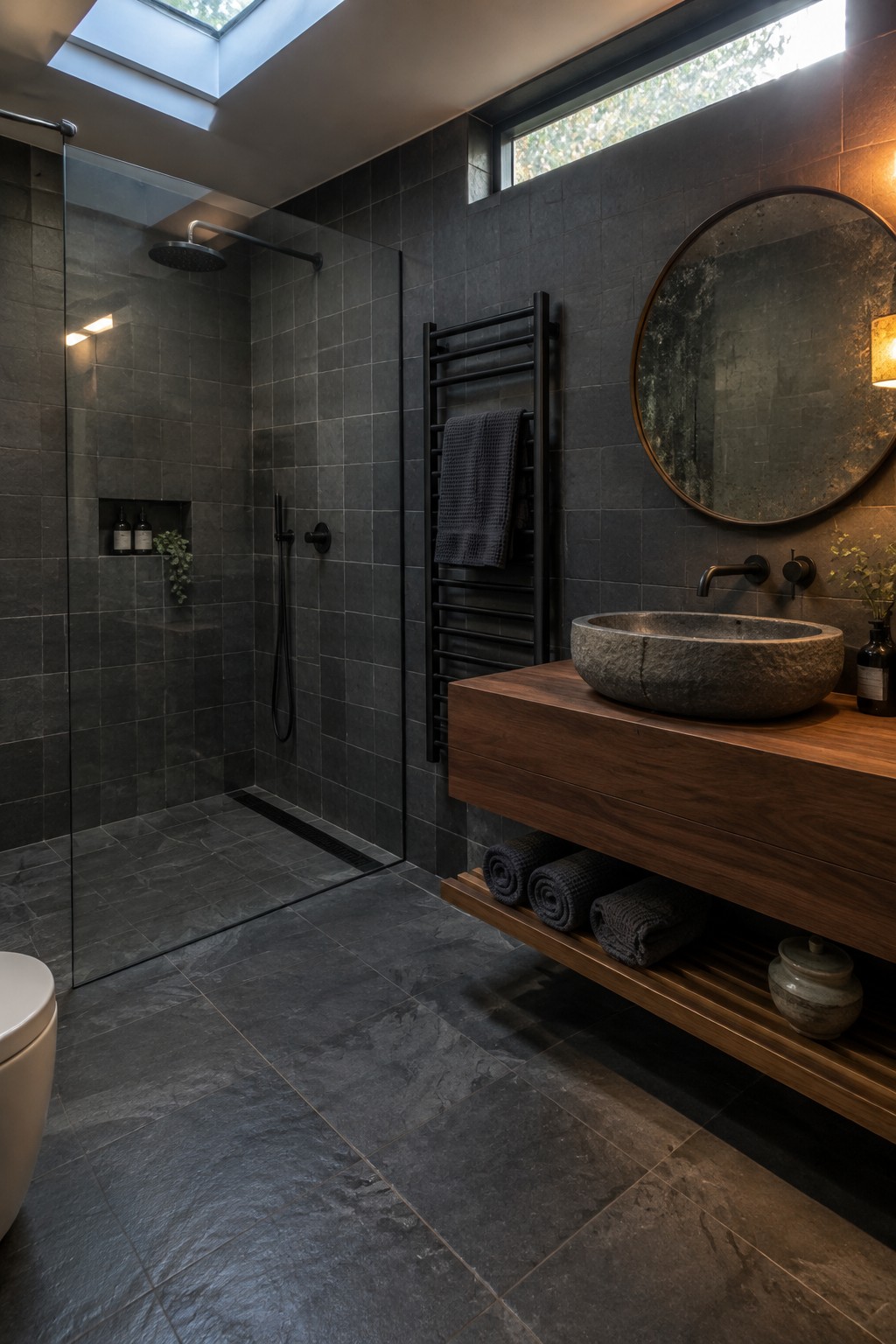
Dark grout helps classic tile feel more defined, especially when the tile and grout sit in a similar charcoal range. The result feels moody without relying on a busy pattern, and it gives the walls and floor a consistent look.
This approach works well in a bathroom with simple shapes and a few warmer materials, such as a wood vanity. Check grout samples beside the tile before choosing, since a small color difference can change how much the grid stands out.
Choose a Dark Floor for a Moody Bathroom
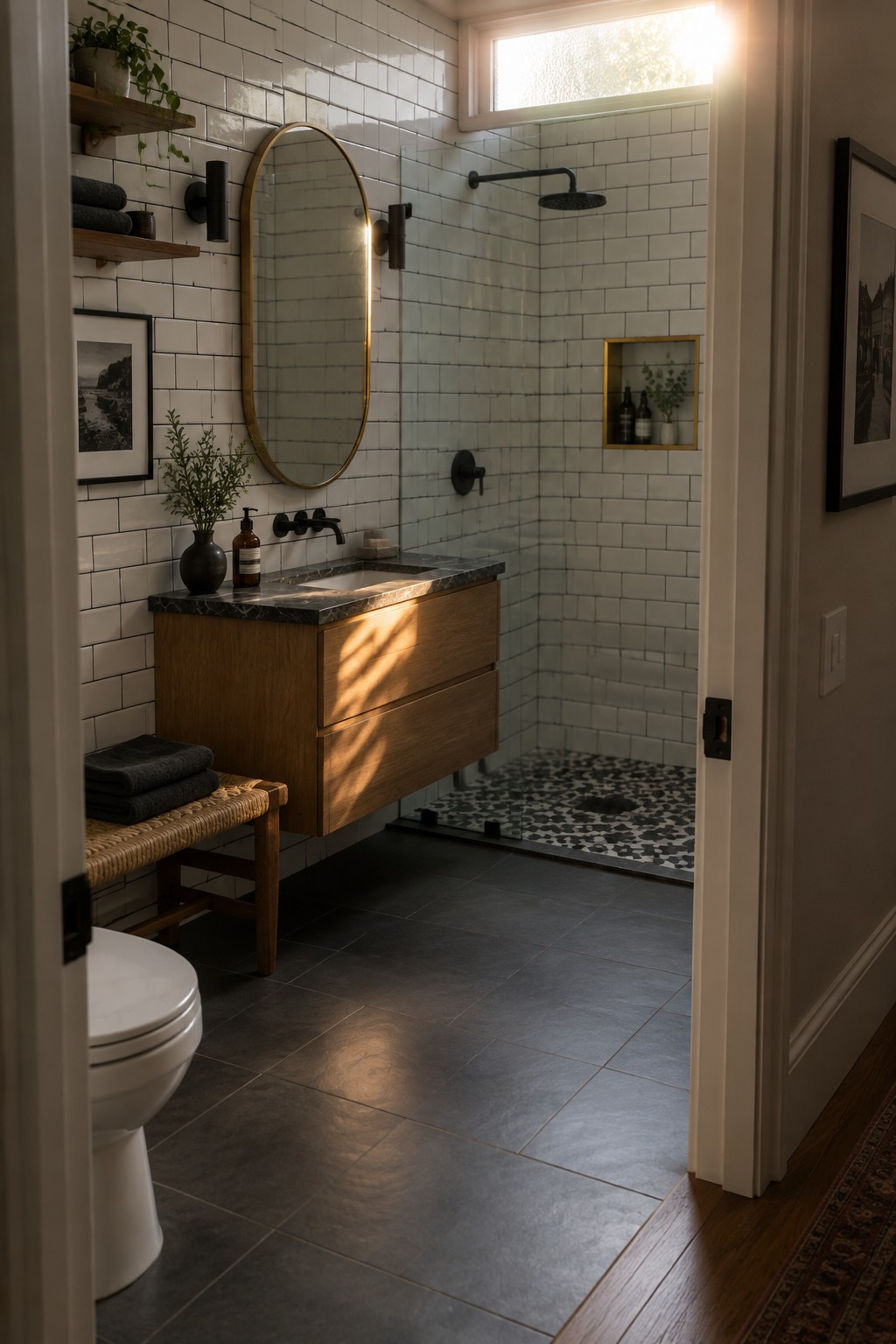
A dark floor can make a classic tiled bathroom feel more settled without covering every wall in a darker color. Here, large charcoal tiles give the room a quieter base, while the white wall tile keeps the small space from feeling too closed in.
This approach works well in bathrooms with white or light-colored walls. Choose a floor tile with a matte finish for a softer look, and make sure it has a suitable grip for wet feet.
Use Deep Blue Tile on the Shower Walls
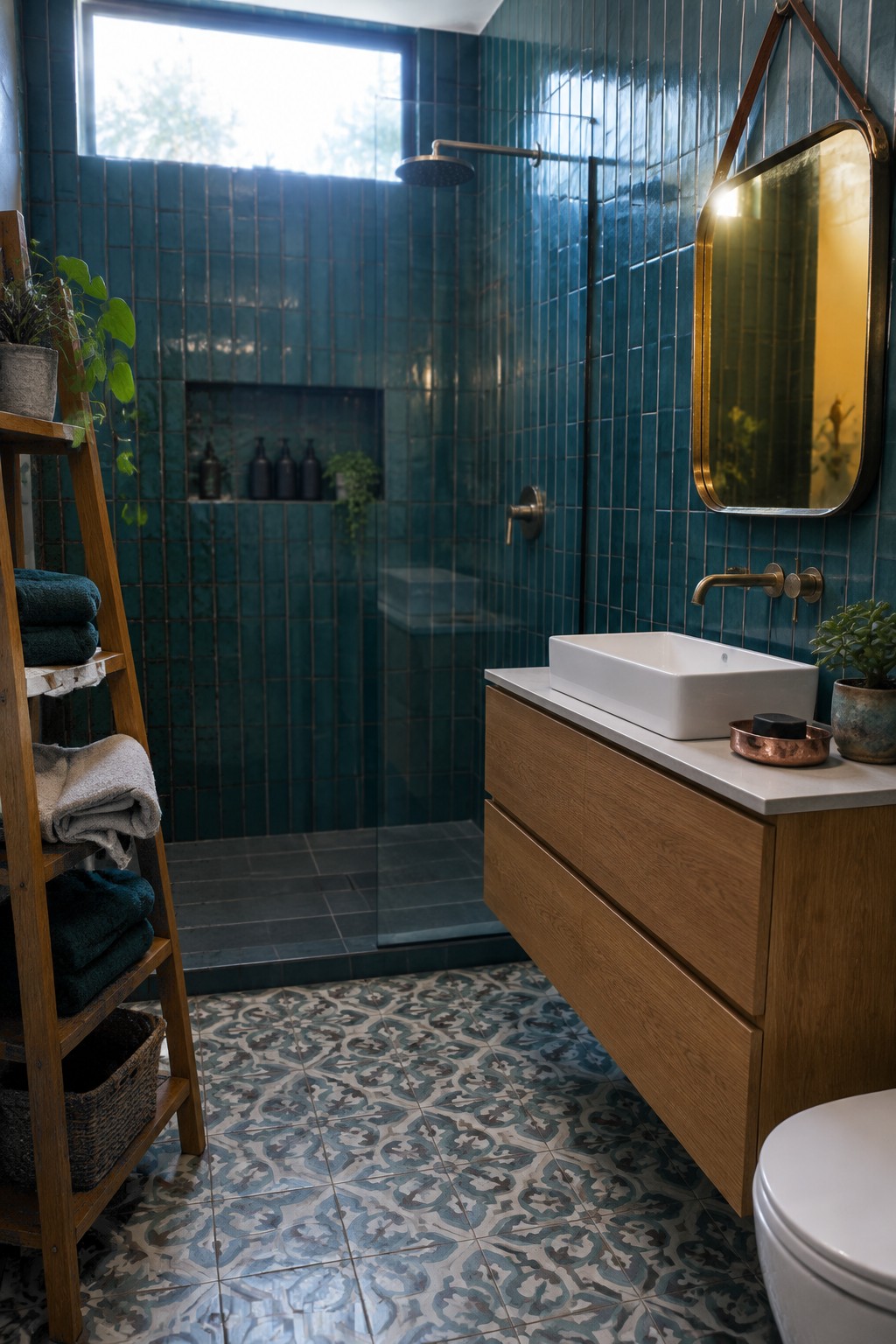
Deep blue tile can make a bathroom feel moody without relying on dark paint. The glossy, narrow tiles here give the shower walls a rich color, while dark grout keeps the grid pattern visible.
This idea works well in a small bathroom, where using one strong tile color can make the design feel intentional. Try it on the shower walls, and keep the other finishes simple so the tile remains the main feature.
Use Dark Stone Tile in the Shower
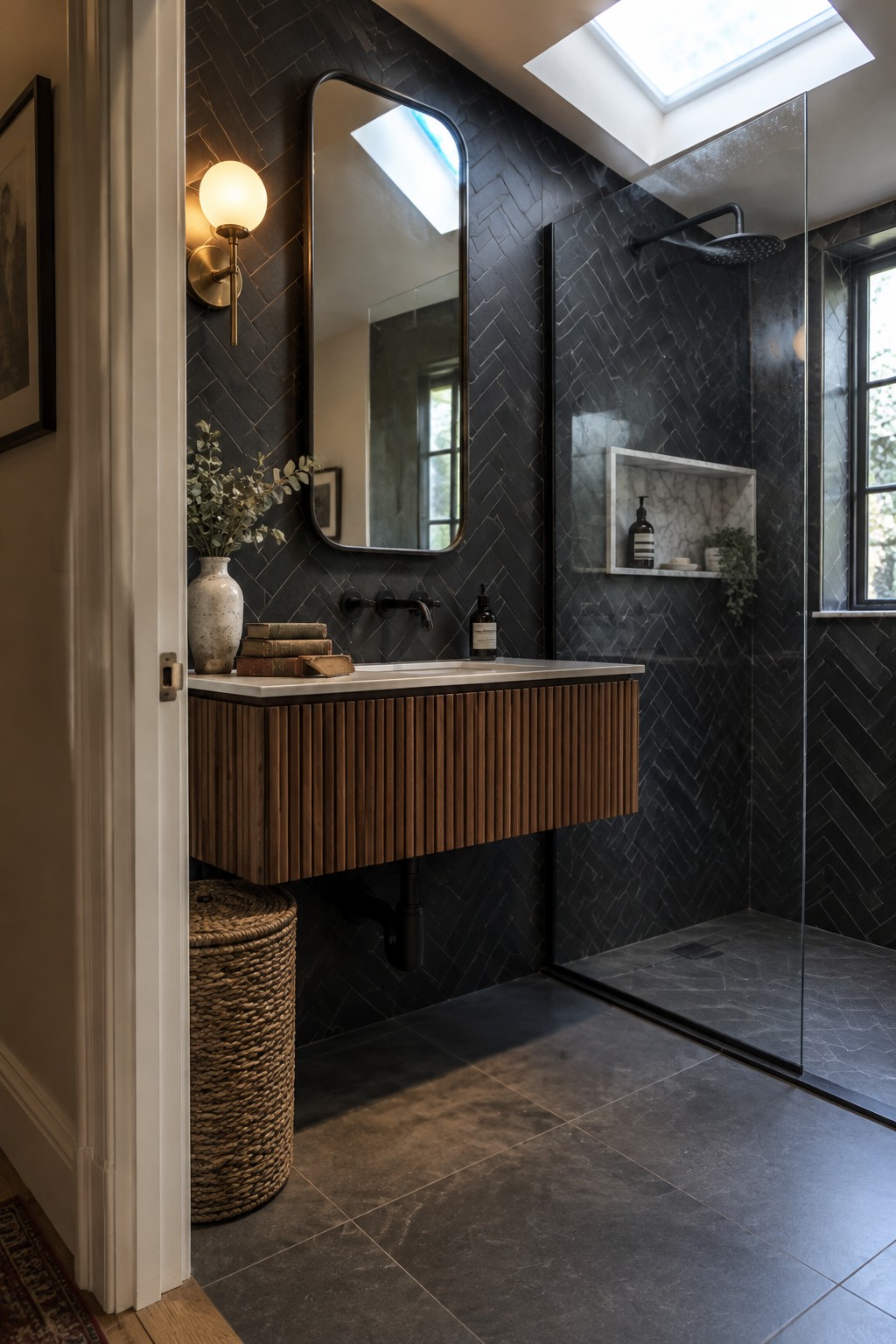
Dark tile across the shower walls gives the room a settled, classic look. The narrow grout lines keep the pattern visible without making it feel busy, while the same tile on the shower floor helps the area read as one connected space.
This approach suits a bathroom with good natural light or a skylight. If the room is smaller or dimmer, keep the darker tile to the shower and use a lighter vanity top or wall to give the rest of the room some contrast.
Use Dark Grout to Give Classic Tile More Definition
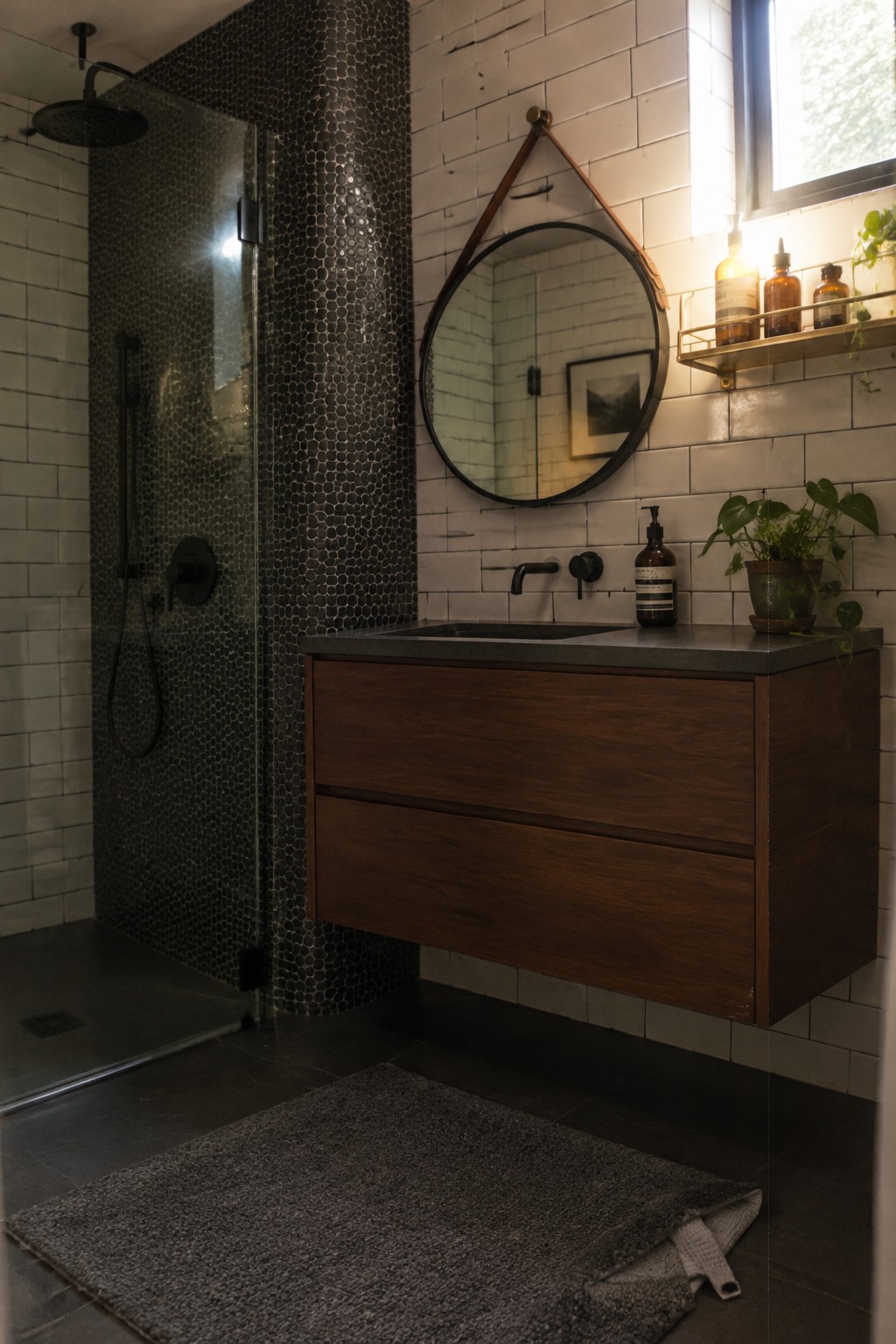
Dark grout makes pale classic tile feel moodier without changing the tile itself. It brings out the tile’s shape and gives a bathroom a more settled, traditional look.
This works especially well on a shower wall, where grout lines can add pattern across a large surface. Keep the rest of the finishes simple, such as a dark floor or wood vanity, so the tile remains easy to read.
Use Dark Grout to Bring Out Light Wall Tile
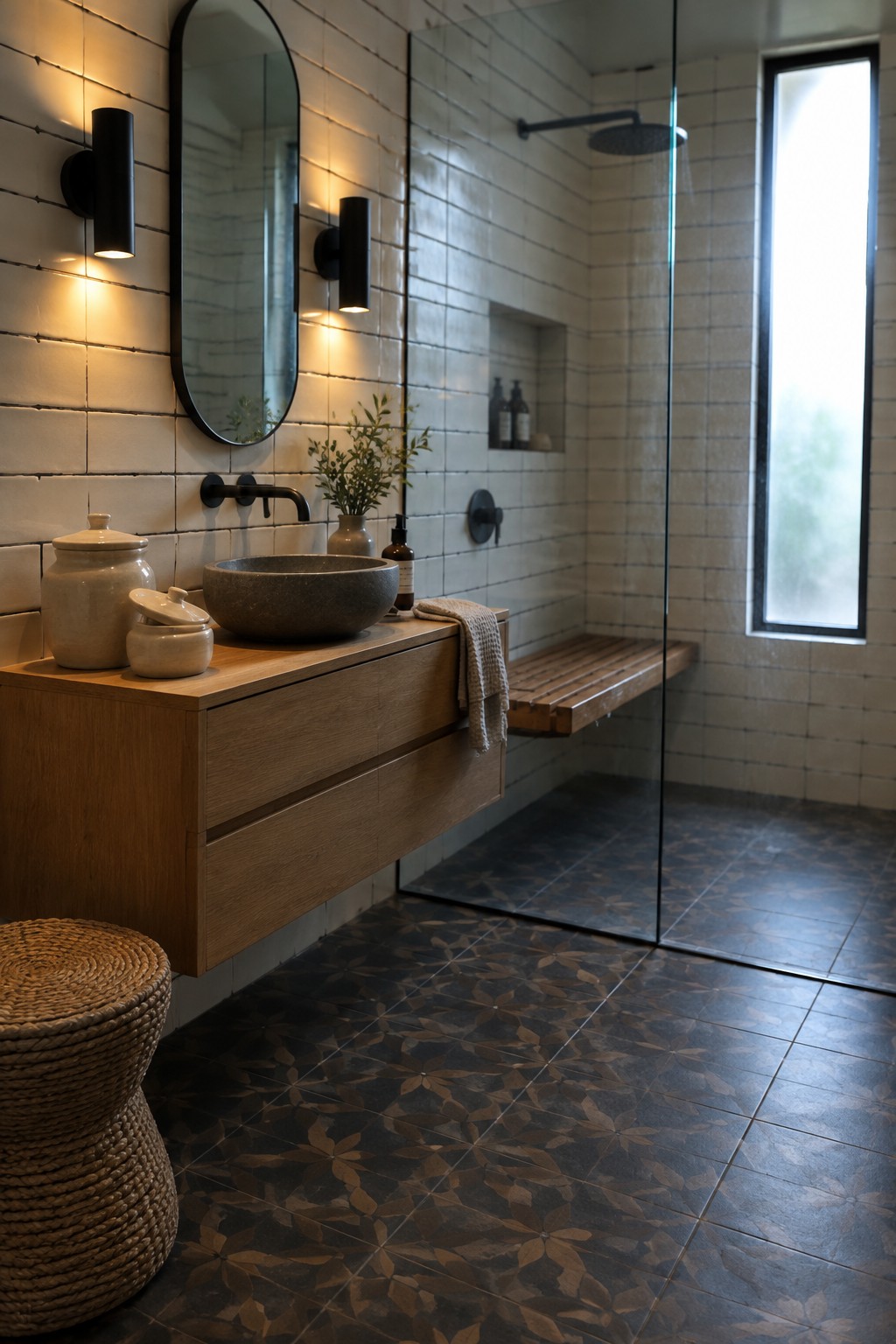
Dark grout makes classic light tile feel more defined and gives a bathroom a moodier look without covering every wall in a dark color. The clear grid of grout lines adds pattern, while the pale tile keeps the wall from feeling too heavy.
This works well with simple rectangular tile, especially in a bathroom with darker flooring or wood cabinetry. Keep the grout color consistent across the tiled walls, and choose a shade that contrasts clearly without overpowering the tile.
Use Classic Tile With Dark Grout
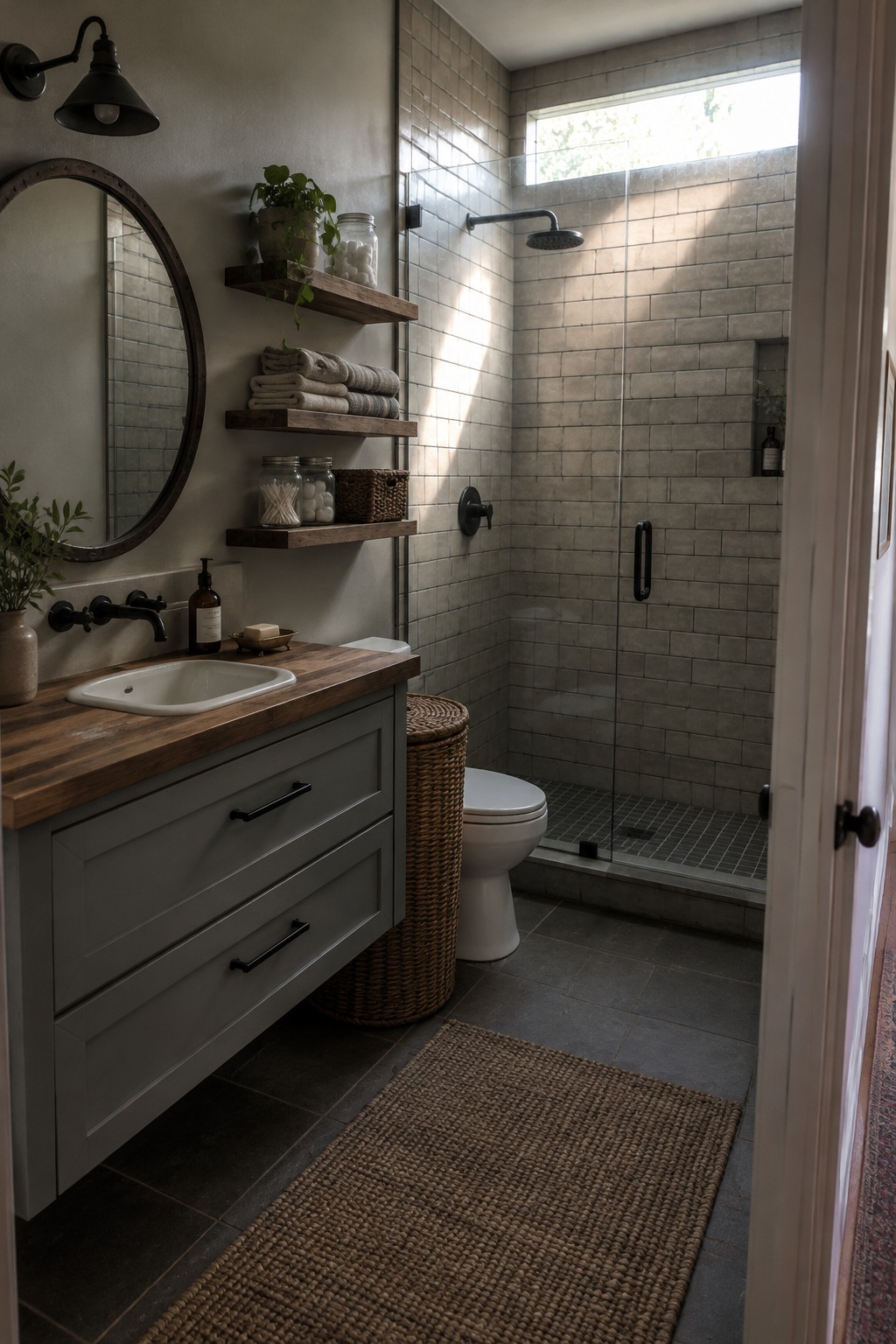
Dark grout gives classic bathroom tile a stronger, more defined look. It brings out the tile pattern and suits a moody bathroom without needing a bold tile color.
For a similar effect, use a medium or light tile with charcoal grout, especially in a shower where the grid is easy to see. Keep in mind that grout color can vary as it dries, so test a small area before committing.
Frequently Asked Questions
Q: Will dark grout make a small bathroom feel even smaller?
A: It can add visual contrast, but it won’t automatically make a small bathroom feel cramped. Try dark grout with lighter tile and keep the rest of the room simple so the pattern doesn’t compete for attention.
Q: Is dark grout harder to keep clean than light grout?
A: Dark grout tends to hide everyday discoloration, but soap residue and pale mineral deposits can show up on it. Wipe down wet areas regularly and use a grout cleaner that suits your tile.
Q: What tile colors work well with dark grout?
A: White and cream tiles give you a classic, graphic look, while muted green or gray tiles feel moodier. Sample the tile and grout together, since the contrast can look different in your bathroom’s lighting.
Q: Can I use dark grout with small tiles?
A: Yes, especially if you want the tile pattern to stand out. Just know that small tiles create more grout lines, so a strong contrast can make the wall feel busy.
