

Dark walls can make a bedroom feel restful and grounded, but they can also swallow the light if the layout and finishes do not balance them.
I find the best results come from paying attention to what you notice first when you walk in, whether it is a soft pool of lamplight, a pale bedspread, or a window left clear.
In a small room, useful storage and an easy path around the bed matter just as much as color, so each choice needs to earn its place.
Warm wood, layered textiles, and a few reflective surfaces can soften the contrast without taking away the moody feel.
I would start with one change that suits the way you use the room, then save any details that seem easy to adapt at home.
Use Dark Walls In A Small Bedroom

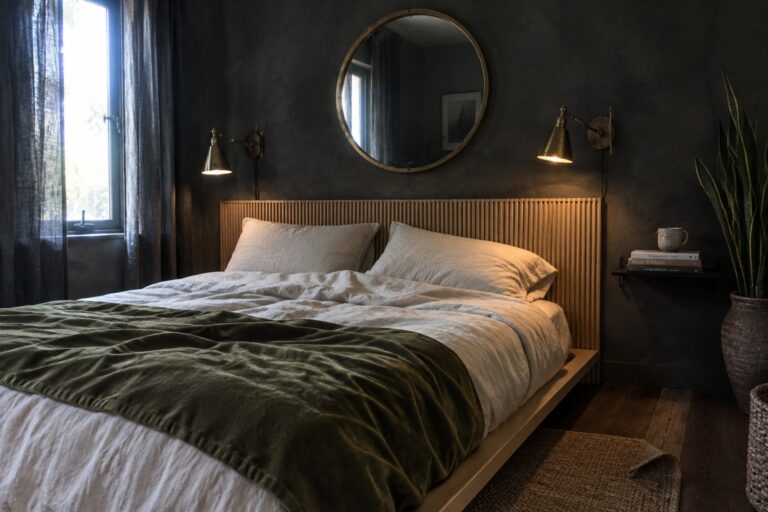
Dark walls can make a small bedroom feel snug rather than cramped when the rest of the palette stays simple. Here, pale bedding stands out against a charcoal wall, while a wood-slat headboard gives the bed a clear place in the room.
Try this approach in a bedroom with limited floor space, keeping larger fabrics light so the walls do not make the room feel too closed in. A warm wood finish can bring in a little contrast without adding another strong color.
Use Dark Walls With Patterned Bedding
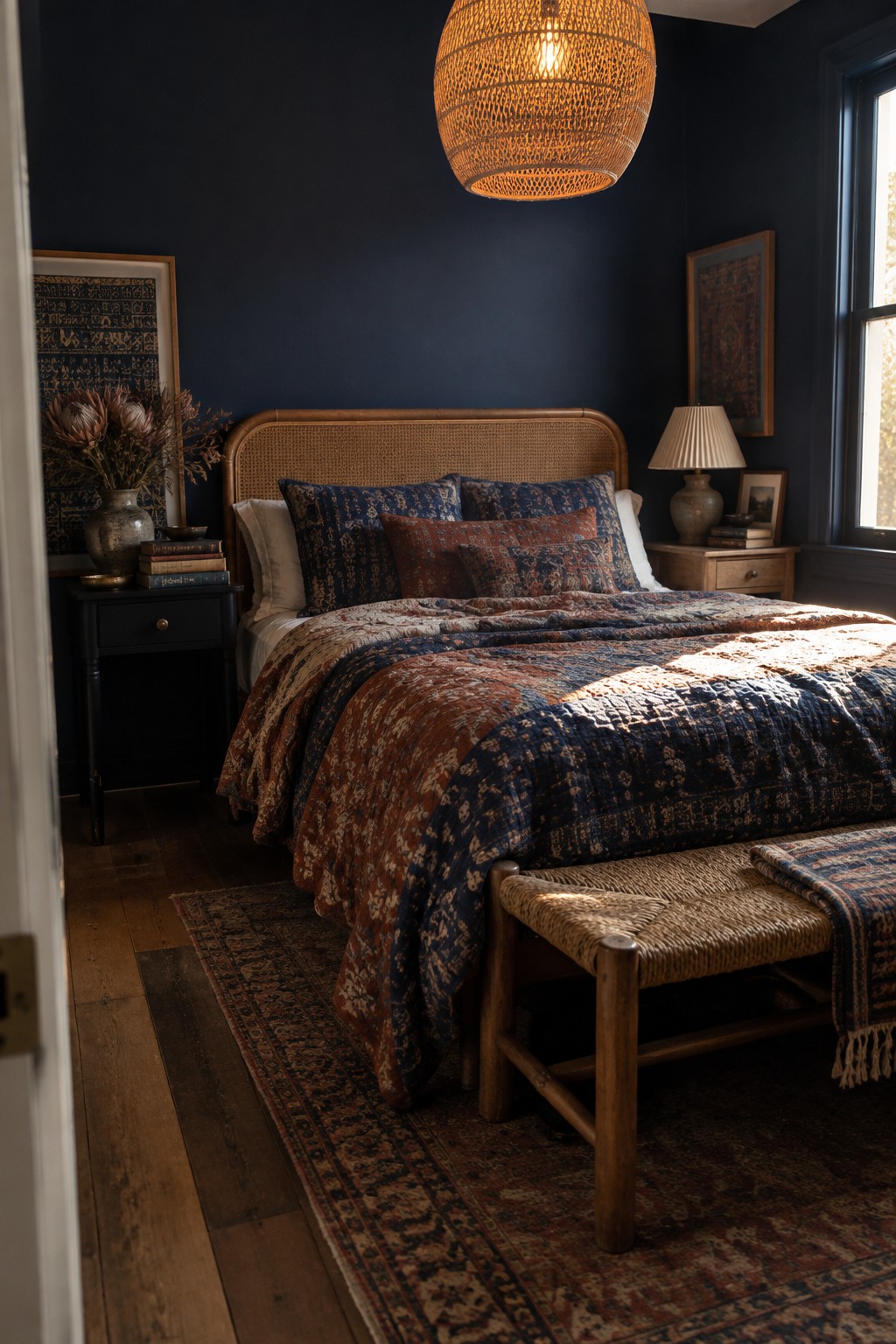
Dark walls can feel comfortable in a small bedroom when the bedding brings in a few warmer colors and patterns. Here, rust and navy prints keep the deep blue walls from making the room feel too stark.
Try this approach with a simple bed and one or two patterns in related colors. Keep the prints to the bedding or pillows so the room still feels restful rather than busy.
Use Dark Green Walls in a Small Bedroom

Dark green walls can make a small bedroom feel restful rather than cramped, especially when the color wraps around a simple bed nook. The key is to let the wall color do its job without filling every surface with more dark decor.
Try this approach in a bedroom with a built-in bed or limited floor space, and keep the bedding fairly light for contrast. A framed landscape and a slim wall light are enough to finish the wall without taking up room on the bedside surface.
Try Dark Walls In a Small Bedroom

Dark walls can make a small bedroom feel snug rather than cramped, especially when the color continues around the room. Keep the bedding simple and use a warm wood or leather headboard to give the wall a little contrast.
This idea suits bedrooms with limited floor space, where a cozy feel matters more than making the room look larger. Use a few warm light sources so the darker surfaces remain easy to live with.
Use Dark Walls With Light Upholstery
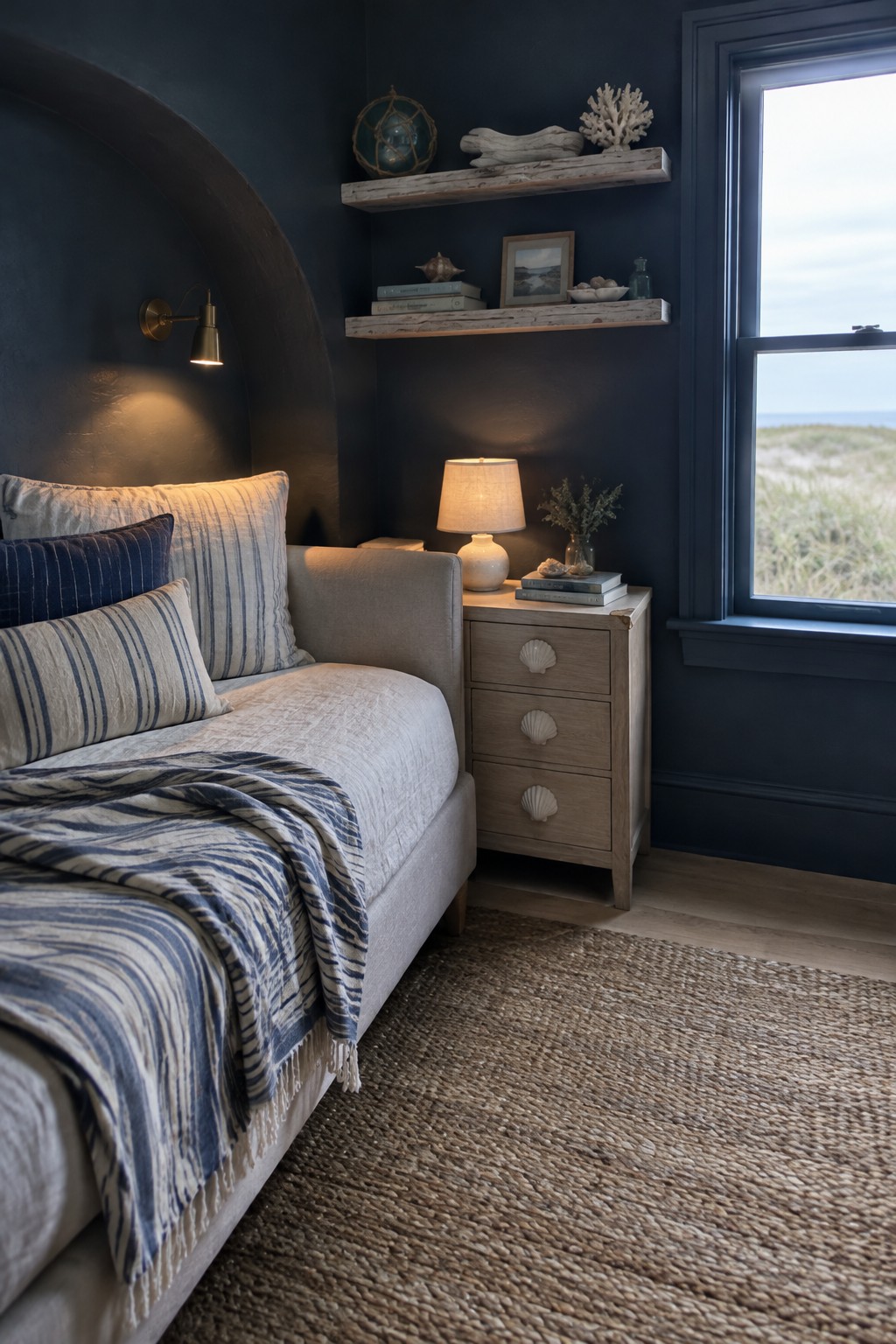
Dark walls can work in a small bedroom when the larger pieces stay light. A pale upholstered bed gives the room a clear contrast, so the walls feel cozy rather than closing in.
Try this with a light neutral bed and keep the bedding simple. A few navy accents can tie the darker wall color into the rest of the room without making the space feel crowded.
Try Charcoal Walls With Warm Wood
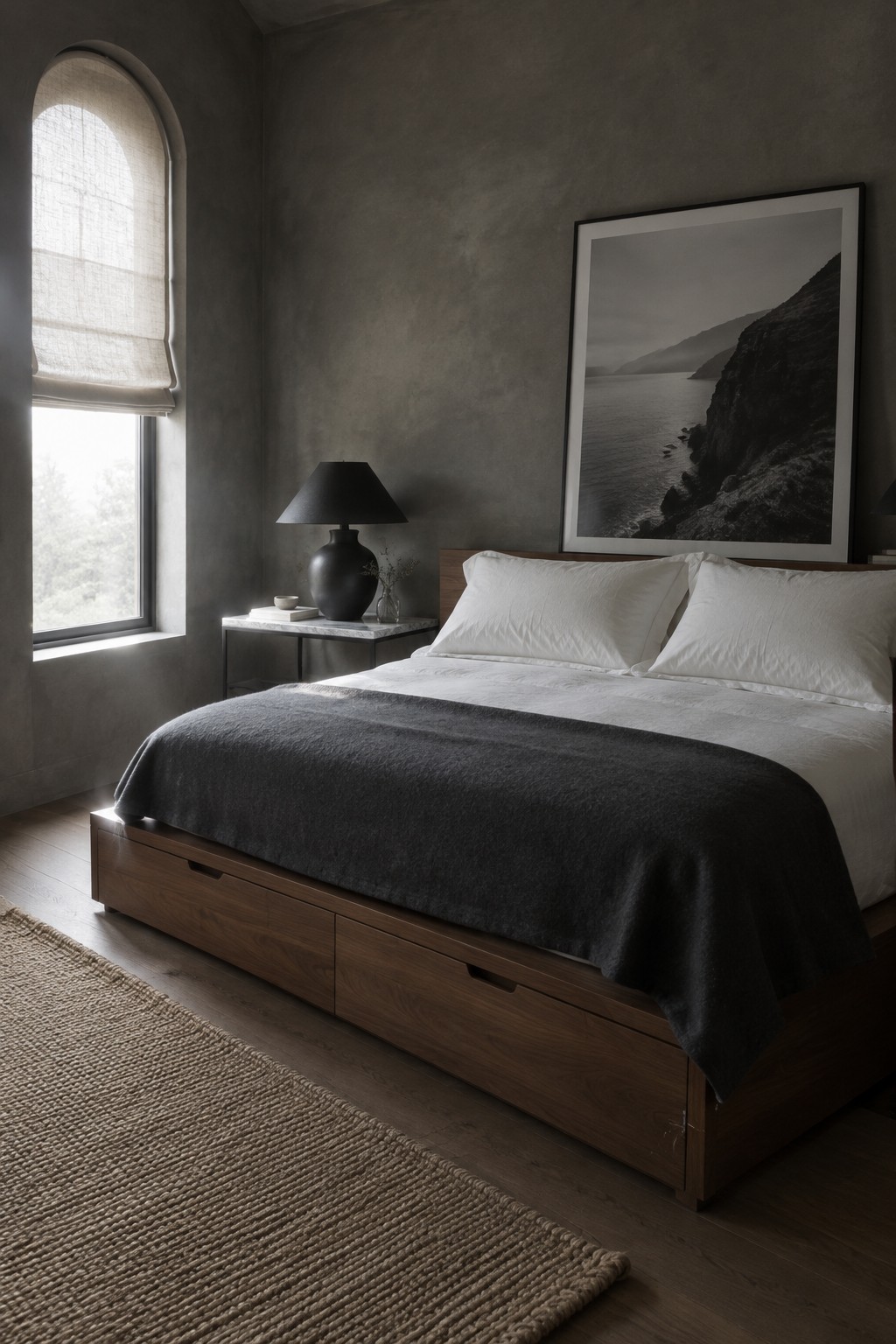
Charcoal walls can make a small bedroom feel settled and restful rather than cramped. Warm wood gives the dark color a natural partner, as seen in the bed frame here.
Use a wood bed or a simple bedside table to bring in that contrast without adding more patterns or colors. This works especially well when you keep the bedding fairly simple, so the room still feels calm.
Use Warm Lighting to Balance Dark Bedroom Walls

A small bedroom with dark walls can feel cozy rather than closed in when the lighting is warm and focused. A bedside lamp with a fabric shade is a simple way to bring a softer glow to the space.
Choose a lamp that gives enough light for reading, and place it where it is easy to reach from bed. Warm bulbs work especially well with deep paint colors, while cooler light can make the walls feel harsher.
Let Dark Walls Set The Mood

A deep green wall can make a small bedroom feel cozy rather than cramped. Keeping the rest of the room fairly simple lets the color feel calm, not busy.
Try this with warm wood furniture and bedding in muted shades. If the room gets little daylight, use lighter bedding or a lamp near the bed to keep the dark walls from feeling too heavy.
Add Built-In Shelves Beside the Bed
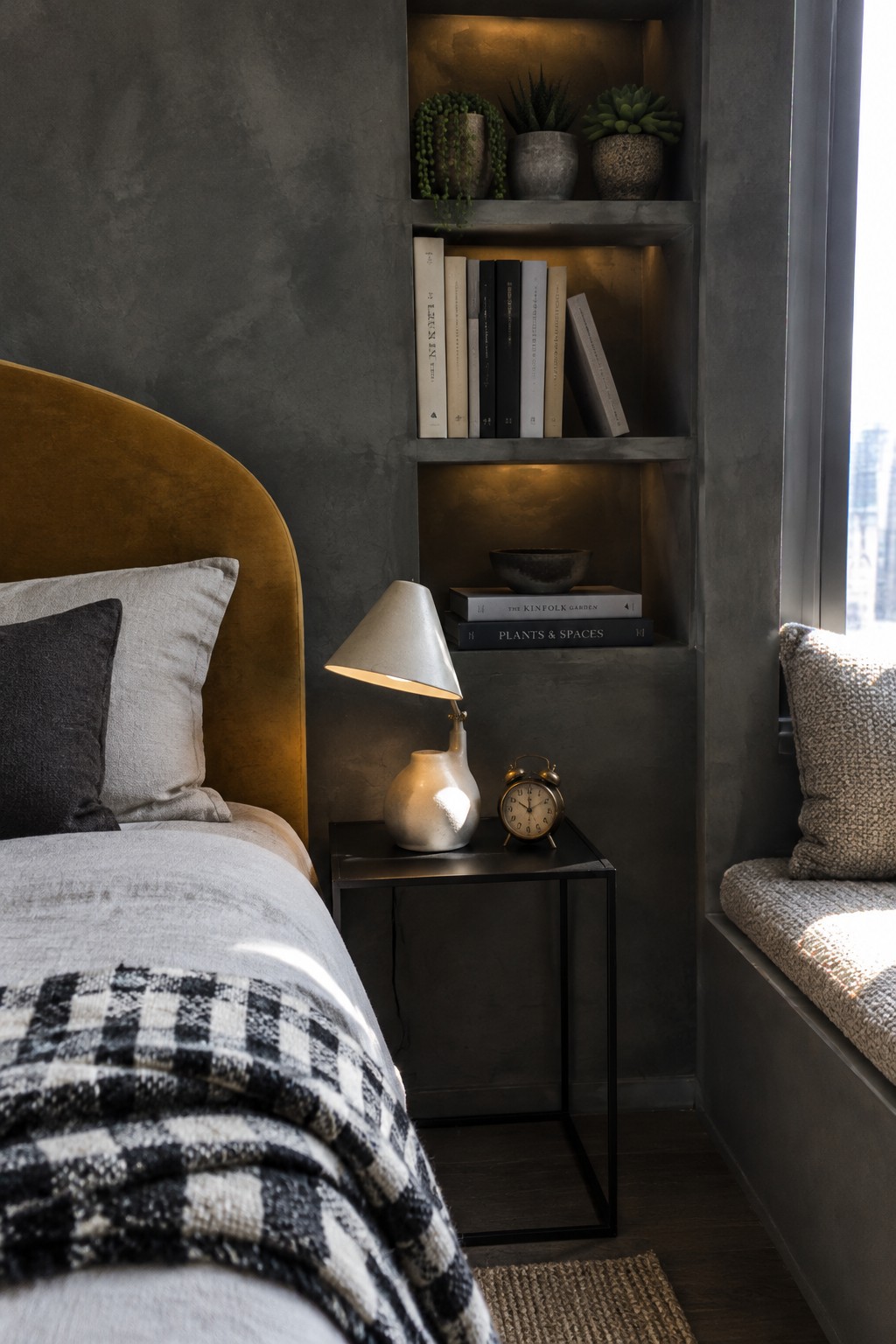
Built-in shelves can make a small bedroom more useful without taking up floor space. Here, recessed shelves provide room for books and plants, while the dark finish keeps them in step with the walls.
This works especially well in a narrow bedroom where a separate bookcase would crowd the walkway. If you’re planning shelves near the bed, leave enough room for a slim bedside table and keep the shelves from becoming overfilled.
Use Burgundy Walls for a Small Bedroom

A deep burgundy wall color can make a small bedroom feel cozy rather than cramped. It works especially well when the rest of the room stays fairly simple, as the pale bedding in this room shows.
Try the color on the wall behind the bed, and use lighter sheets to keep the room from feeling too closed in. A warm bedside lamp also helps the dark paint feel comfortable in the evening.
Use Dark Walls With Natural Materials
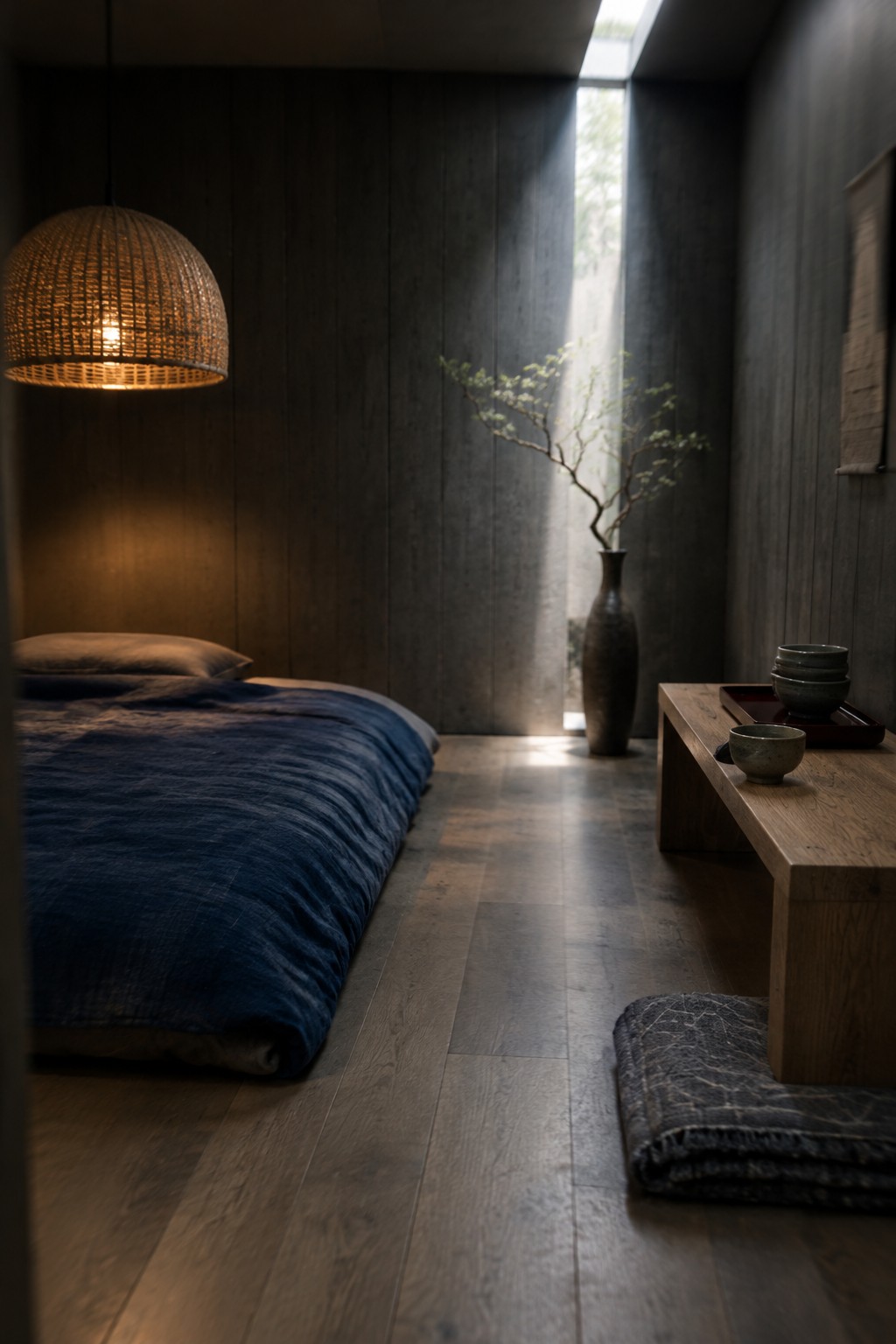
Dark walls can suit a small bedroom when the room’s materials keep the look from feeling too stark. Here, dark wall panels sit alongside warm wood flooring and a woven pendant, giving the space a simple mix of textures.
Try this approach with one or two natural finishes rather than adding lots of decor. It works especially well in a pared-back bedroom, where a few tactile materials can make dark walls feel considered without crowding the room.
Build Storage Into A Small Bedroom
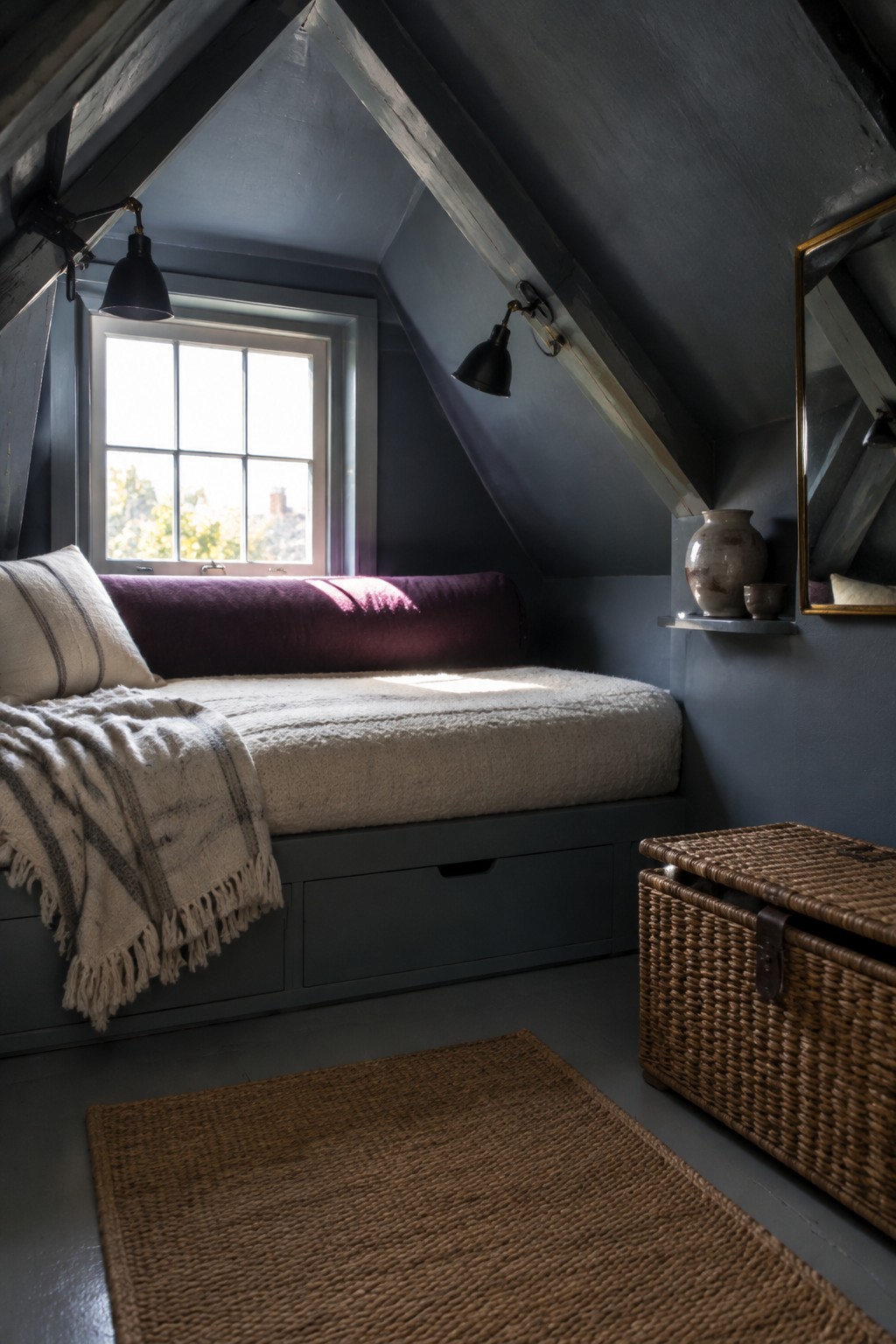
A built-in bed can make an awkward small bedroom more useful without adding extra furniture. Here, drawers beneath the bed provide a place to put linens or clothing, while the dark finish keeps the storage from breaking up the room’s moody look.
This idea works especially well in attic bedrooms where sloped ceilings limit furniture choices. Measure carefully before planning a built-in, and leave enough room for drawers to open comfortably.
Use A Dark Wall With Soft Gray Upholstery
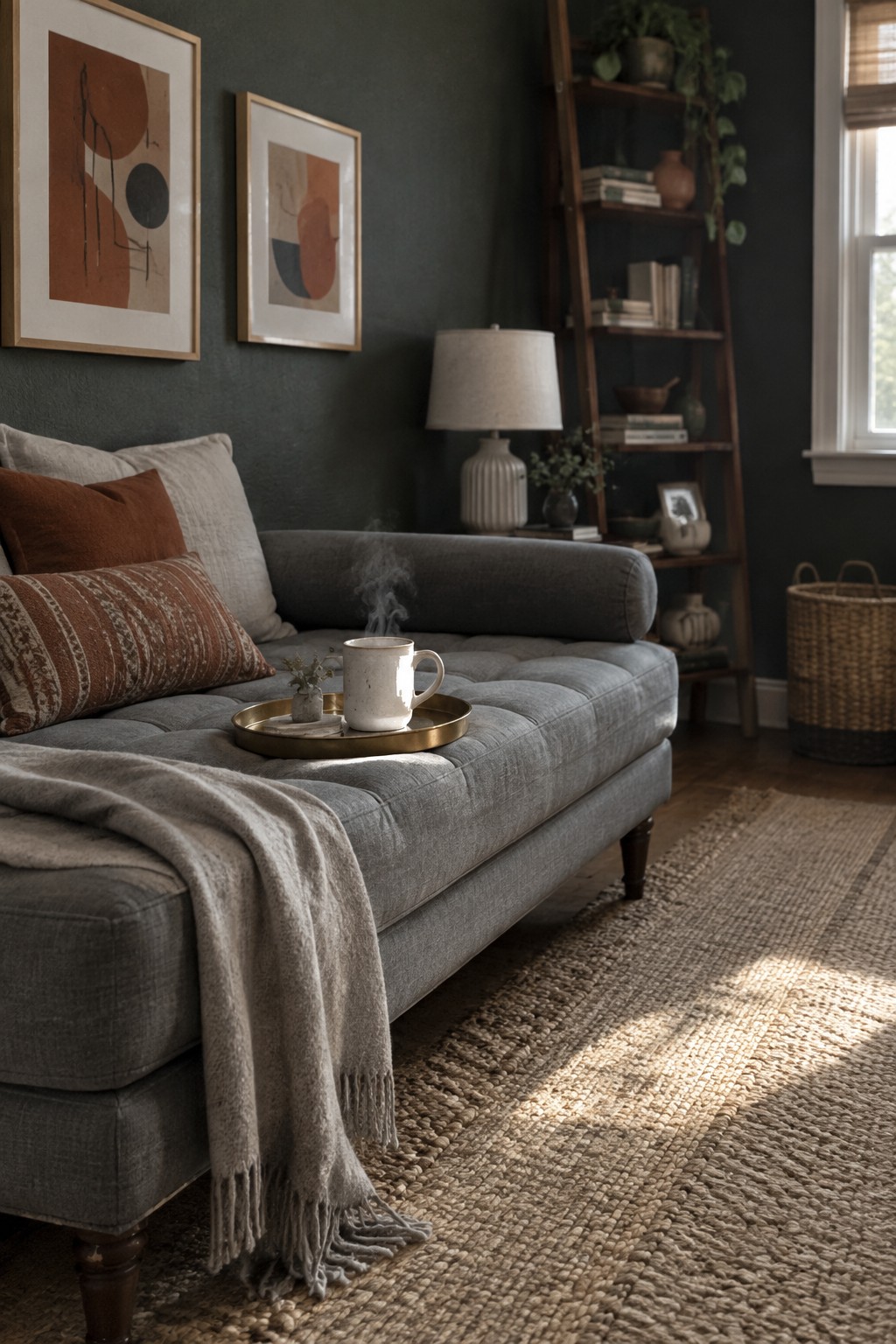
A charcoal wall can make a small bedroom feel cozy without needing much decoration. Soft gray upholstery offers a lighter contrast, so the room still feels comfortable rather than closed in.
Try this with a simple upholstered bed and keep the bedding fairly quiet. A warm rust pillow or two can bring in color, but too many strong accents may compete with the dark wall.
Use Velvet To Make Dark Walls Feel Cozy

Dark walls can feel more comfortable in a small bedroom when the bedding and headboard have a soft, touchable finish. Here, dark velvet gives the bed a cozy look without needing a brighter wall color.
Try velvet on the headboard or duvet, and keep the rest of the bedding simple so the fabric does not crowd the room. A deep blue or charcoal works well against black walls, especially with one pale accent such as a throw.
Carry Dark Walls Through A Small Bedroom
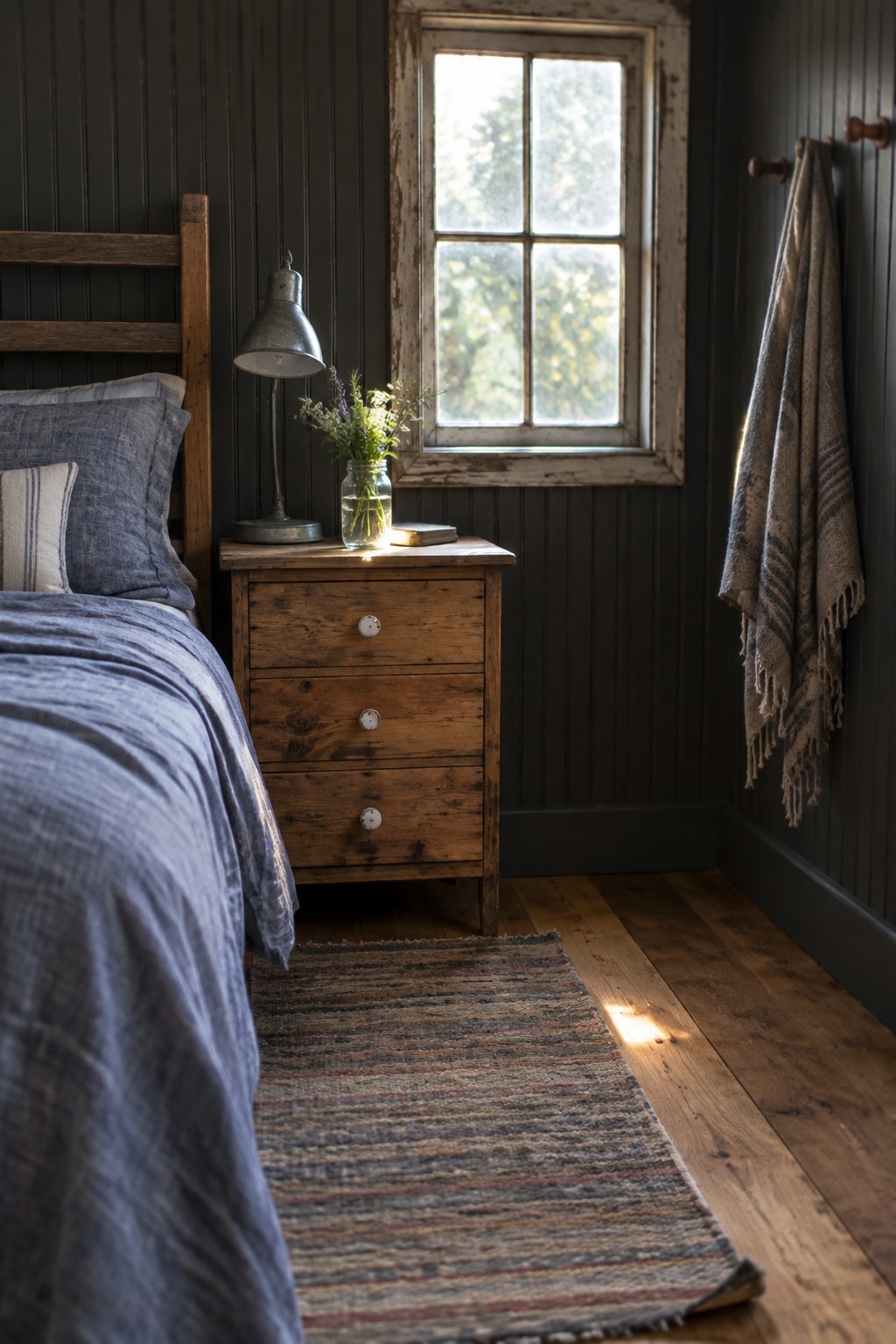
Dark walls can make a small bedroom feel settled and cozy rather than cramped. Keeping the same deep color across the walls gives the room a simple, tucked-in quality, while worn wood brings in a softer contrast.
This works especially well in a narrow bedroom where there isn’t much room for extra decor. Try dark painted paneling with a wood bed or bedside table, and keep the bedding fairly simple so the room still feels restful.
Use an Alcove To Fit A Daybed

A built-in daybed can make a small bedroom feel more useful without taking up extra floor space. Here, the dark alcove gives the bed a tucked-in spot, while the pale upholstery keeps the seating area from feeling too heavy.
This idea works especially well in a narrow room or a spare bedroom that needs to serve more than one purpose. Add drawers beneath the bed for extra storage, and keep the bedding simple so the dark walls remain the main feature.
Use Dark Walls To Highlight Tall Windows
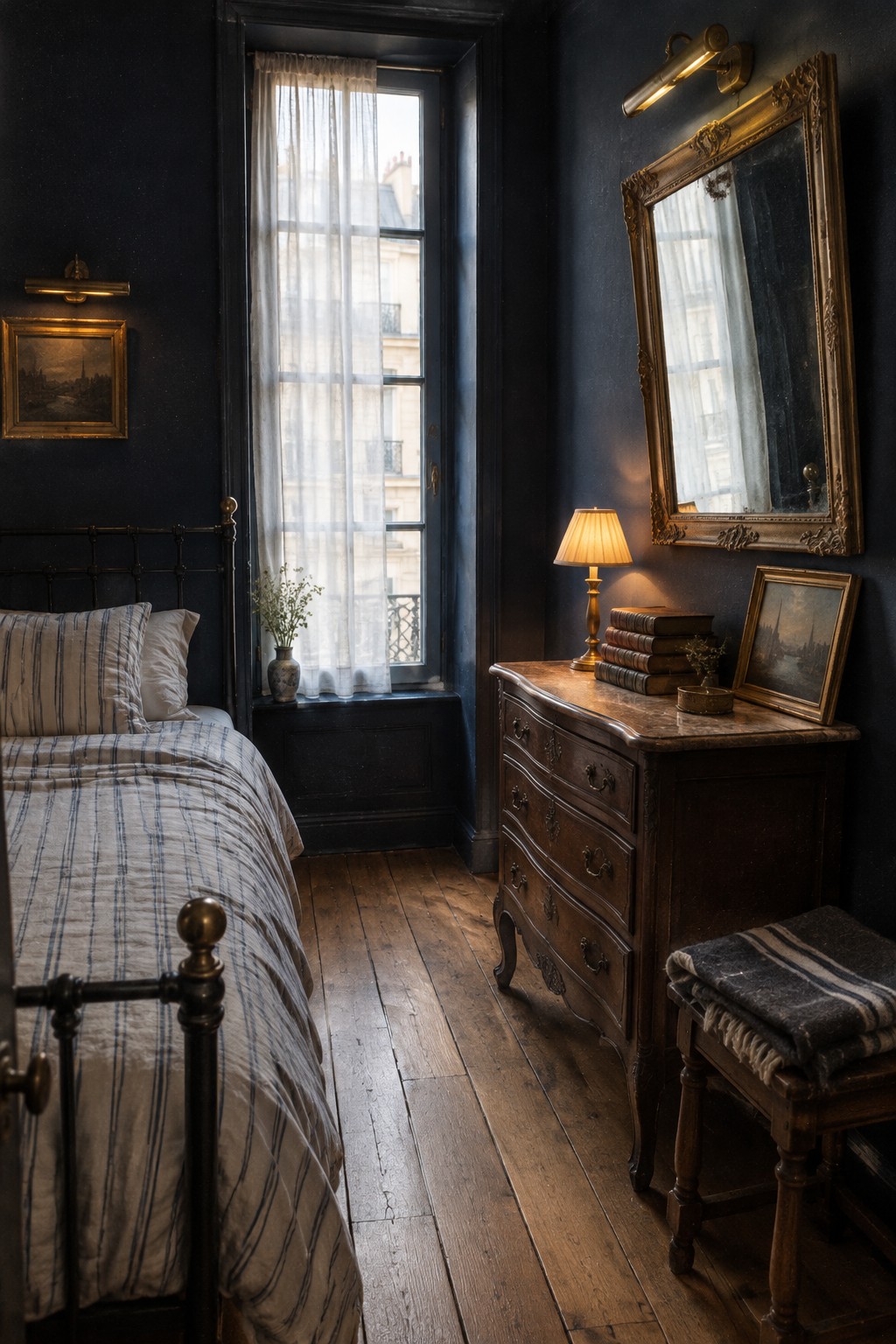
Dark walls can make a small bedroom feel cozy, while a tall window gives the room a useful break in the darker color. Here, the deep paint around the window makes the opening stand out without needing extra decoration.
This idea works especially well in narrow rooms with high windows. Keep the window treatment light and simple so daylight can still reach the room, and use a warm lamp nearby for the evening.
Use Textured Dark Walls In A Small Bedroom
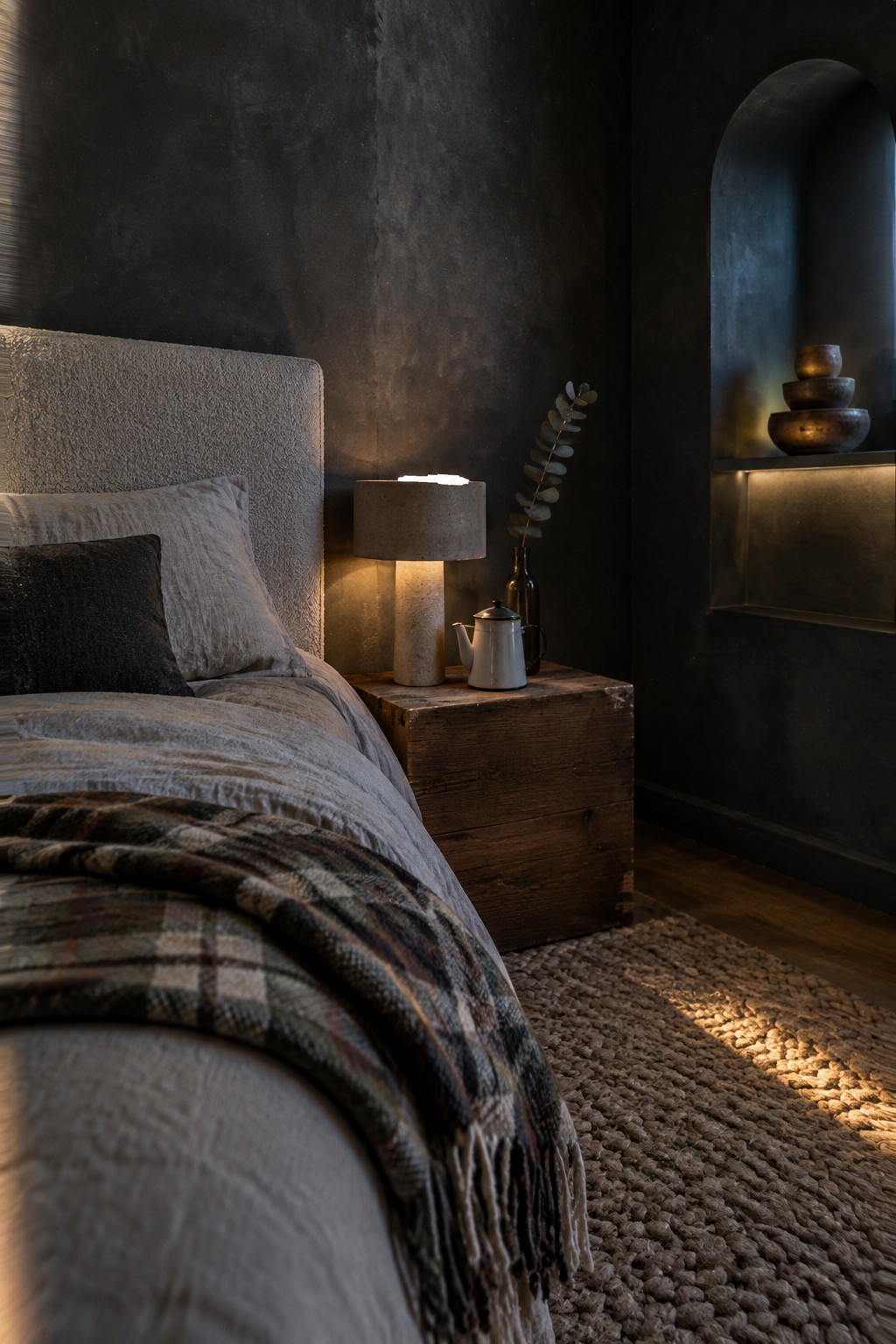
A textured wall can make a small bedroom feel finished without needing much decoration. Here, the dark plaster-like surface has variation that keeps it from looking like a plain block of color.
This approach works well when you want a moody room but prefer to keep the furniture simple. Try a matte finish with subtle texture, and use warm bedside lighting so the wall still feels comfortable after dark.
Use Patterned Bedding to Break Up Dark Walls
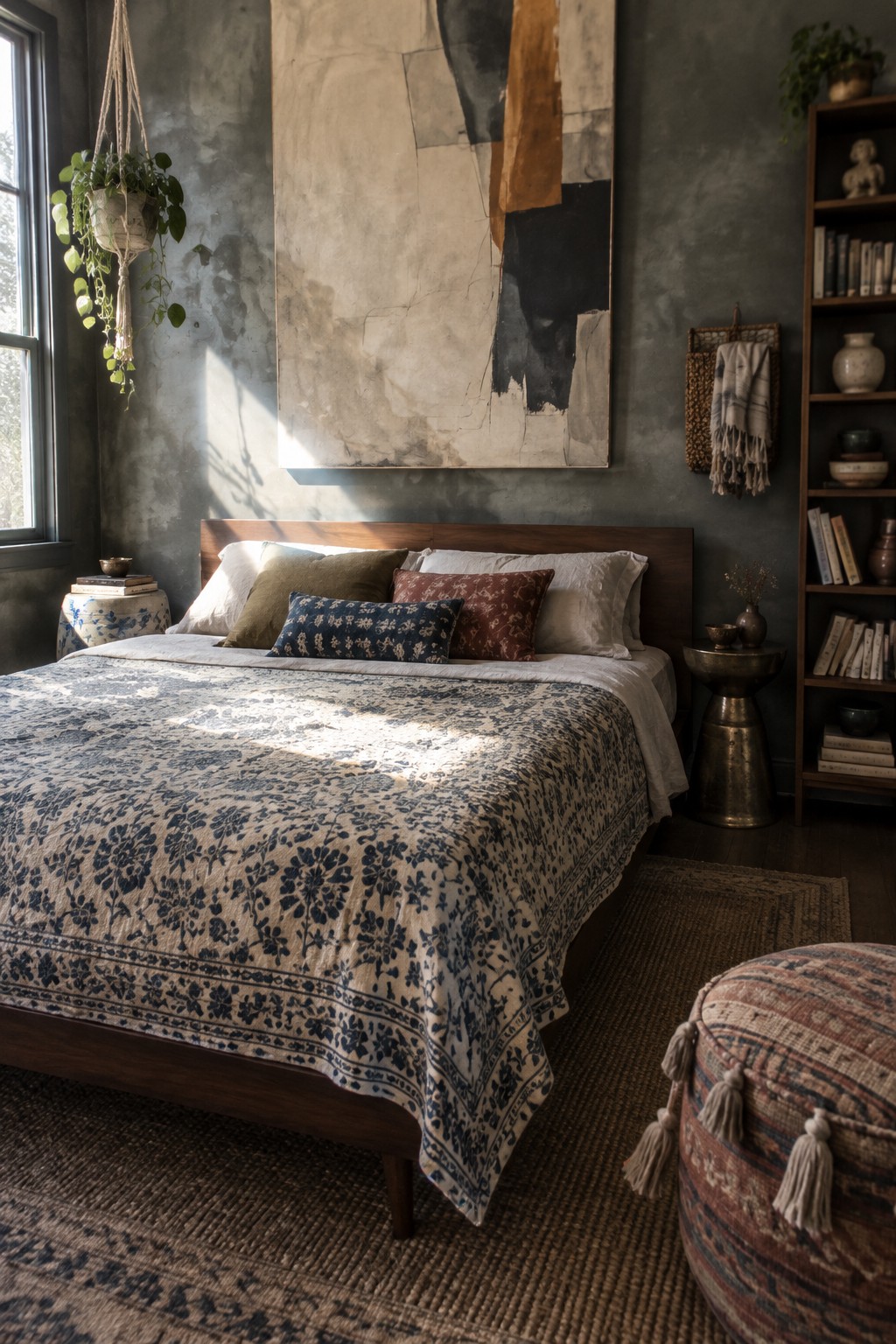
A patterned bedspread can bring a little lift to a small bedroom with dark walls. The blue-and-cream print here gives the bed a lighter focal point without asking the walls to do all the work.
Try a print that picks up one or two colors already in the room, and keep the sheets fairly simple so the pattern doesn’t get busy. This works especially well when there isn’t much floor space for extra color or decoration.
Use Dark Paneling To Make A Small Bedroom Cozy
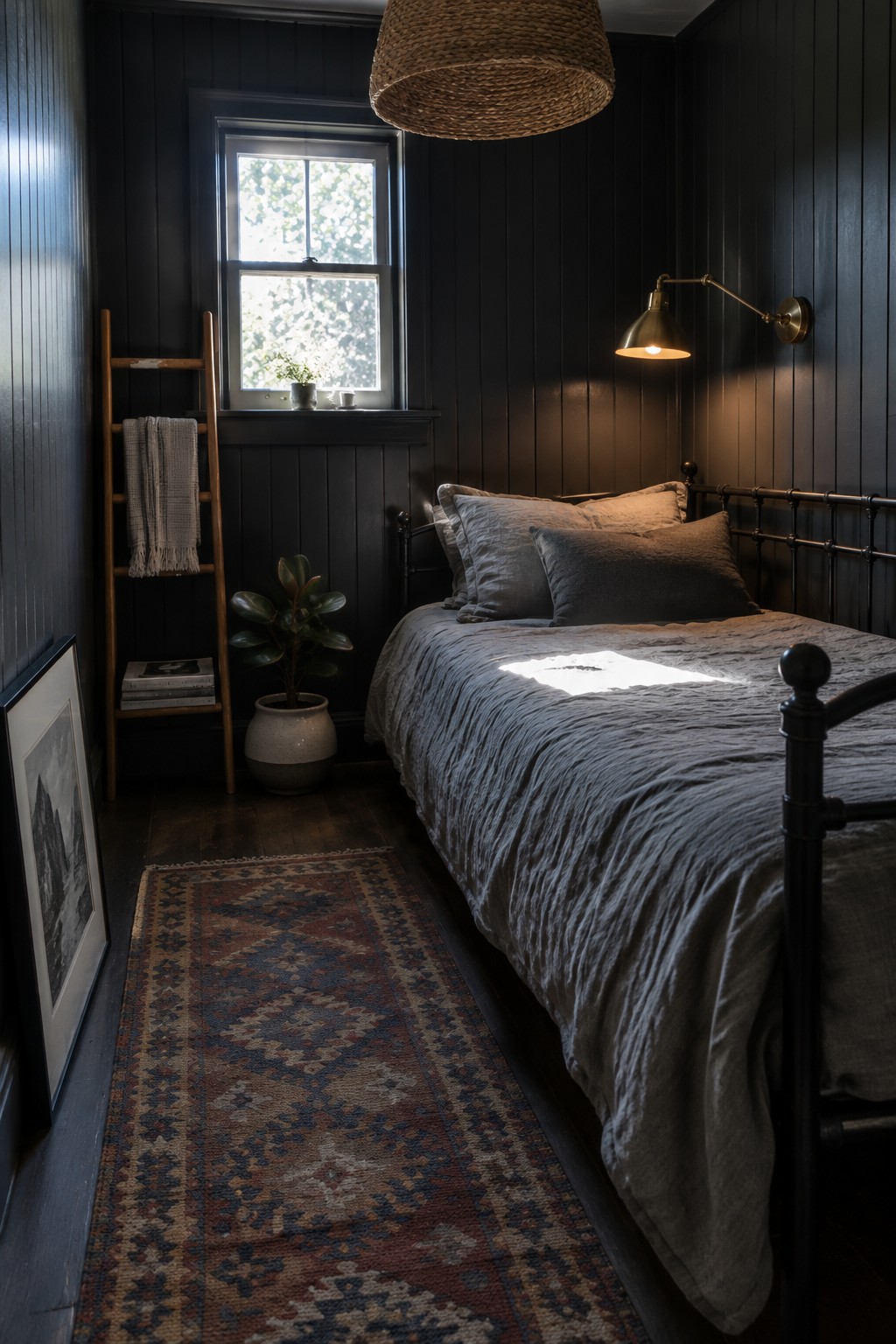
Dark vertical paneling gives a small bedroom a snug, settled feel without needing much decoration. Here, the charcoal walls are paired with simple gray bedding, so the room stays restful rather than busy.
This approach suits a compact bedroom, especially one with a window that brings in daylight. Keep the bedding fairly simple and add a warm lamp for evening use; too many dark patterns can make the walls feel crowded.
Frequently Asked Questions
Q: Will dark walls make a small bedroom feel even smaller?
A: They can make the room feel snug, but that isn’t always a bad thing. Keep the bedding or curtains a little lighter, and use a mirror or a warm bedside lamp to stop the corners from feeling too heavy.
Q: What colors work well with dark bedroom walls?
A: Cream, warm white, muted blush, and soft wood tones all sit nicely against deep walls. If you want a more layered look, add a small accent in rust or olive rather than bringing in several bright colors.
Q: How can I make a moody bedroom feel cozy instead of gloomy?
A: Use warm, layered lighting instead of relying on one bright ceiling light. A bedside lamp and a soft glow near a reading spot can make dark paint feel inviting after sunset.
Q: Do I need to paint every wall dark?
A: Not at all. Try a dark wall behind the bed and keep the others lighter if you want the mood without wrapping the whole room in color.
