

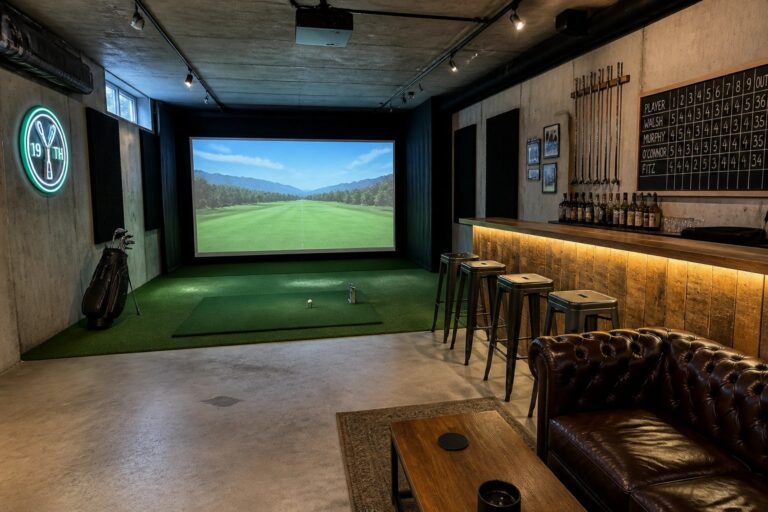
I have found that golf simulator rooms work best when the impact screen feels like part of the wall instead of an add on. The swing space and seating areas then need careful planning so movement stays comfortable. Layout changes everything in these rooms. Ideas that hide the projector and computer controls keep the space looking like a regular man cave on most days. Trying one or two of the simpler builds first can reveal what actually fits your own room size and habits.
Add A Bar Counter Next To The Simulator
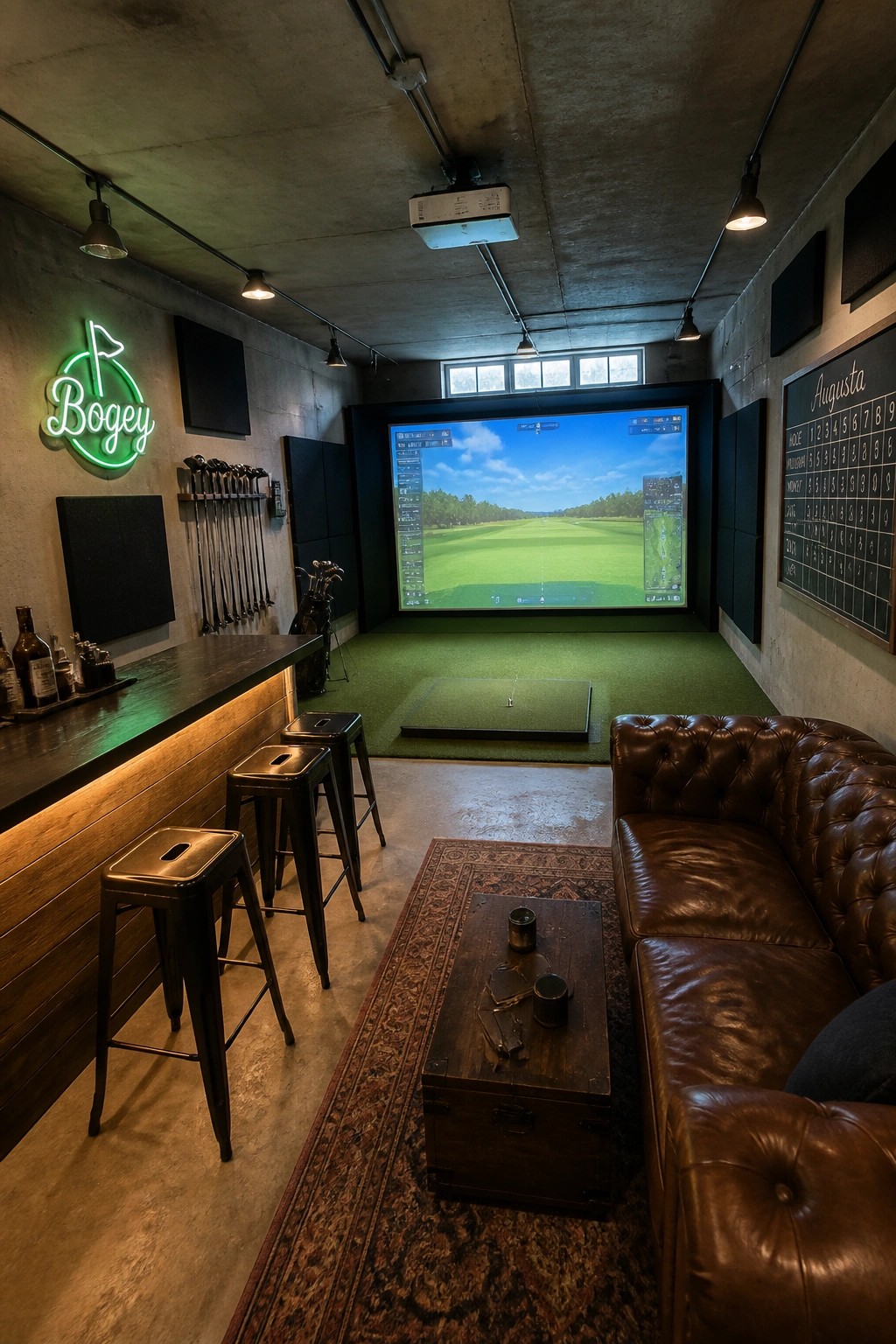
A bar counter with stools gives people a place to sit and relax without crowding the hitting area. It turns the simulator room into a spot where friends can take turns, grab a drink, and stay involved instead of drifting away between shots.
This setup works best in basement rooms or larger garages that have wall space along one side. Keep the counter height standard so stools fit comfortably and do not block views of the screen.
Add a Putting Surface Right in Front of the Screen
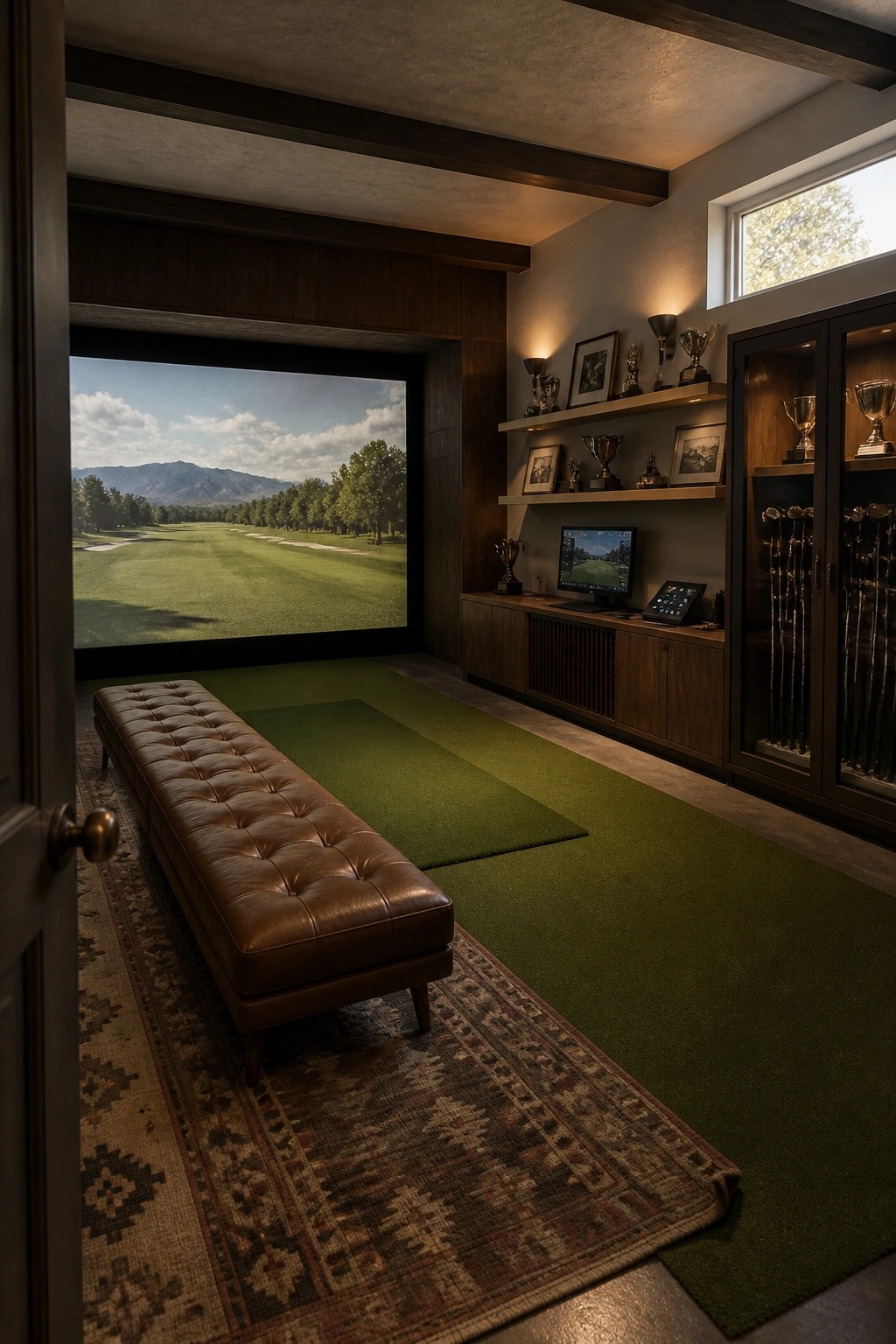
Many simulator rooms stop at the screen, but adding real turf for putting changes how the space gets used. It gives players a chance to practice short game shots without leaving the room or switching setups.
This works best when the turf section stays flat and open, with the bench kept to one side so nothing blocks the roll. It suits rooms that already have some depth in front of the impact screen and a simple storage wall for clubs and trophies nearby.
Add Natural Light With A Skylight
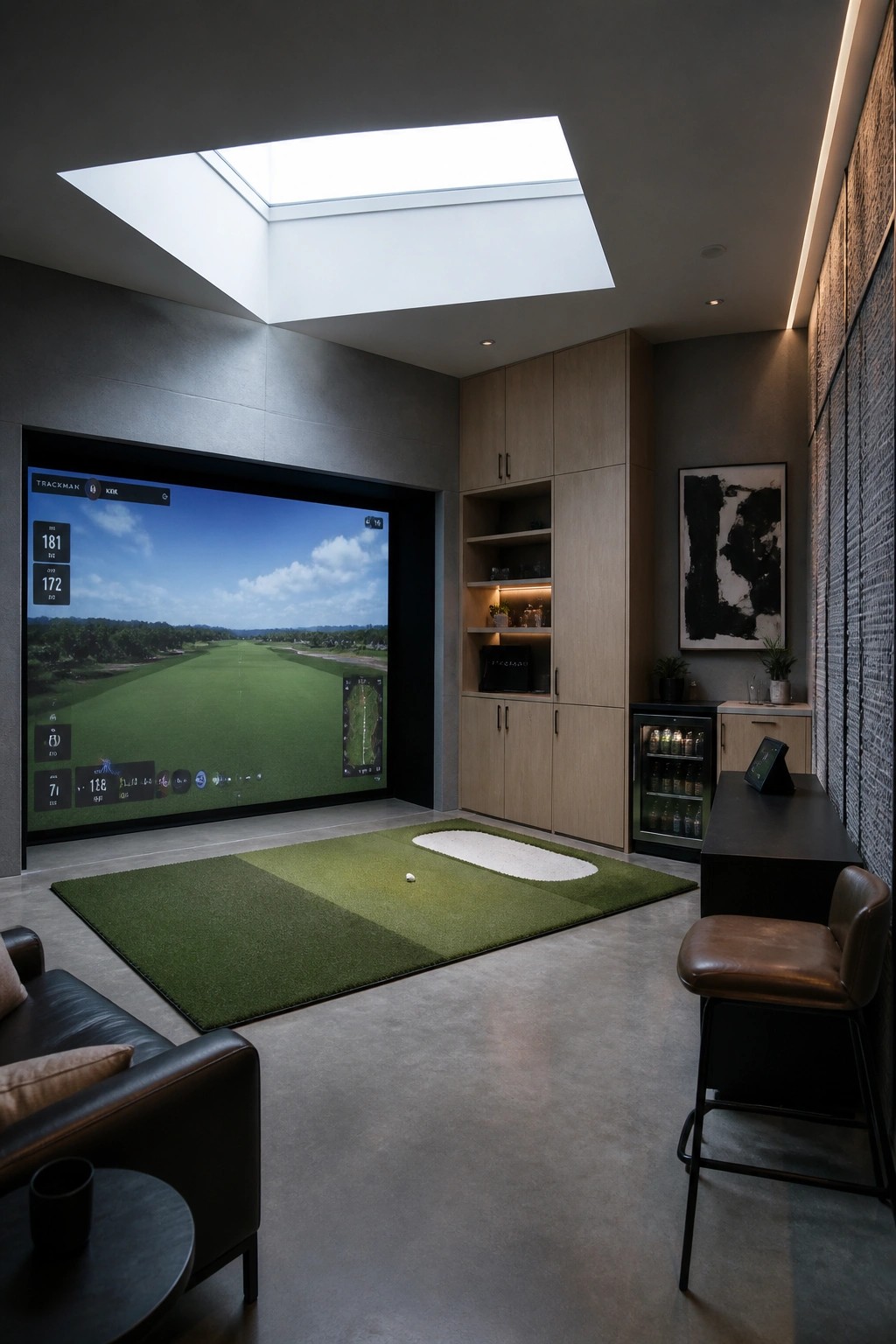
Many golf simulator rooms end up feeling closed off because they are often built in basements or windowless spaces. A skylight placed directly above the hitting area brings in real daylight and makes the room usable at any time without relying only on artificial lights.
This setup works best in rooms with decent ceiling height where the light can spread evenly across the turf and screen. It keeps the space from feeling like a cave while still letting you control brightness for practice sessions. Just check that the projector angle avoids direct glare on the screen during the brightest hours.
Install A Large Impact Screen In The Basement
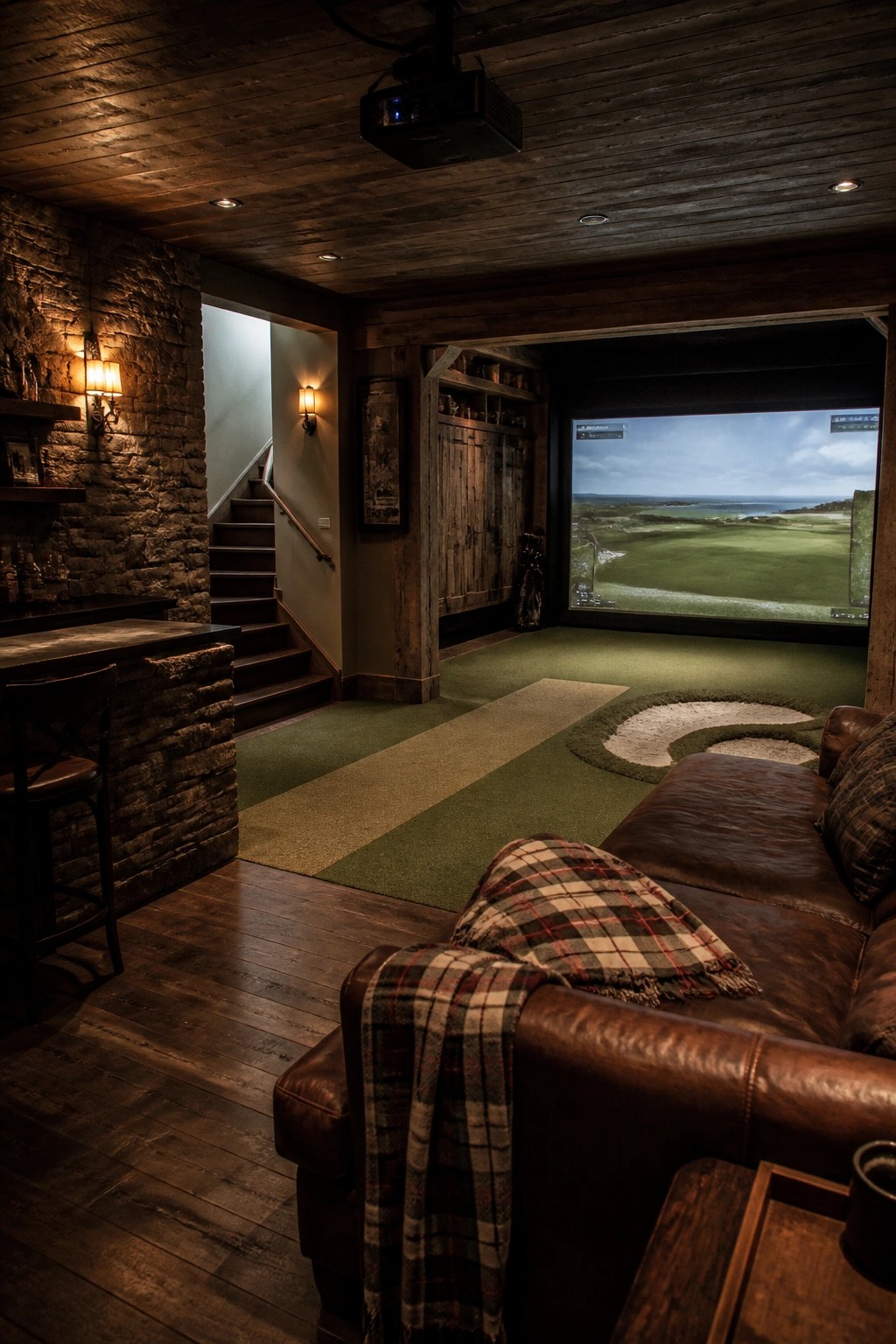
A basement works well for a golf simulator because it often has the depth and height needed for a full swing. Placing the impact screen on the main wall turns the space into a dedicated practice area while still leaving room for seating and a small bar.
This layout suits homes with a finished lower level that already has good lighting and access. Keep the flooring in turf and add a few comfortable chairs so the room stays usable for watching games or relaxing between sessions.
Extend A Putting Green Toward The Impact Screen
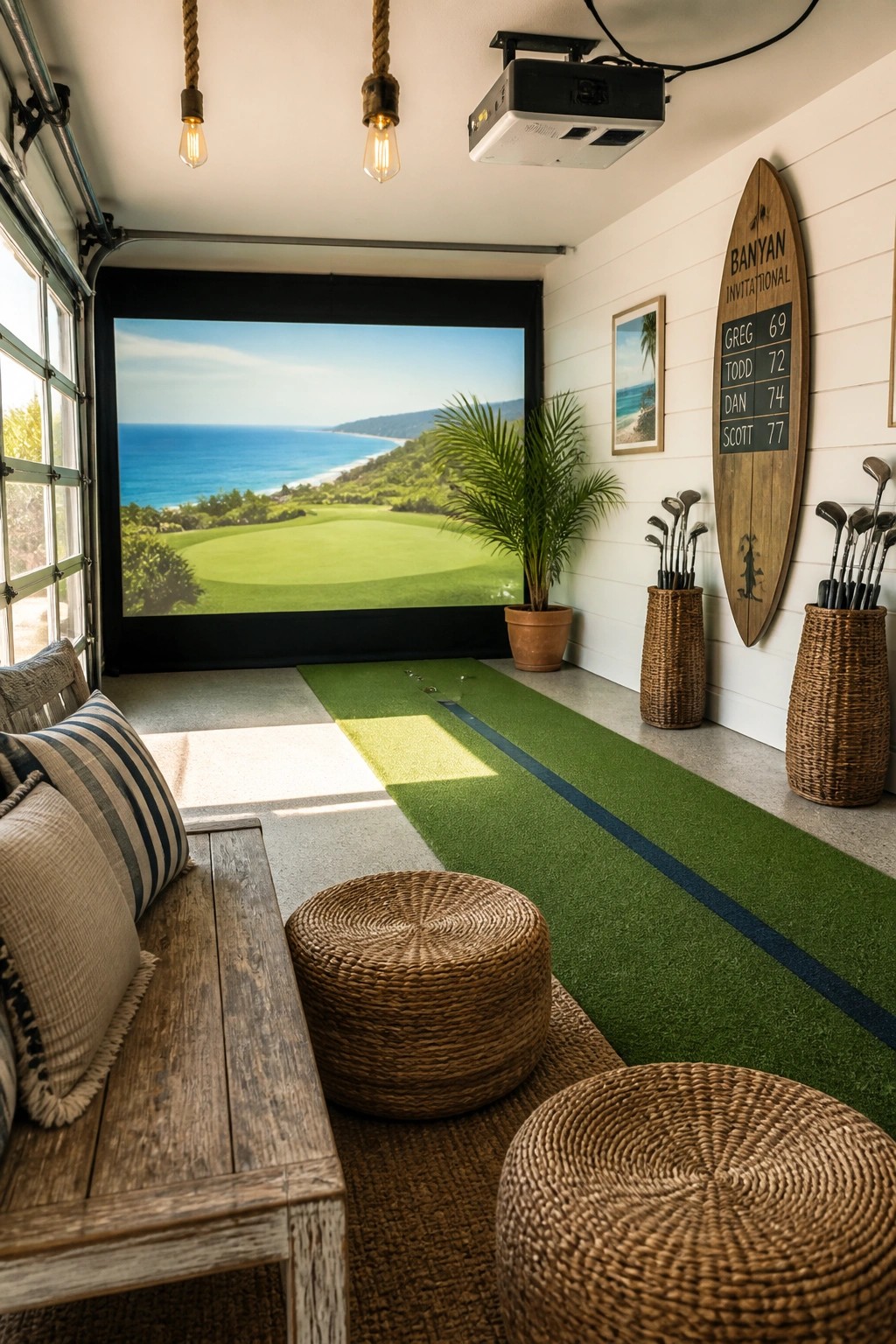
A strip of artificial turf that runs straight to the impact screen turns the simulator into a spot where putting practice feels more natural. It gives the room a clear purpose beyond just hitting into the screen and makes the whole setup feel more complete.
This idea works best in a garage or basement where you have the floor space. Keep the turf low and even so balls roll true, and leave enough room on the sides for people to move around without stepping off the surface.
Adding A Bar To Your Simulator Room
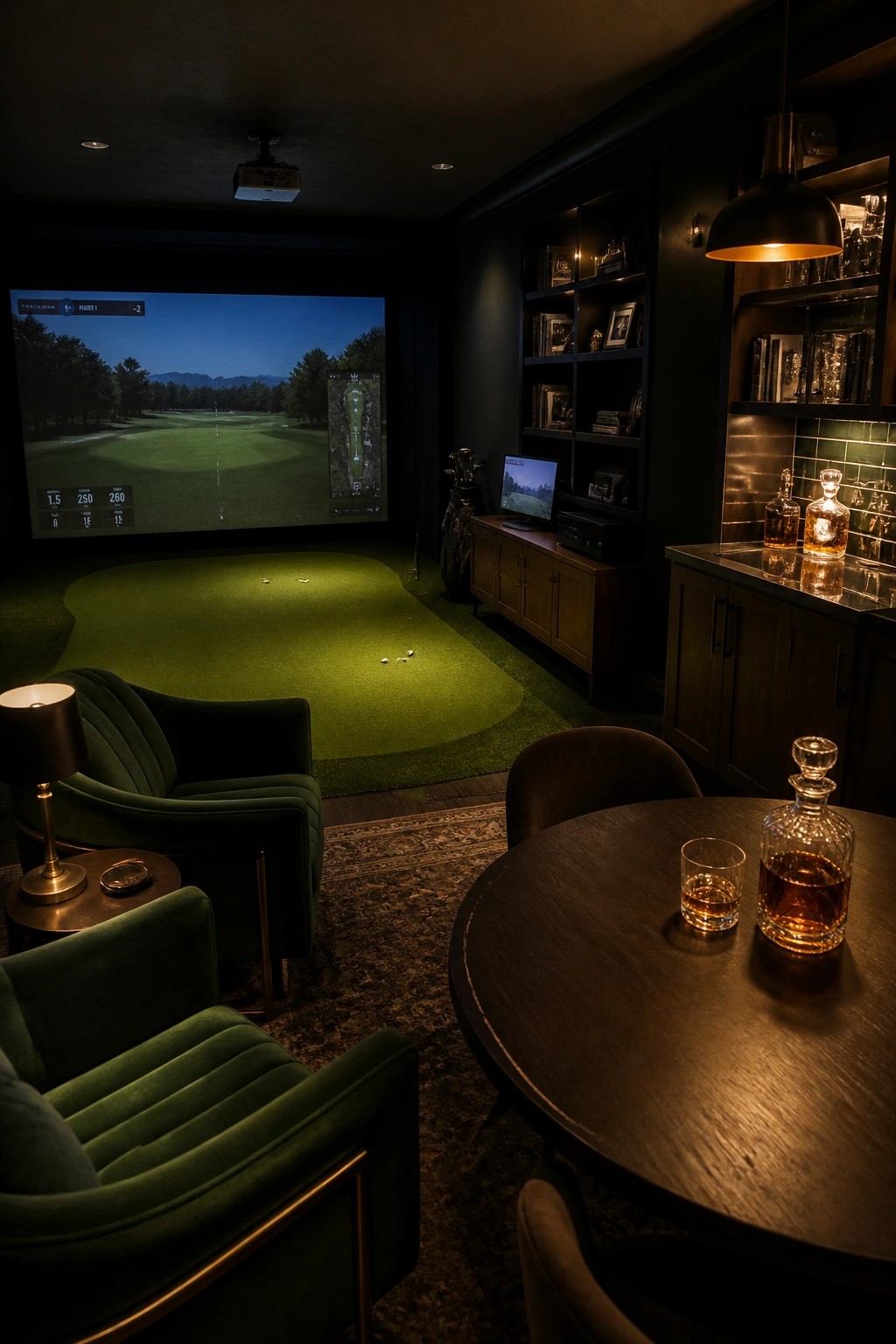
Many people set up a small bar right next to the simulator so the space works for both practice and hanging out with friends. It keeps drinks close without needing to leave the room, which makes longer sessions feel more relaxed and social.
This idea fits best in a finished basement or spare room where you already have the screen and some floor space. Keep the bar simple with a few bottles and glasses on a counter or cabinet, and place a couple of chairs nearby so people can sit and watch shots without getting in the way.
Add a Bar Counter Facing the Impact Screen
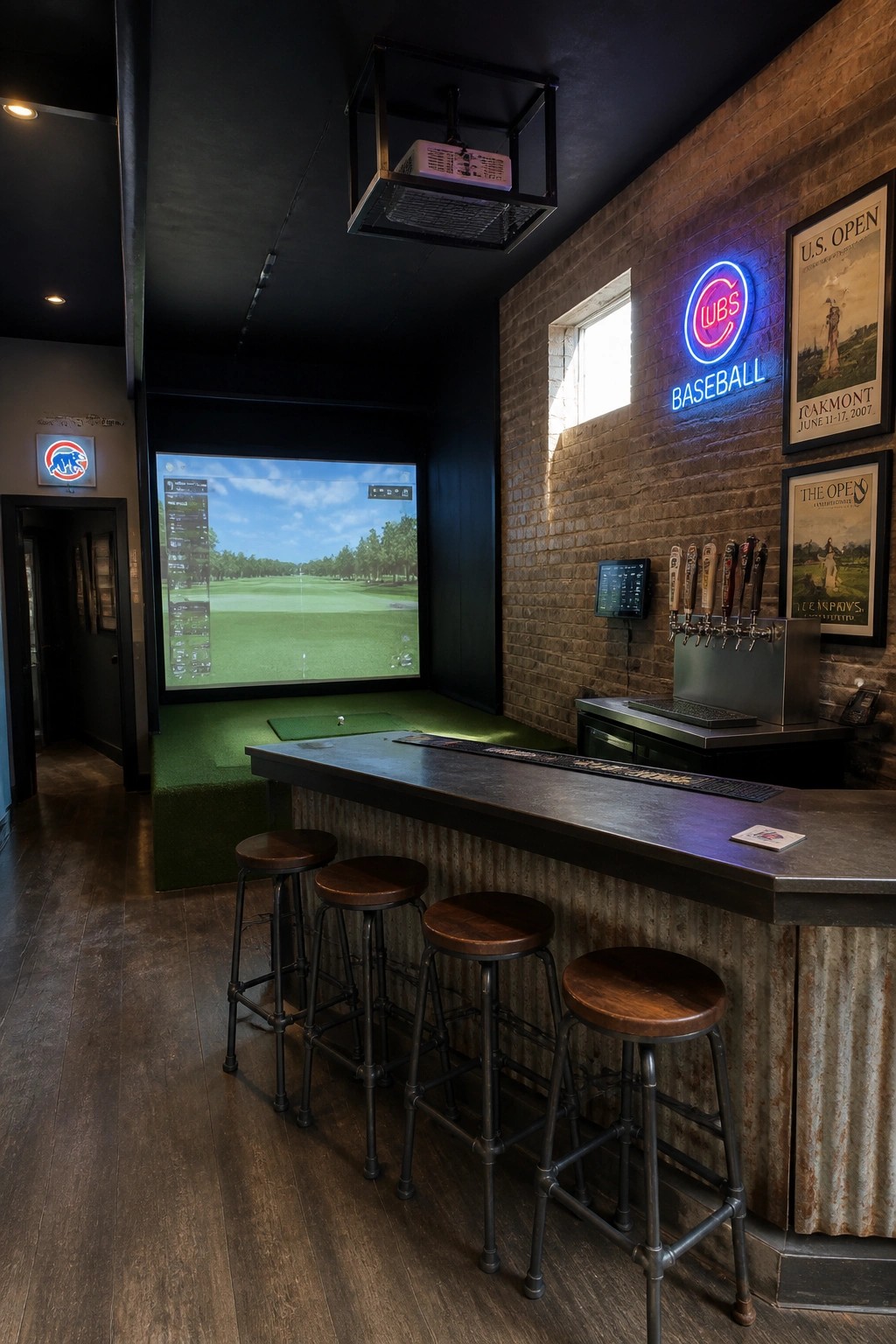
A bar counter set up right in front of the simulator screen turns the space into a spot where people can watch shots and grab a drink without moving to another area. The stools let friends sit comfortably for longer sessions instead of standing around or pulling up random chairs.
This layout works best in smaller rooms where you want to combine entertainment and seating in one zone. It suits finished basements or spare rooms that already have some bar elements, but keep the counter height low enough so it does not block the screen view from the hitting area.
Recessing the Impact Screen Into the Wall
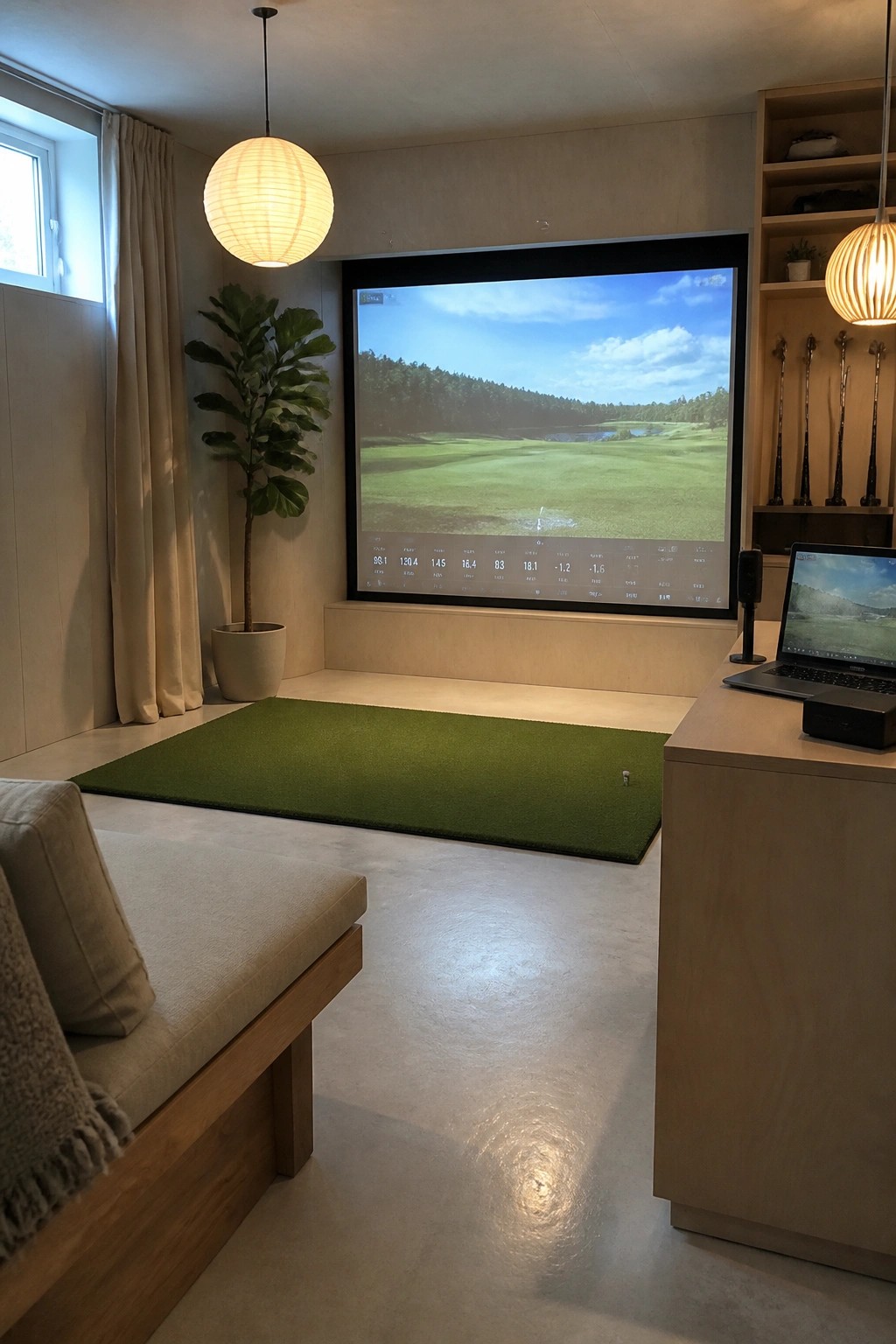
A recessed impact screen keeps the golf setup from taking over the whole room. The screen sits back into the wall so the surrounding space still reads as a regular living area rather than a dedicated simulator bay. This approach works especially well in smaller rooms where you want the equipment visible but not dominant.
Place the turf mat directly in front of the recessed opening and keep nearby furniture simple and low. The look suits homes that already have built-in cabinetry or alcoves, and it avoids the need for a separate dark room. Just make sure the depth of the recess matches your screen size so the projector can sit at the right distance without extra framing.
Extend the Putting Green Into the Living Area
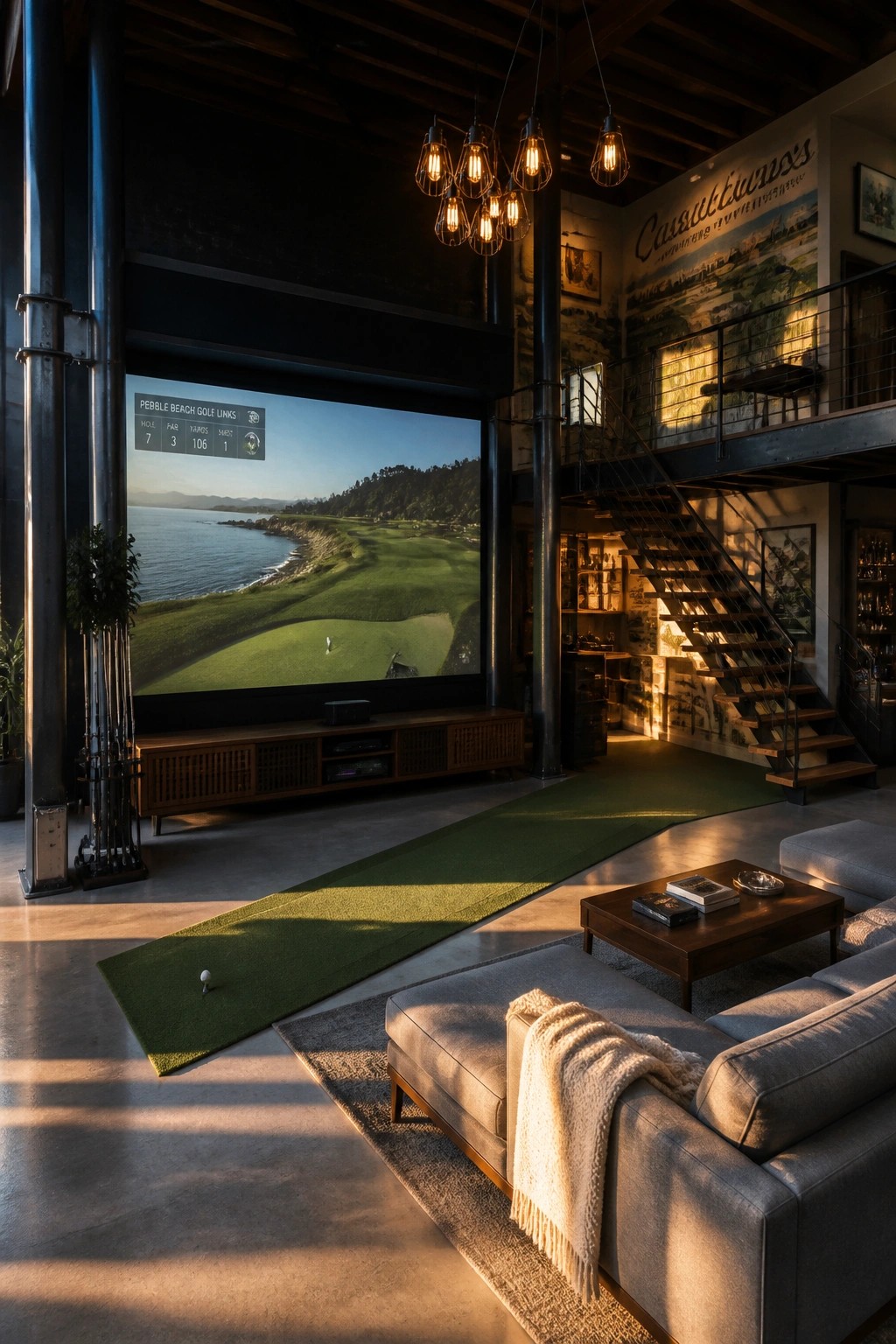
One of the simplest ways to make a golf simulator feel like part of the room instead of an add-on is to run the turf straight out from the screen. The short stretch of green gives you real putting distance and keeps the space from feeling like it was split into two separate zones. It also makes the whole setup easier to use on a regular basis since you do not have to step over different floor surfaces every time you want to hit a few balls.
This approach works best in larger rooms where the screen can sit on one wall without crowding the seating. Keep the turf narrow enough that it does not take over the floor plan, and make sure the edges are finished cleanly so the rest of the room still feels comfortable for everyday use.
Place Comfortable Chairs Facing the Simulator Screen
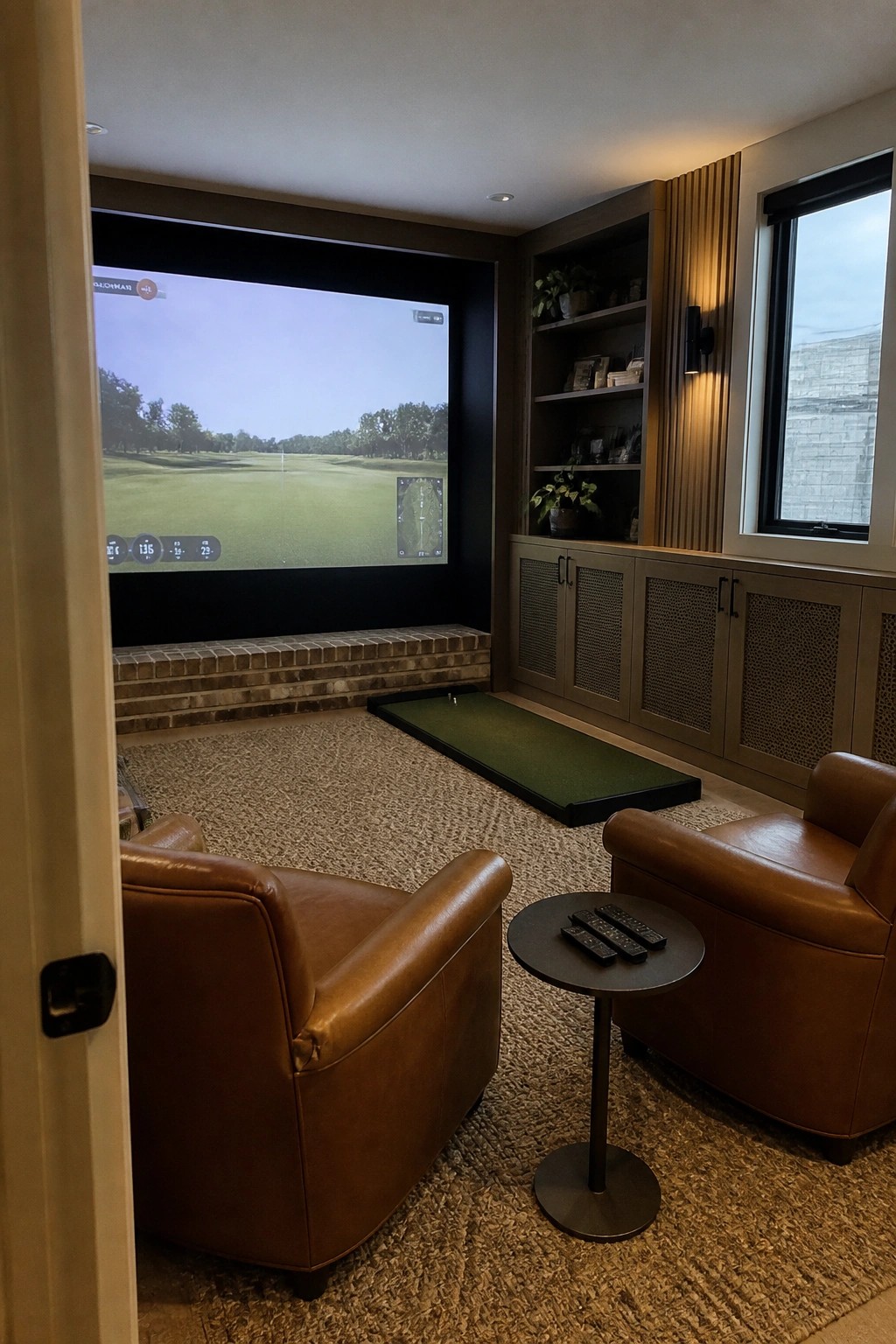
Many golf simulator rooms end up feeling like pure practice spaces, but adding a pair of chairs right in front of the screen changes that quickly. It gives you a spot to sit between shots, watch a round, or just relax without standing on the mat the whole time.
This setup works best in finished basements or spare rooms where the simulator shares space with everyday use. Keep the chairs low and angled slightly so they do not get in the way during swings, and use a small table between them for remotes and drinks.
Add a Small Putting Surface
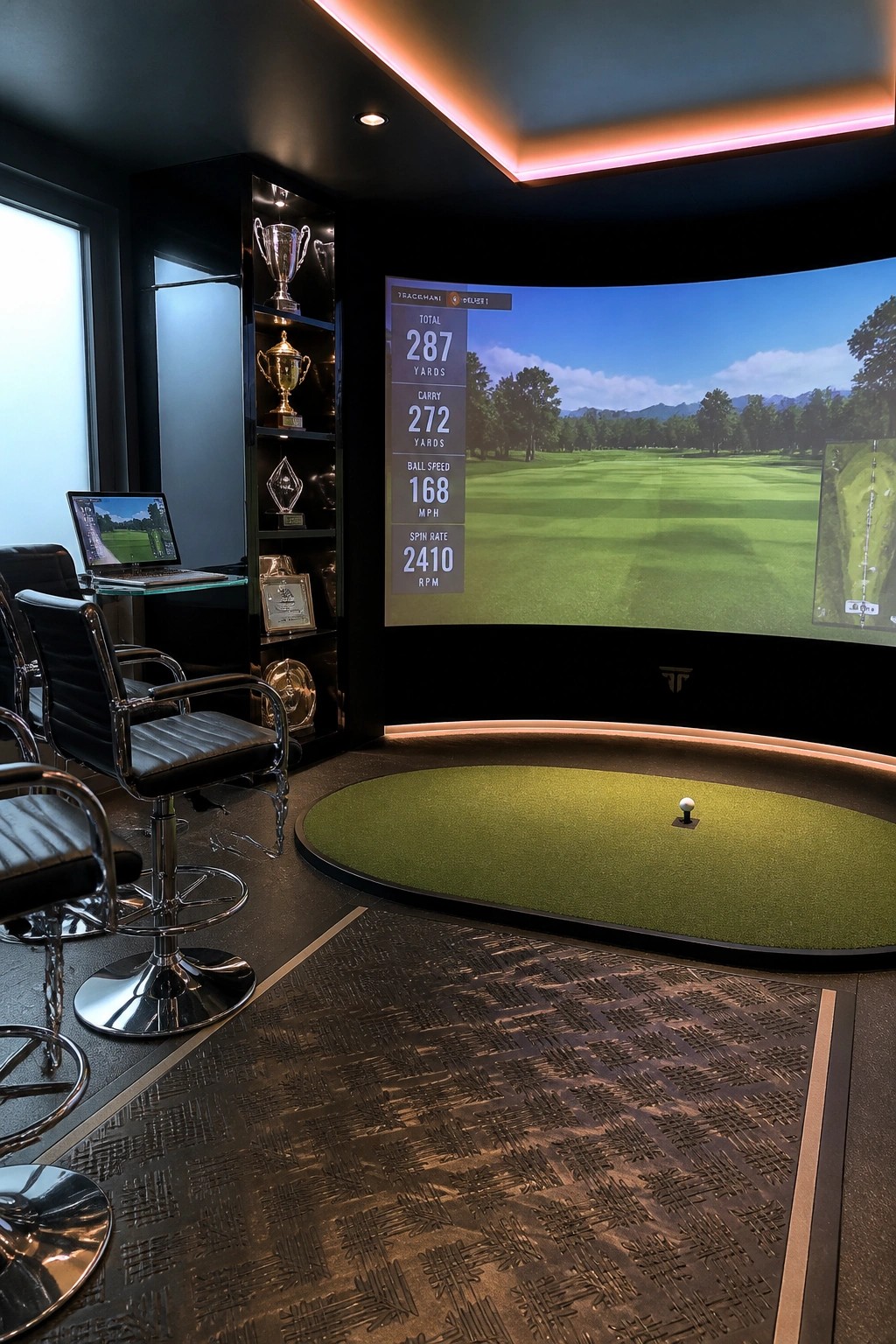
Placing a turf area right in front of the impact screen gives the simulator room a more complete feel. It turns the space into somewhere you can actually practice putting instead of just hitting full shots into the screen.
This works best in rooms that are not huge. Keep the turf section compact so the rest of the floor stays open for seating and moving around. It also helps if you want the room to feel like a real practice spot rather than just a screen on the wall.
Extend Turf Across The Whole Floor
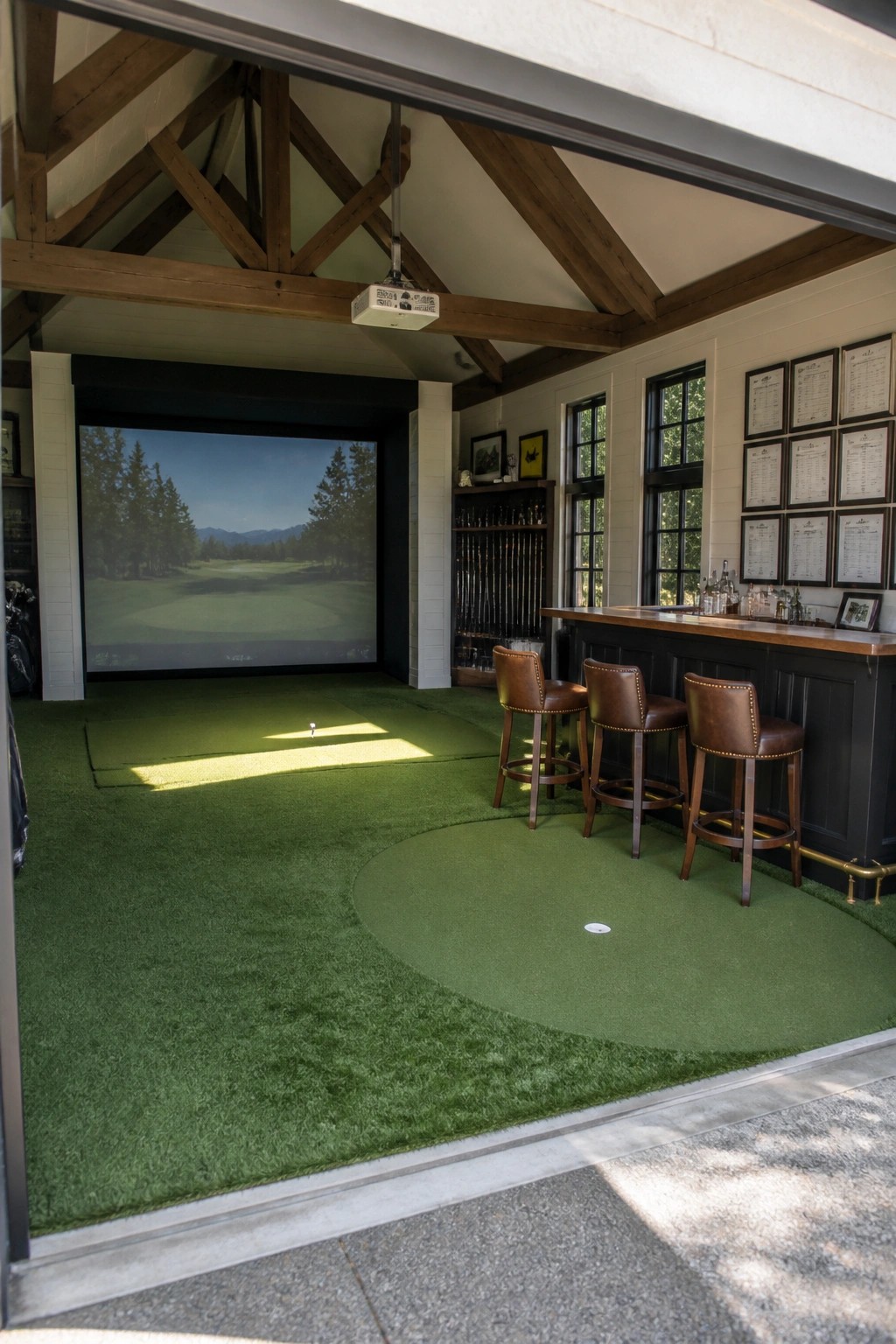
Running artificial turf from wall to wall turns the simulator into the main feature instead of something set off to the side. The consistent surface makes the room feel like one connected space rather than a screen stuck in a regular room.
This works best in garages or finished basements where you already have the height for a projector. Keep the turf thick enough for putting and choose a color that stays easy to clean around the bar and stools.
Run A Turf Putting Lane Down The Room
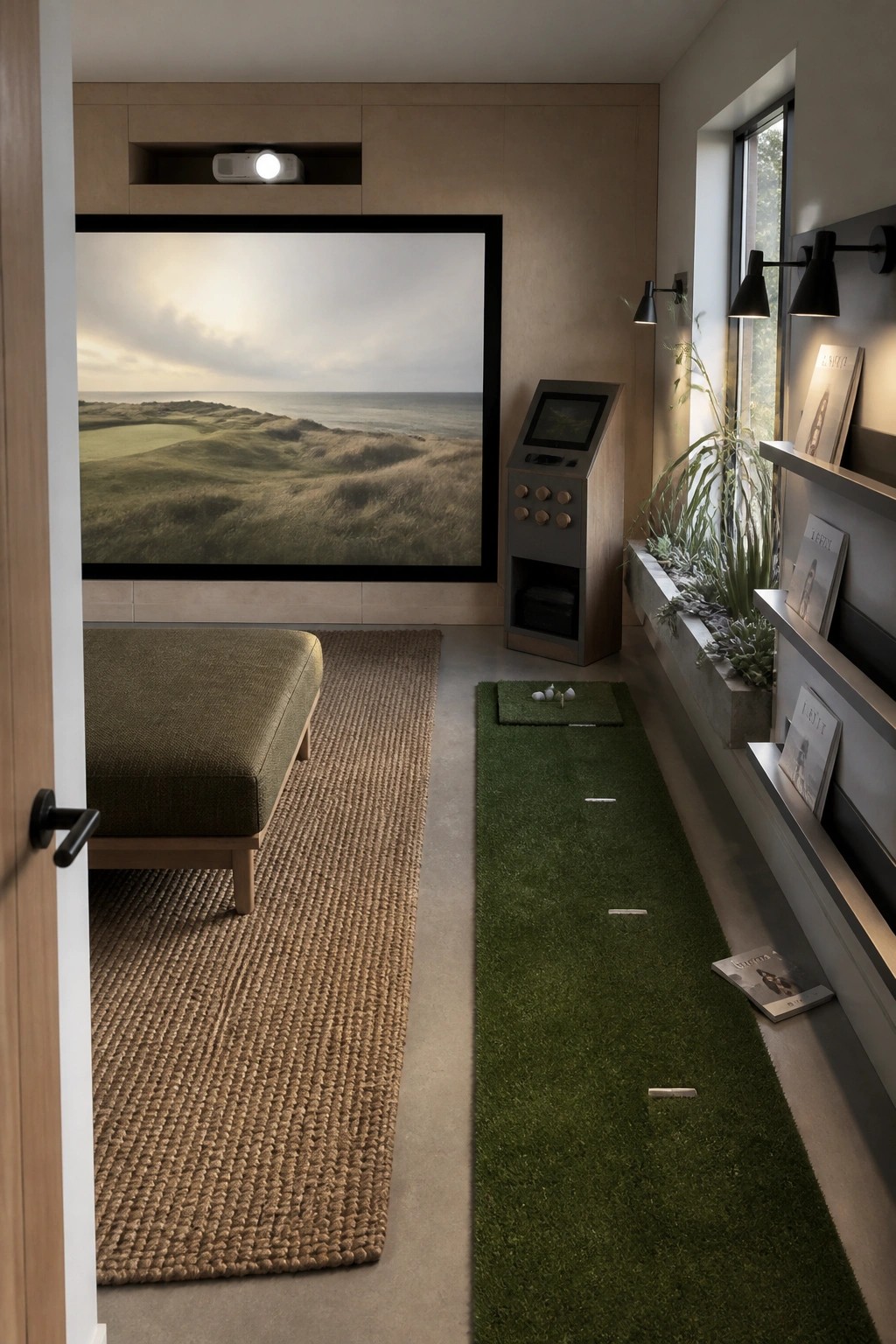
A long strip of artificial turf gives the simulator room a clear purpose beyond just watching shots on screen. It turns part of the floor into an active putting area so you can practice real strokes without needing a separate space or moving furniture around every time.
This setup works best in rooms that have some length but not a lot of extra width. Keep the turf narrow and straight so it does not take over the whole floor, and leave the rest of the room open for seating or storage.
Frame the Impact Screen with an Arch
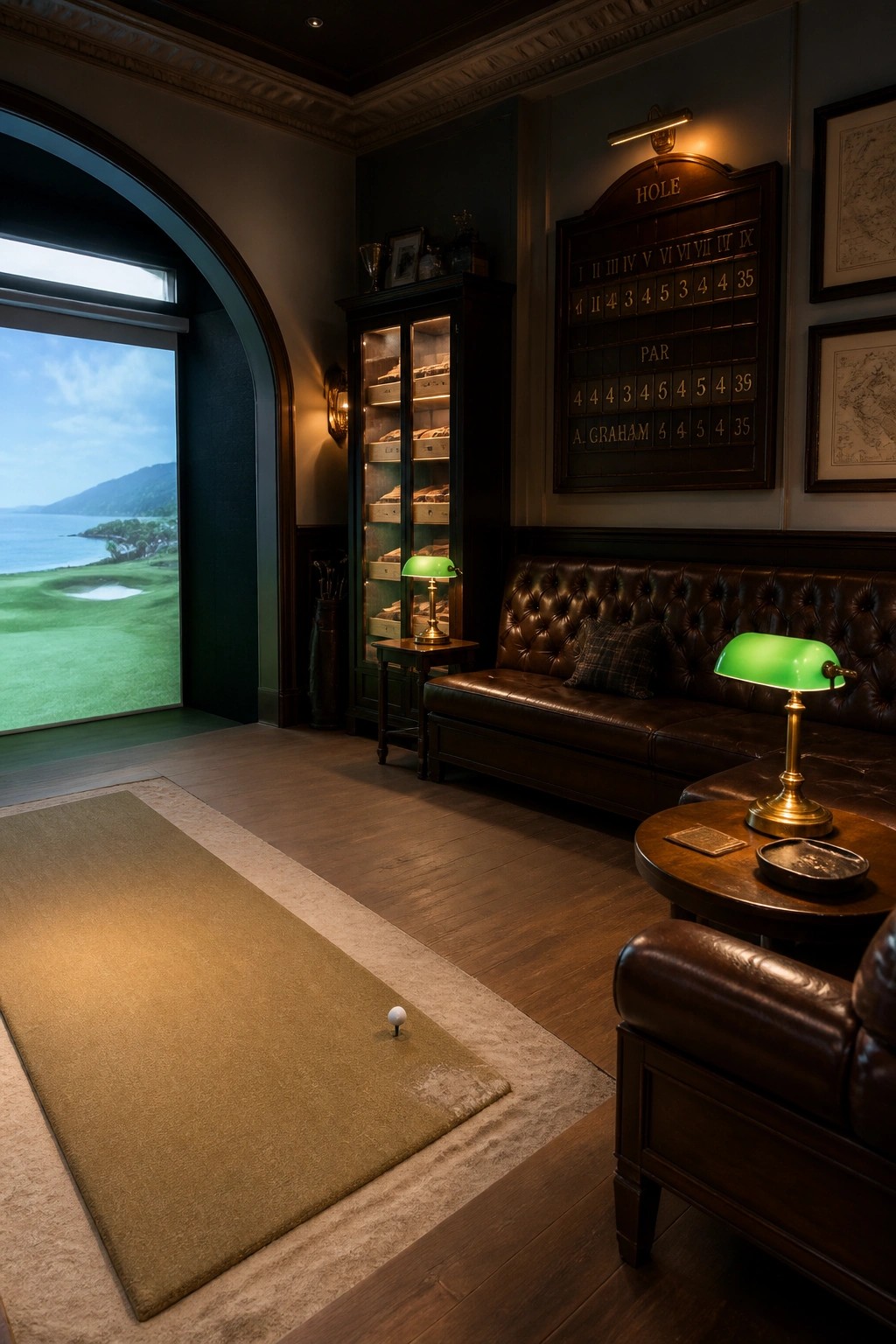
An arched opening around an impact screen helps the whole setup feel like part of the original room instead of a later addition. The depth of the arch creates a natural recess that softens the size of the screen and keeps the focus on the space rather than the equipment.
This works best in rooms with traditional trim or darker wall colors. Match the arch finish to nearby woodwork and keep the surrounding area clear so the putting surface stays the main practical feature.
Add A Bar Counter Next To The Simulator
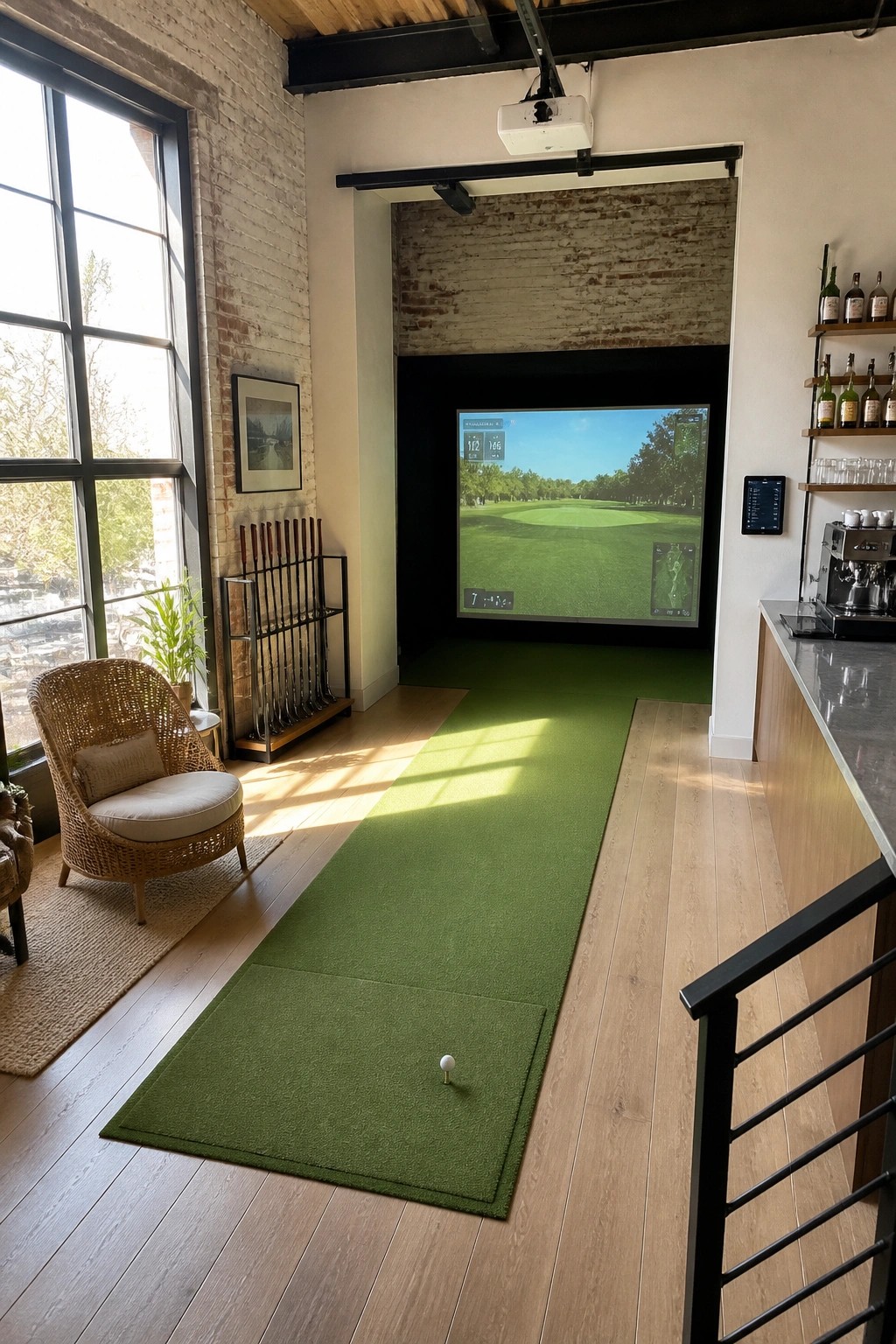
A bar counter along one wall turns a golf simulator room into a place where people actually want to spend time. It gives guests a spot to set drinks or snacks without crowding the hitting area, and it makes the space feel more like a lounge than a practice bay. The setup works especially well when the counter runs parallel to the turf so people can watch shots while they chat.
This idea fits homes that already have some extra room beside the screen and want the simulator to double as an entertaining spot. Keep the counter simple with a few shelves above for bottles and glasses, and make sure it does not block the projector or the swing zone. It is an easy upgrade if you already plan to run power and plumbing into the room.
Create A Putting Area In Front Of The Screen
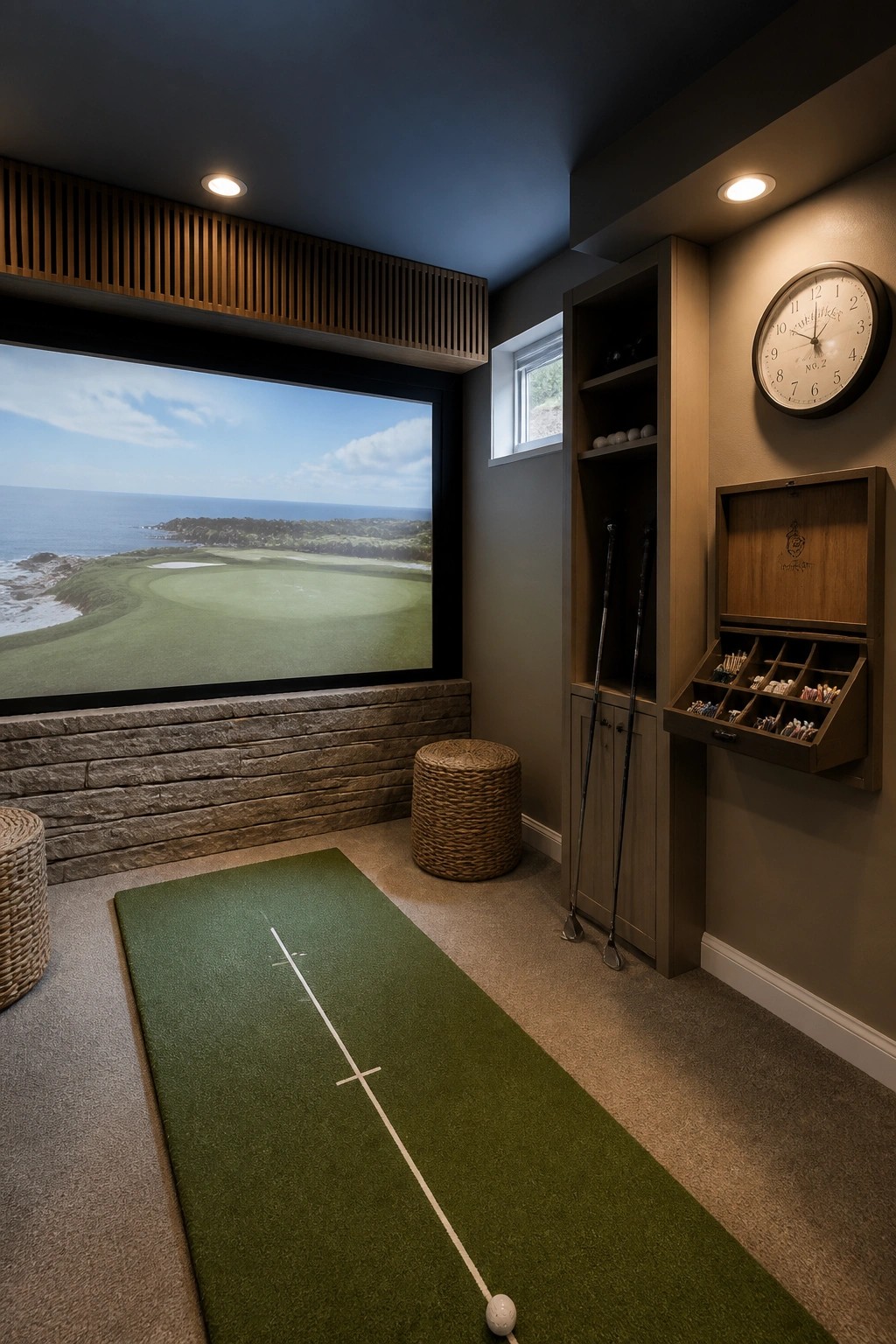
Many simulator rooms stop at the screen and miss the chance to add real practice value. Laying down a putting green right in front turns the space into something you can actually use for short game work instead of just full swings.
This works best in rooms that have at least ten or twelve feet of depth from the screen. Keep the floor clear of furniture and use low storage along the side walls so nothing blocks the mat. The stone base under the screen in this setup helps protect the wall while still leaving the floor open for the green.
Adding a Bar Next to the Putting Green
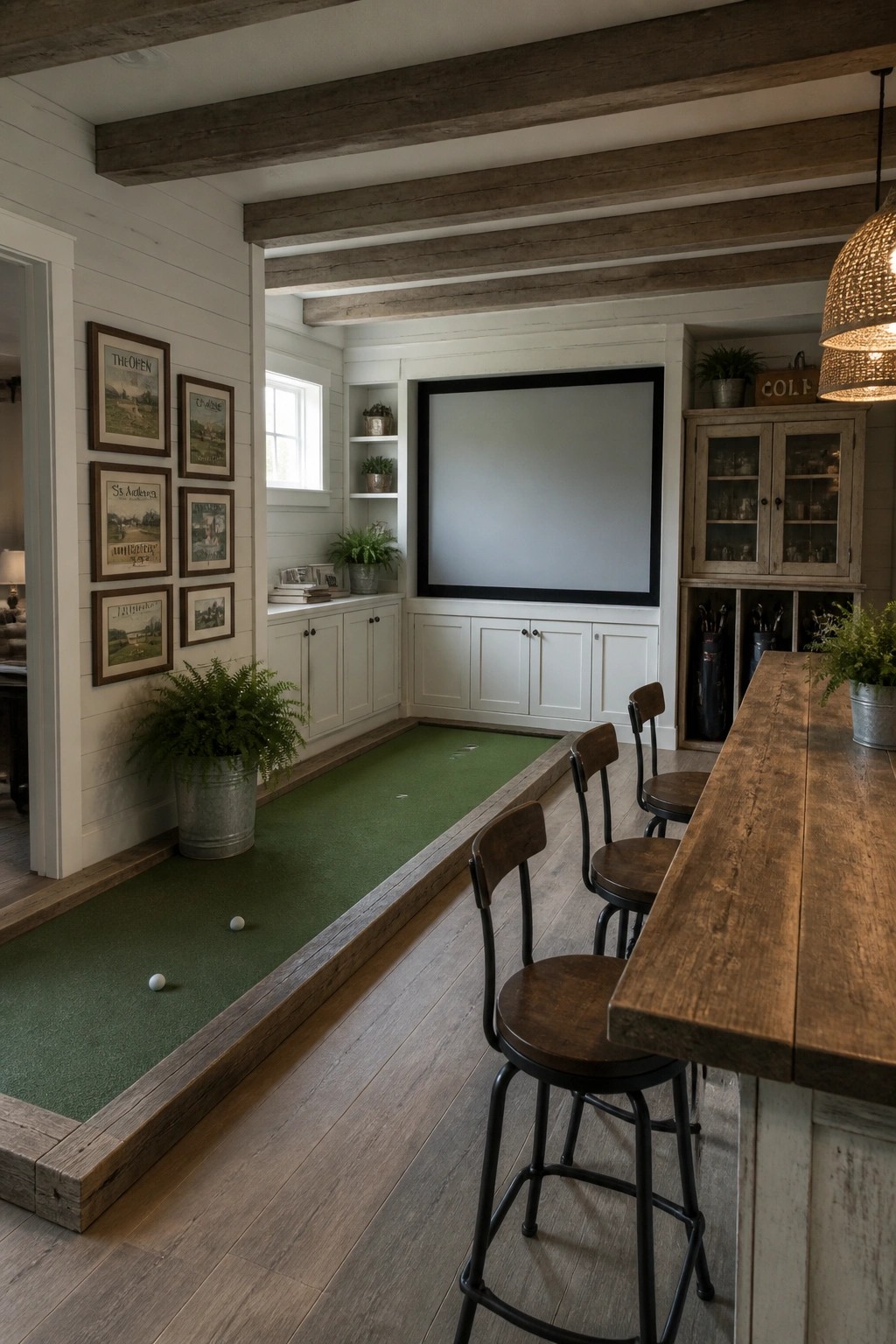
One idea that works well here is placing a long bar counter right beside the putting green. It turns the simulator space into a spot where people can practice and still stay part of the group.
This layout suits larger basements or bonus rooms that can handle both the turf length and the seating. Keep the counter simple and make sure the stools do not block the swing area.
Include Seating in Your Golf Simulator Room
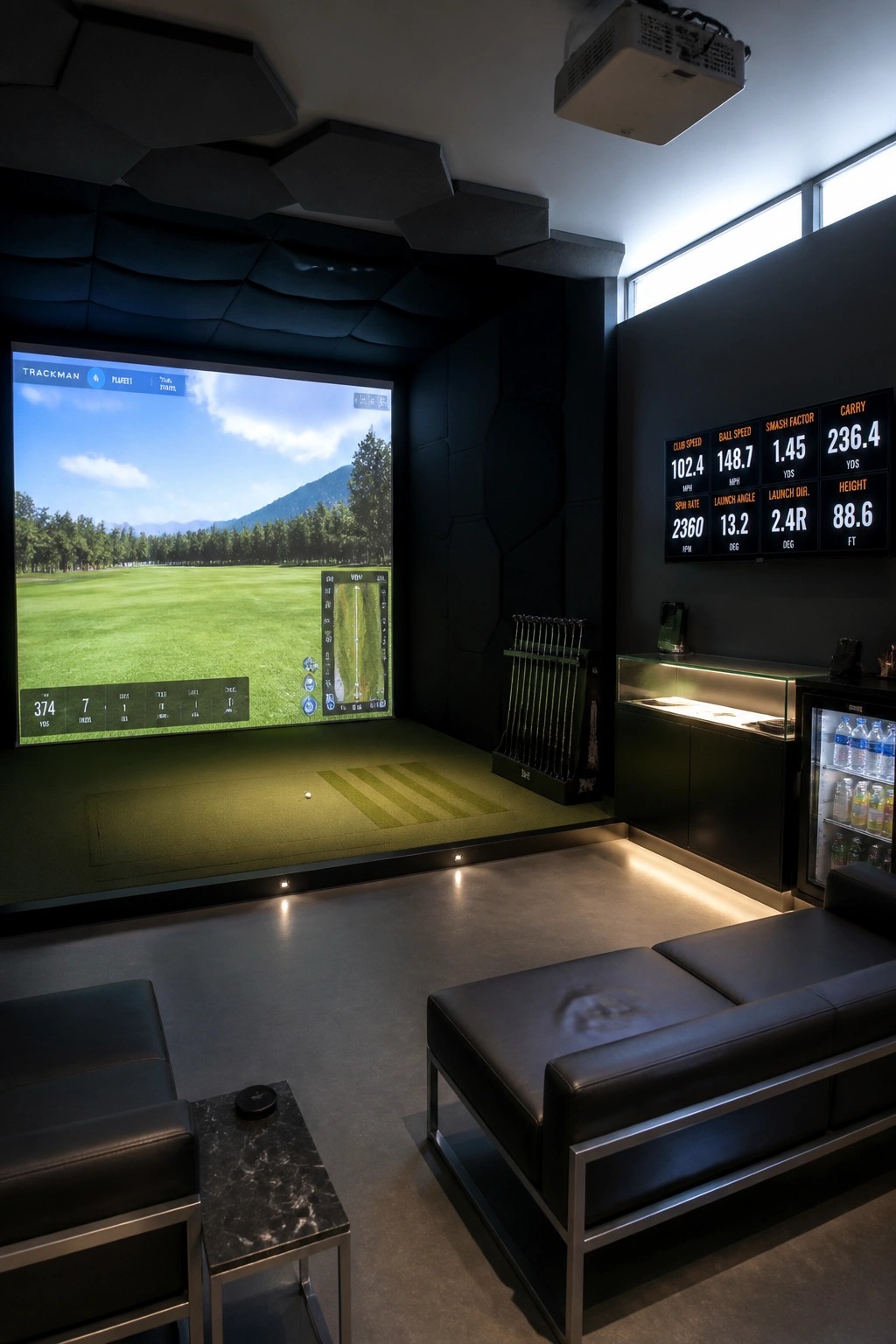
One simple way to make a golf simulator room feel more usable is to add a few comfortable seats. A sofa or pair of ottomans gives people a place to sit while they wait for their turn or review the numbers on screen.
This approach works best in a basement or spare room where the space already has some extra square footage. It suits homes that want the simulator to double as a casual hangout spot rather than a pure practice area.
Add Seating To Your Golf Simulator Setup
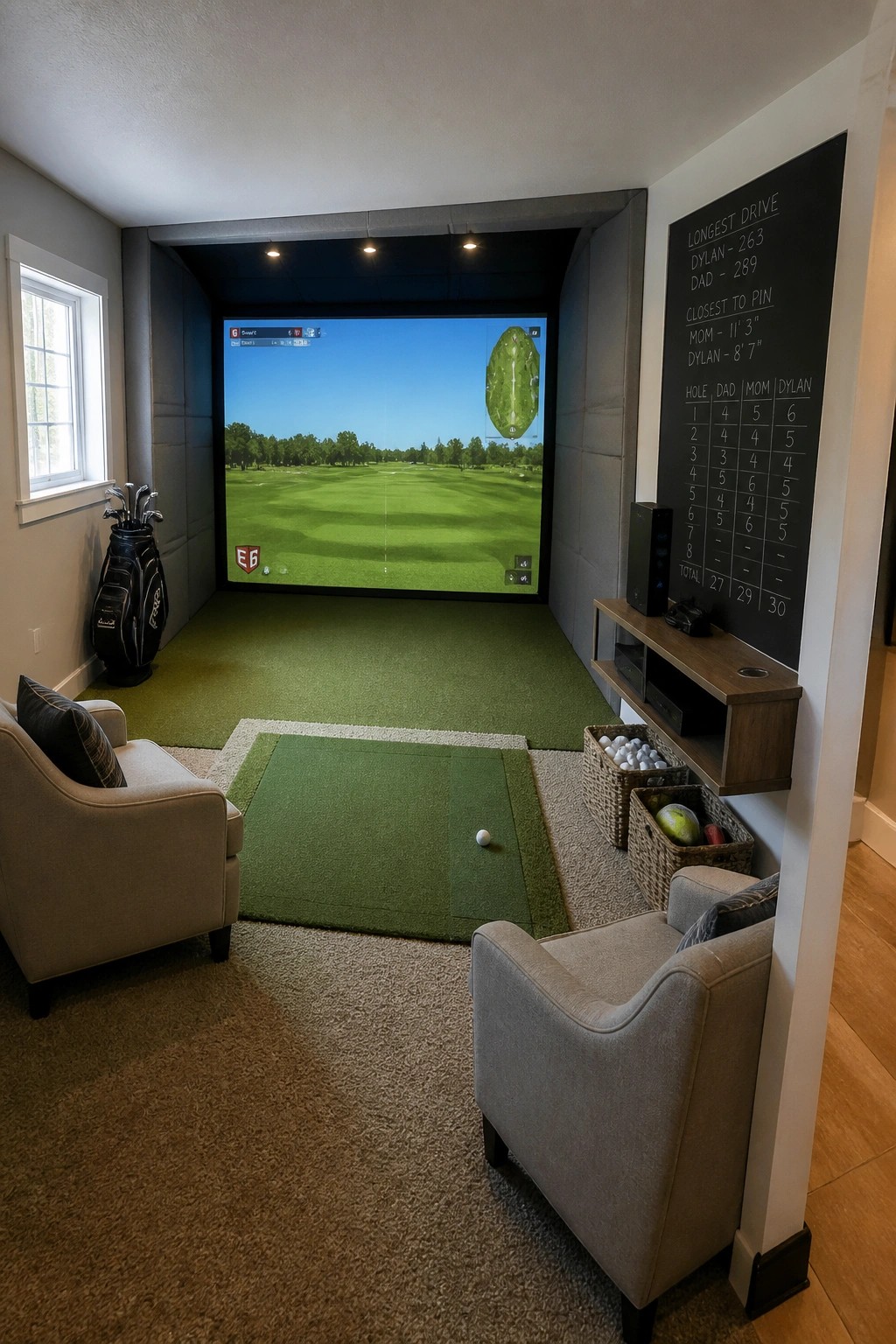
Many people build a golf simulator around the screen and turf but end up standing the whole time. Adding a pair of comfortable chairs facing the screen gives you a place to rest, watch a round, or wait your turn without leaving the room.
This setup works best in a dedicated basement or spare room where you have enough depth. Keep the chairs to the sides so they stay clear of swings, and choose fabrics that can handle indoor use without looking out of place.
Add Heaters To Your Golf Simulator Garage
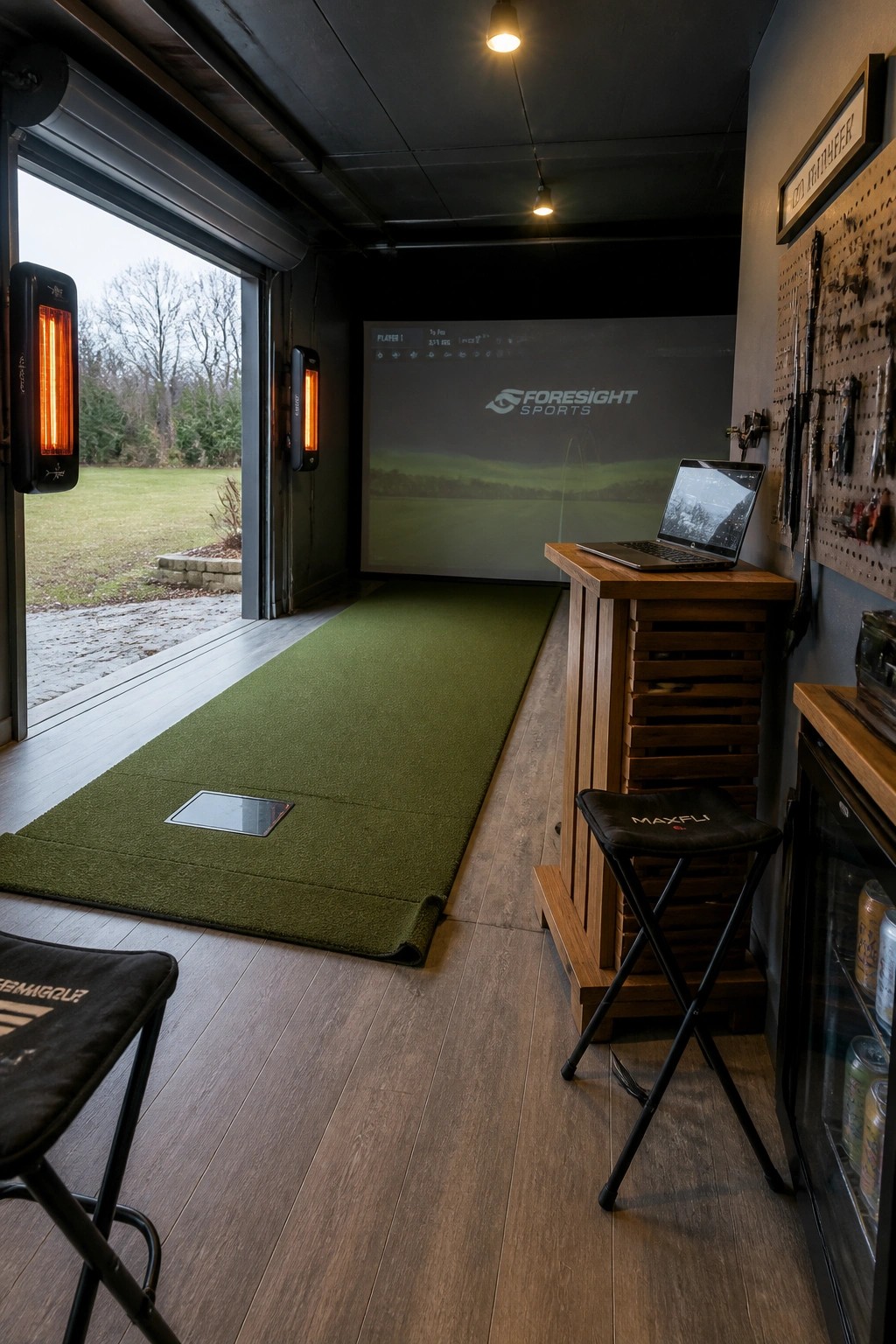
Many people set up golf simulators in garages, and one detail that makes a real difference is adding wall mounted heaters near the opening. They keep the space warm without taking up floor room or getting in the way of your swing.
This works best in homes where the garage can stay open during use. The heaters let you keep practicing even on cooler days while still getting fresh air and natural light from outside. Just place them high enough on the sides so they stay clear of your backswing.
Frequently Asked Questions
Q: How much space should I leave around the impact screen for a full swing?
A: Give yourself at least four feet of clearance on each side. This keeps your club from clipping walls or furniture during those big drives.
Q: Will the screen hold up if I hit it every day?
A: Pick a heavy-duty vinyl or polyester material made for repeated impacts. It lasts years longer than cheap fabric when you play often.
Q: Can I add seating without blocking the projector?
A: Place a couple of bar stools off to one side. They stay out of the light path and let friends watch without crowding the hitting area.
