

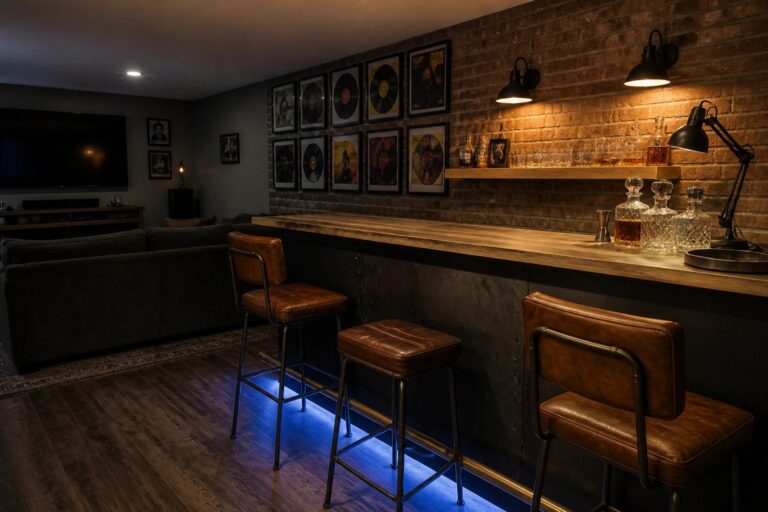
I have noticed that lighting in a man cave often decides whether the room feels like a place to unwind or just another dimly lit corner that never quite works.
When the overhead lights stay too bright or too flat, the whole space ends up looking unfinished no matter how much furniture is in it.
Lighting choices often make or break the mood.
Over time I have found that mixing wall sconces with low LED strips lets me adjust the feel without needing to redo the whole room.
Trying one or two of these setups in person usually shows which ones fit the actual layout better than any plan on paper.
Layered Lighting Around A Home Bar
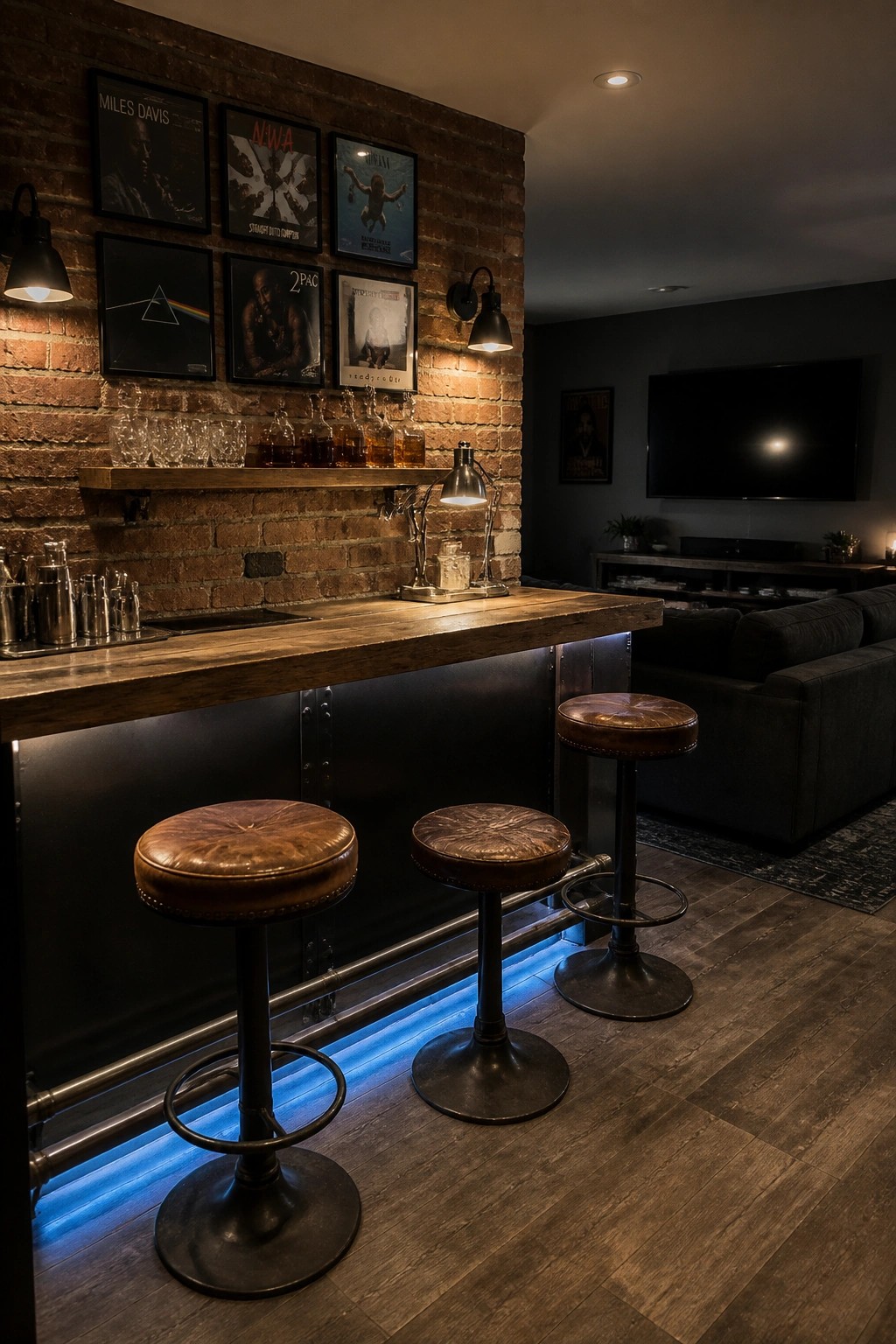
Many basements and spare rooms end up with a bar that feels a little dark once the main lights are off. A simple mix of lighting changes that. Wall scones on the brick give a steady glow across the surface, a task lamp on the counter helps with pouring, and a thin LED strip tucked under the front edge adds a low blue line that keeps the whole area from going flat.
This setup works best in smaller spaces where one overhead light just is not enough. Use black or dark metal fixtures so they blend with the wood and brick. Place the sconces at eye level or slightly above, run the LED strip on a dimmer, and keep one adjustable lamp on the bar itself. That way the space stays usable without feeling like a spotlight is aimed at the stools.
Dark Walls With Sconces And LED Strips
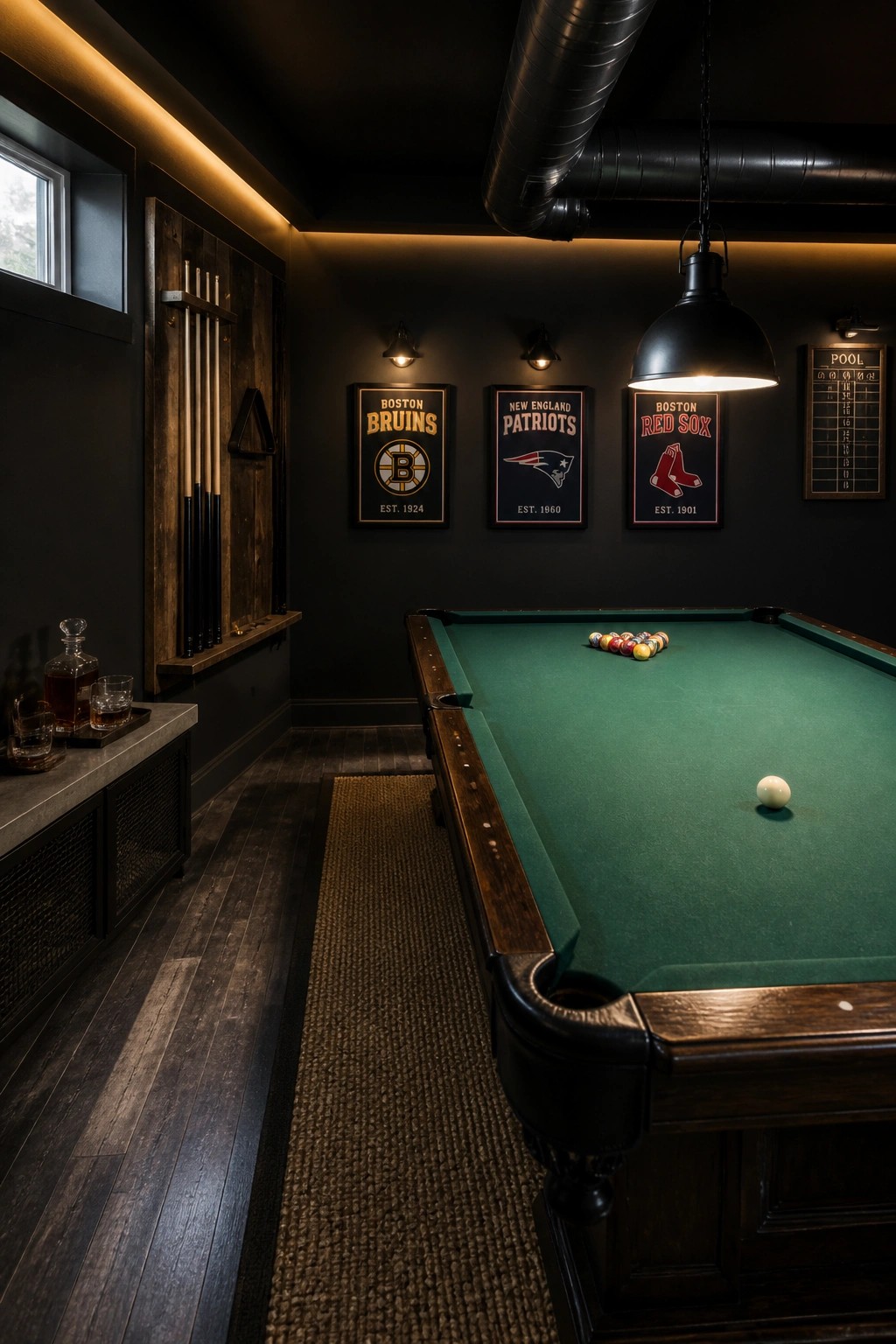
Many man caves feel more pulled together when the walls stay dark and the lighting stays selective rather than trying to brighten everything. Wall sconces placed over team posters and a simple LED strip along the top edge of the wall keep the focus on the pool table and the framed prints without washing out the room.
This approach works best in smaller or basement spaces where you want a contained, low-light atmosphere. Keep the sconces aimed at the main wall pieces and let the LED strip run along the ceiling line for a soft glow, then add one stronger hanging light over the table itself.
Layer Lighting Sources in a Media Room
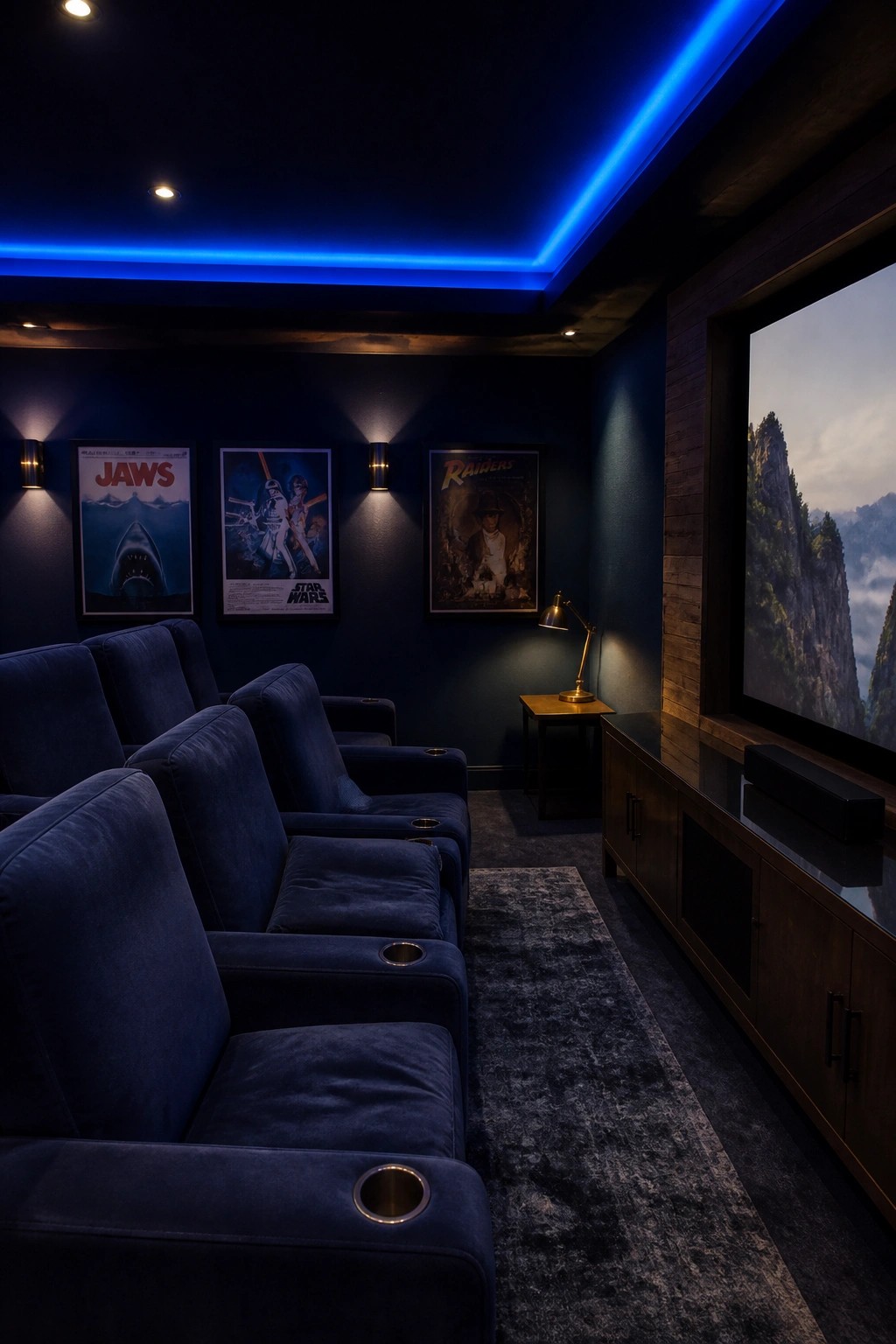
A good man cave often needs lighting that can shift from bright to very dim without losing all definition. Using LED strips along the ceiling edge along with wall sconces gives you that control. The LEDs handle the overall glow while the sconces keep key spots like posters from disappearing into shadow.
This setup works best in rooms that already have dark walls and heavy seating. Keep the LEDs on a dimmer so you can lower them during movies, and place one or two small lamps on side tables for when you need a bit of focused light to find the remote or pour a drink. Avoid overdoing the brightness or the room can start to feel flat instead of cozy.
Layer Sconces and LED Strips Around the Desk
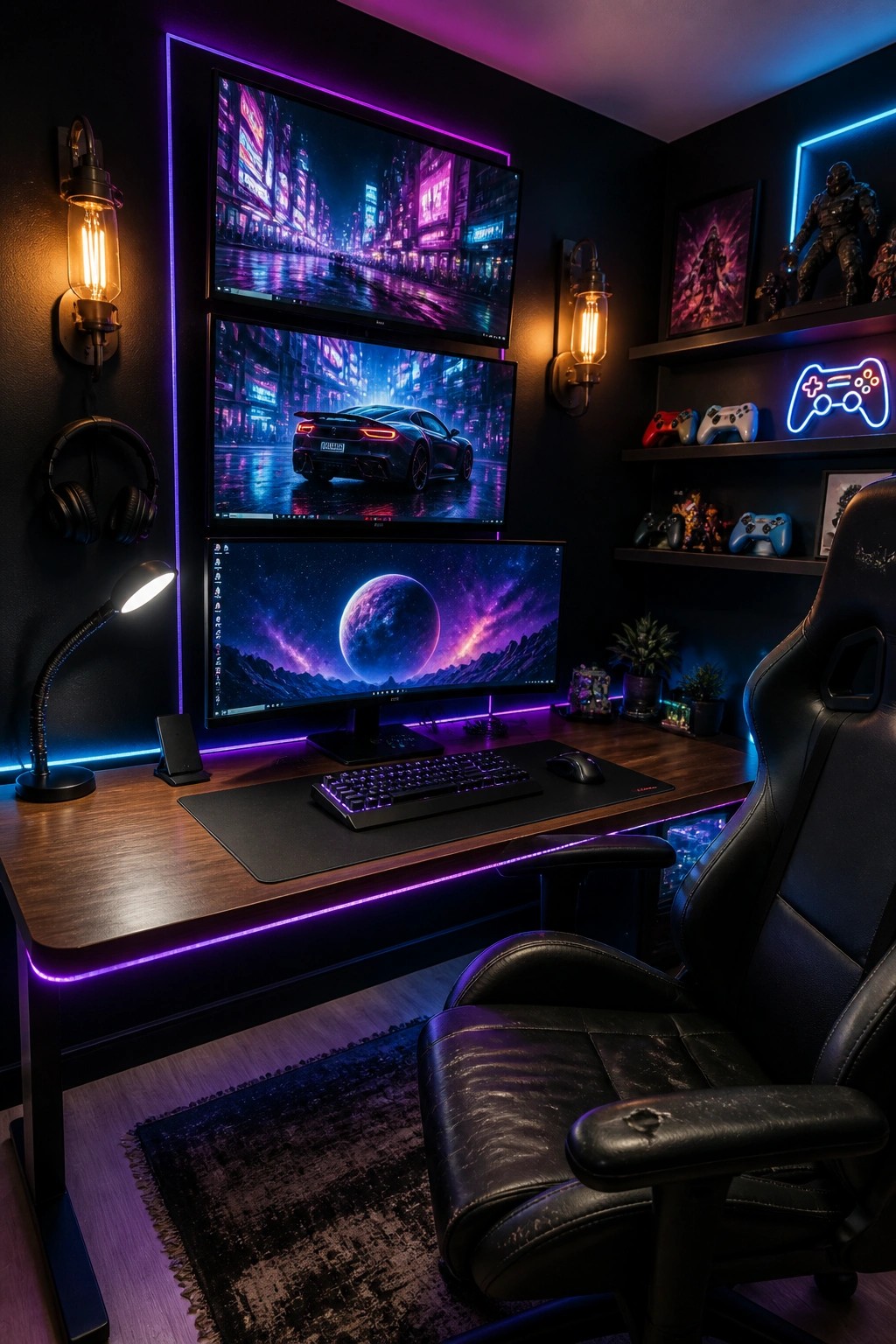
Many man caves end up feeling either too dark or too flat when they rely on one main light source. Adding wall sconces on either side of the monitors along with LED strips under the desk and around the frame gives the space depth without needing overhead lights. The mix keeps the focus on the screens while still making the whole area usable at night.
This approach works best in smaller dedicated rooms where you want control over the mood. Place the sconces at eye level so they bounce light off the wall instead of shining straight into your eyes, and run the LED strips on a dimmer so you can adjust them based on the time of day. It suits most gaming or media setups where you already have a large desk and want the lighting to feel intentional rather than scattered.
Layer Sconces With Task Lamps And LED Strips
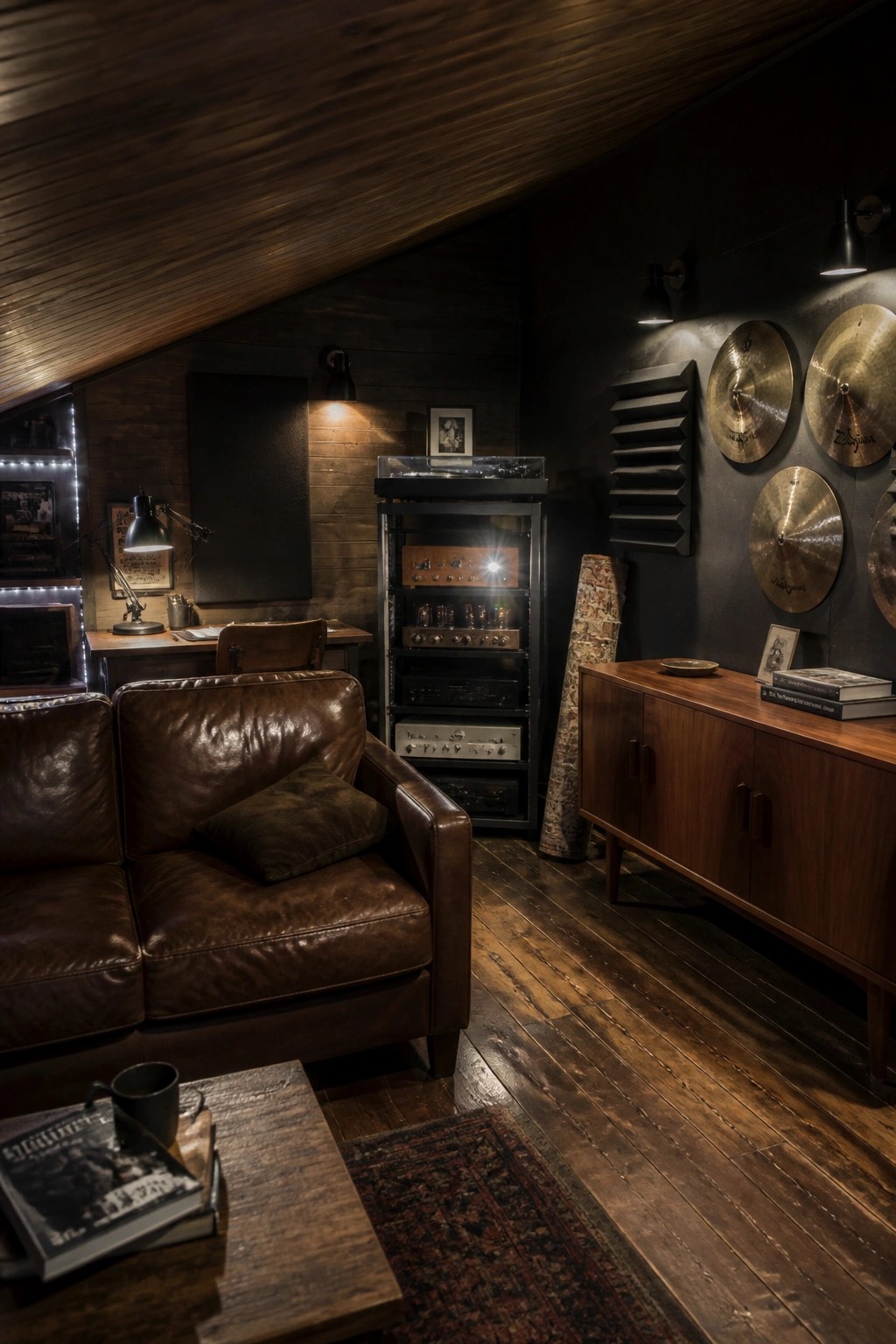
Many man caves get stuck with either one overhead light or total darkness. Adding wall sconces, a small task lamp on the desk, and LED strips along open shelves lets you shift the mood without turning everything on at once. The mix keeps the room usable while still feeling low and enclosed.
This approach works best in wood heavy or basement spaces where light bounces off surfaces differently. Keep the sconces on dimmers and use the task lamp only where you need focused light. Skip anything too bright or cool toned if you want the same warm, settled feel.
Layer Sconces With Task Lighting
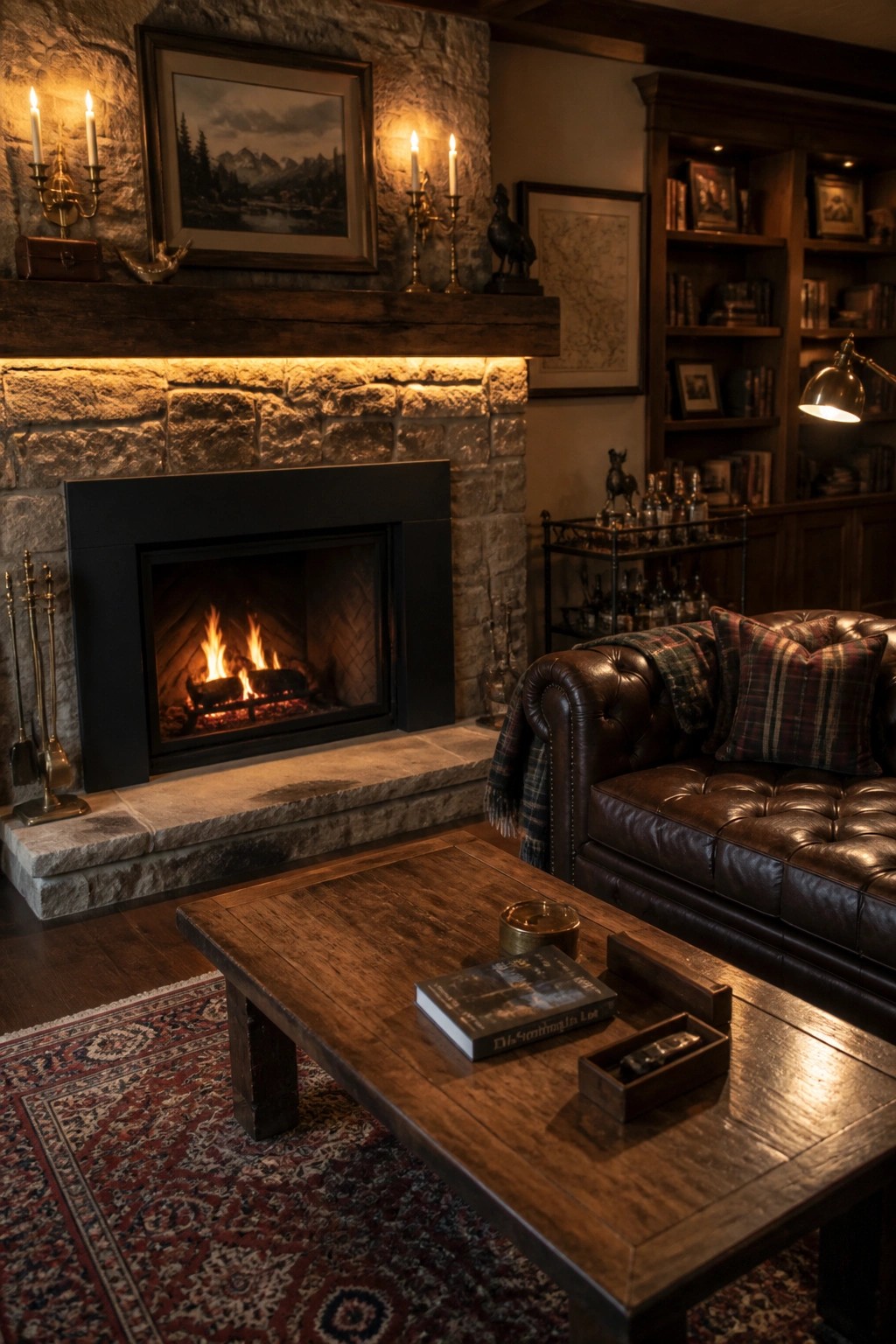
Placing wall sconces on either side of the fireplace and adding one focused task lamp nearby gives the room a steady mix of light levels. The candles add a soft glow at eye height while the lamp on the shelf pulls attention to the books and bottles without flooding the whole space. This keeps the dark wood and leather from feeling heavy.
It works best in smaller rooms where you spend evenings reading or relaxing. Keep the fixtures on dimmers so you can adjust as the fire dies down, and avoid anything too bright that would wash out the mood.
Layered Lighting Works Well In A Home Bar
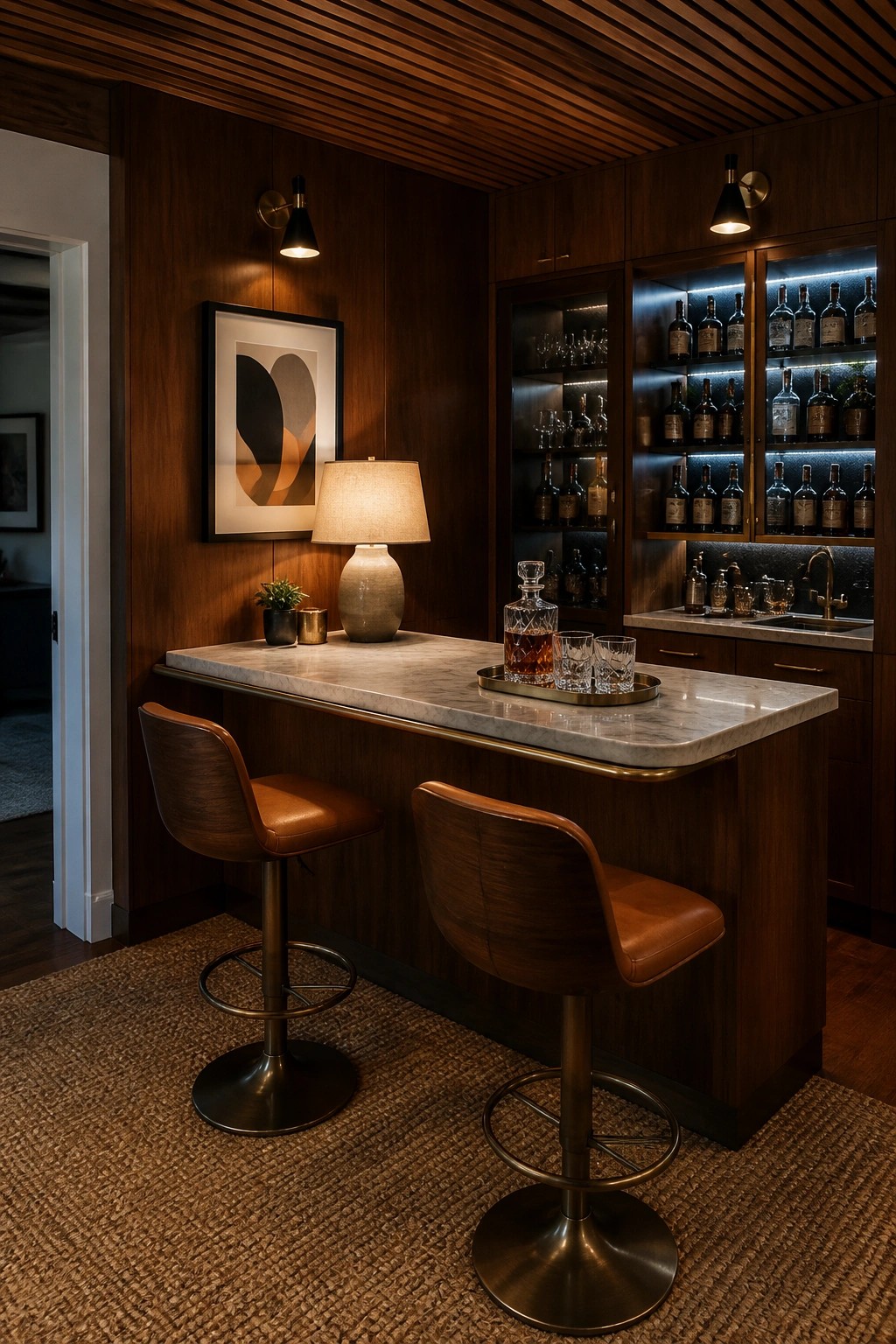
A bar area often needs more than one kind of light to feel usable at night. Wall scones provide a soft glow along the sides while LED strips inside the cabinets highlight the bottles without making the whole room too bright. A single lamp on the counter adds a warm spot for pouring drinks.
This setup works best in a basement or a room with few windows. Keep the cabinet lights on a dimmer so they do not overpower the sconces, and place the lamp where it does not block seating. Dark wood walls help the lights stand out without needing extra fixtures.
Built-In Lit Cabinets For Your Collection
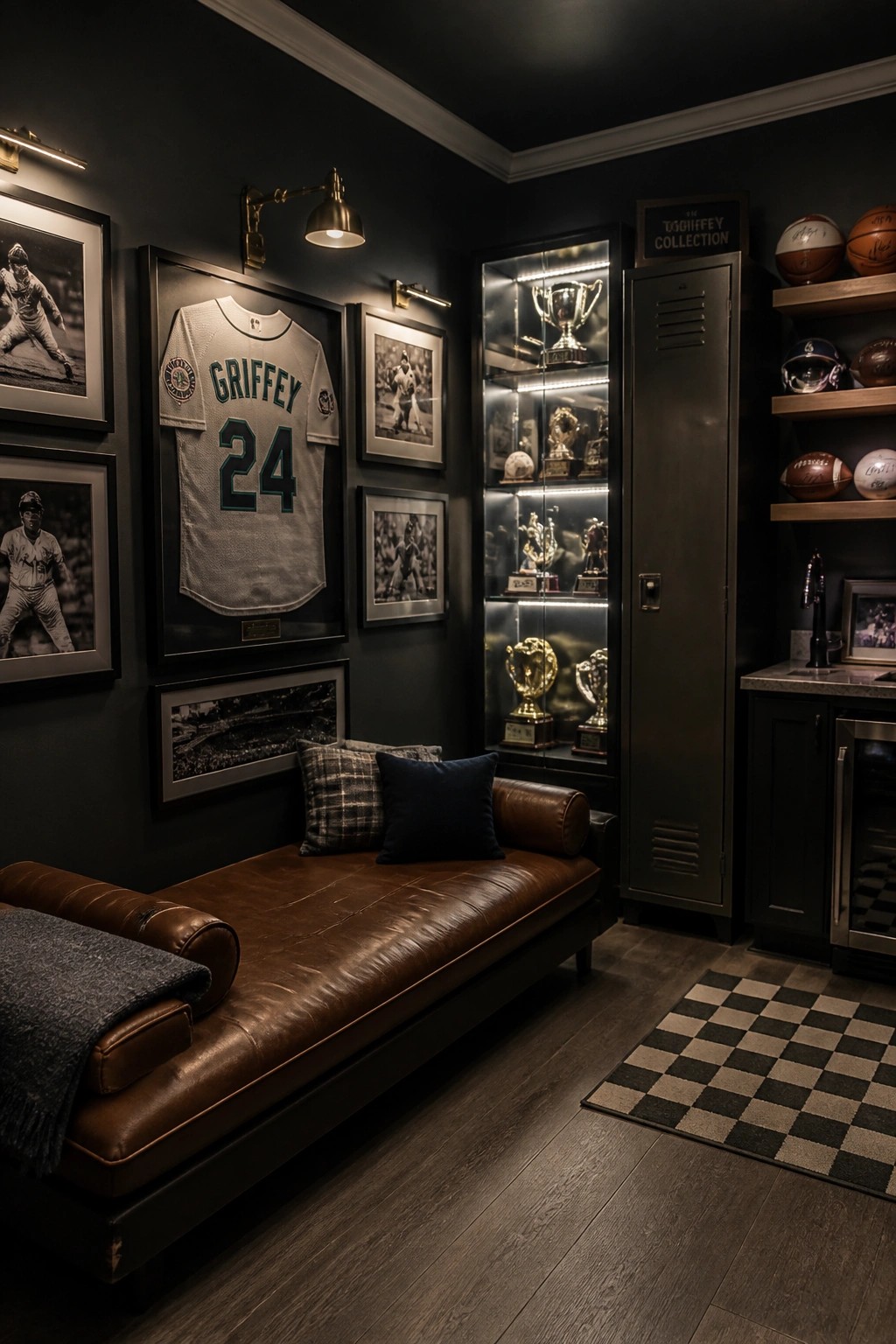
One simple way to handle a big collection in a man cave is to put it behind glass with its own lighting. The internal lights make the items stand out even when the rest of the room stays dark, so you do not need to flood the whole space with bright fixtures.
This setup works best in smaller rooms or along one main wall. Keep the cabinet depth shallow so it does not eat up floor space, and add a couple of wall sconces nearby for reading or general use. It suits anyone who wants the collection visible without turning the room into a bright display area.
Mixing Sconces With LED Strips Over A Workbench
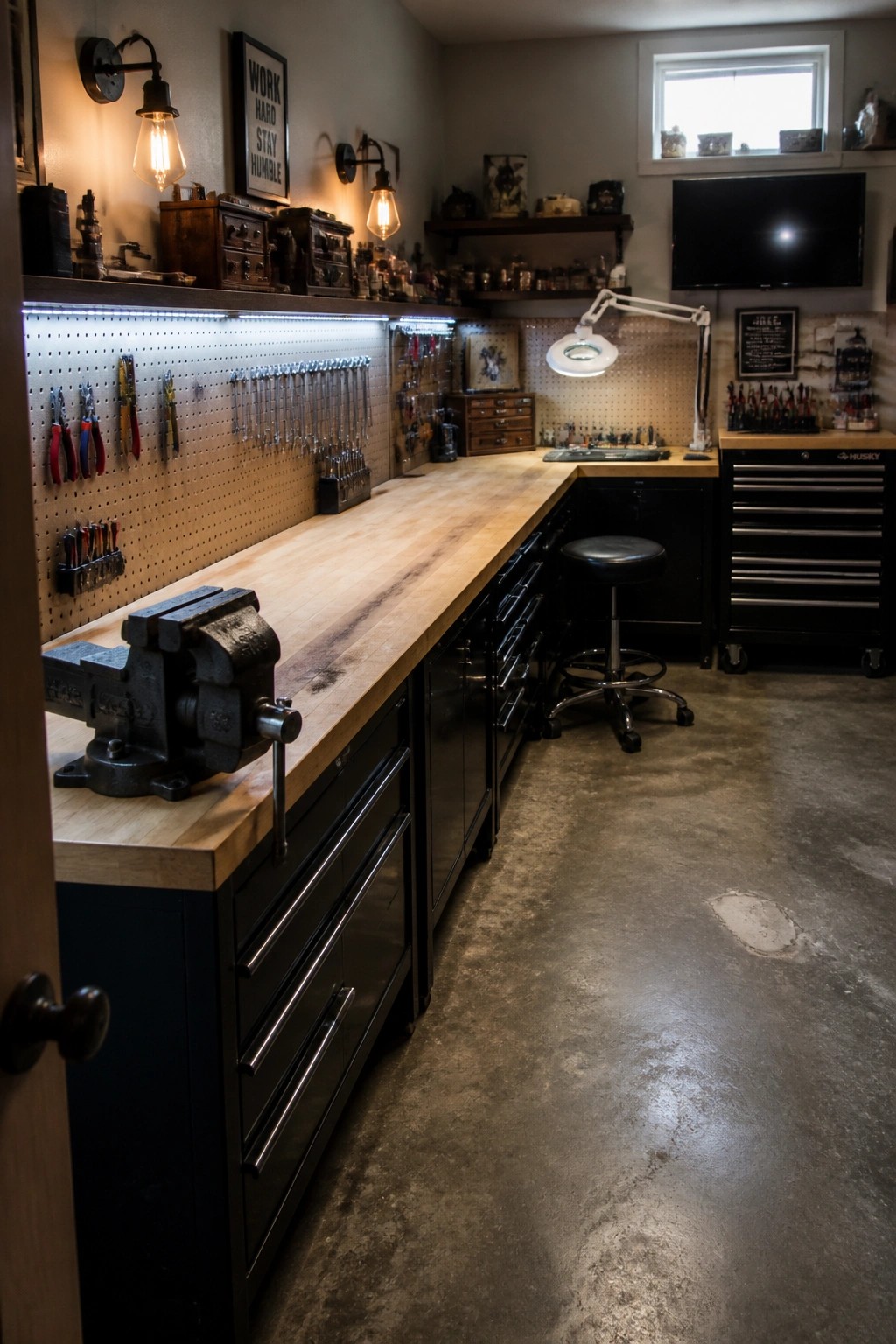
A workbench this long needs more than one light source to stay useful after dark. Wall sconces give a steady background glow while the LED strip tucked under the upper shelf lights the whole surface evenly. The separate task lamp can then be pulled in for close work without lighting up the whole room.
This approach fits a garage or basement space that doubles as a workshop. It keeps things practical for tools and projects while still giving the room a finished feel. Black cabinets below help the lights stand out without adding extra brightness.
Combine Sconces And Task Lamps In Dark Spaces
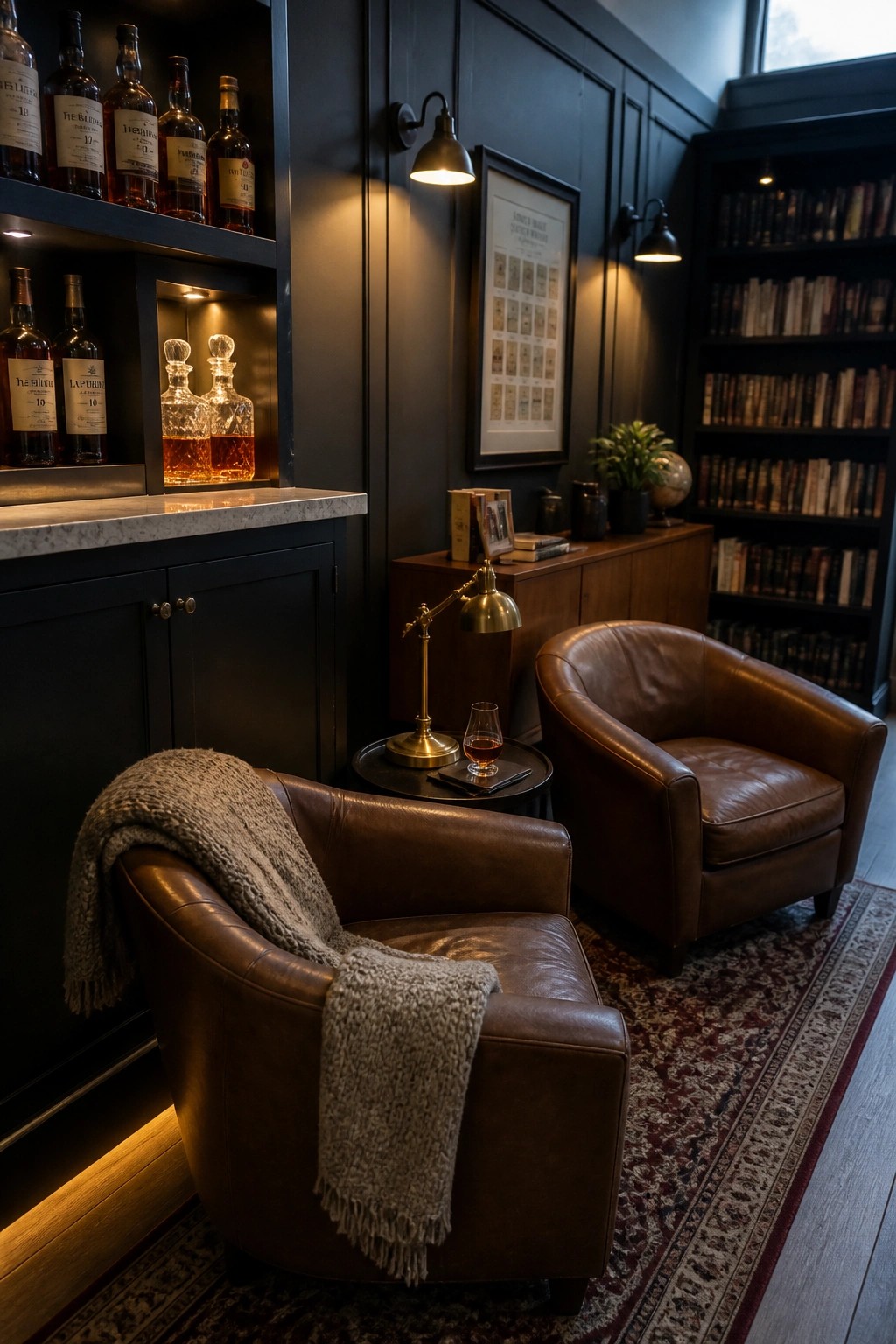
Dark wood paneling can make a room feel closed in when the light comes from only one source. Adding wall sconces along with smaller task lamps helps break up the shadows and keeps the space from going flat.
This mix works best in a study or lounge with leather seating and built-in shelves. Keep the sconces higher on the walls and set the task lamps on low tables so each seat gets its own pool of light without brightening the whole room.
Sconces And LED Strips Along Built-In Shelves
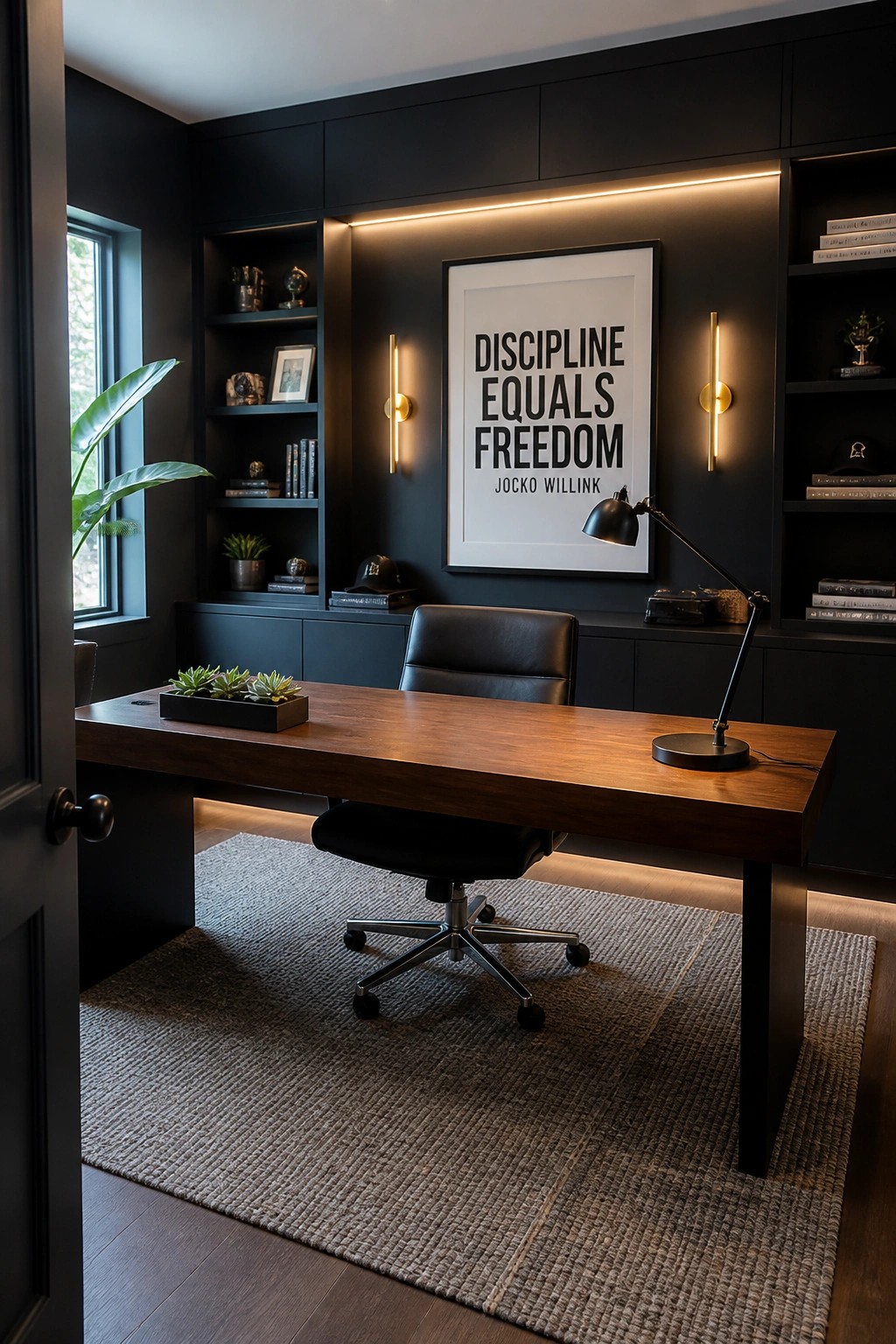
Dark walls can make an office feel closed in, but the right lighting changes that. Running an LED strip along the top edge of the built-ins and placing sconces on either side of the main wall piece gives the room a low, steady glow without any harsh overhead light.
This setup works best in smaller rooms or spaces with limited windows. Keep the sconces simple and mount them at the same height so the light feels balanced, then use a dimmer on the LED strip to control how bright the shelves appear at night.
Lighting A Game Table With Mixed Sources
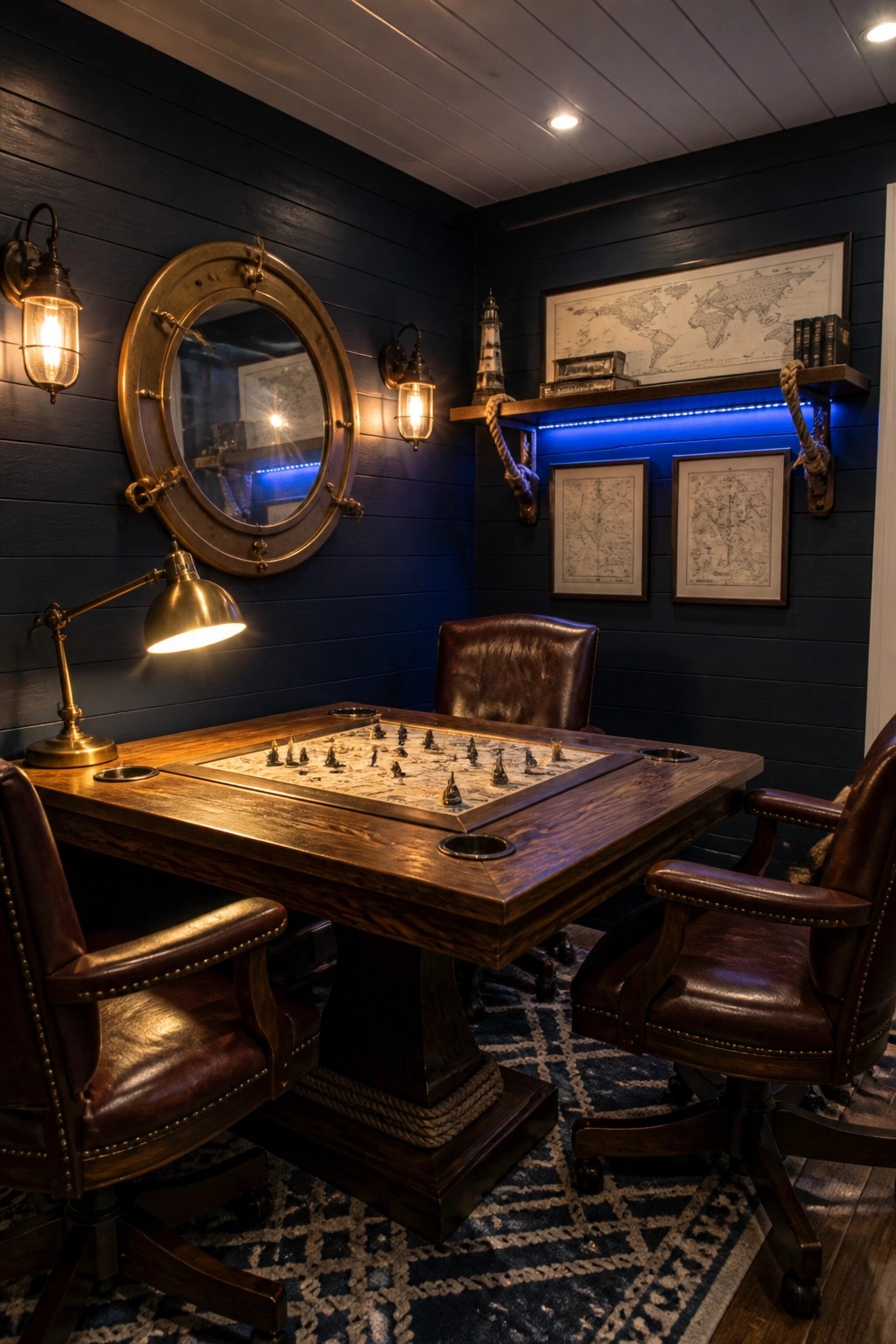
Dark rooms can make board games hard to follow unless the table itself gets some direct light. A small task lamp positioned at the edge of the table keeps the playing surface clear without needing bright overhead fixtures that would change the whole mood.
Wall scones on either side give enough background light for the rest of the space, while a narrow LED strip tucked under a shelf adds a low glow that stays out of the way. This mix works best in smaller game rooms where the table is the main focus and you want to keep the walls dark.
Built-In Bookshelves With LED Strips
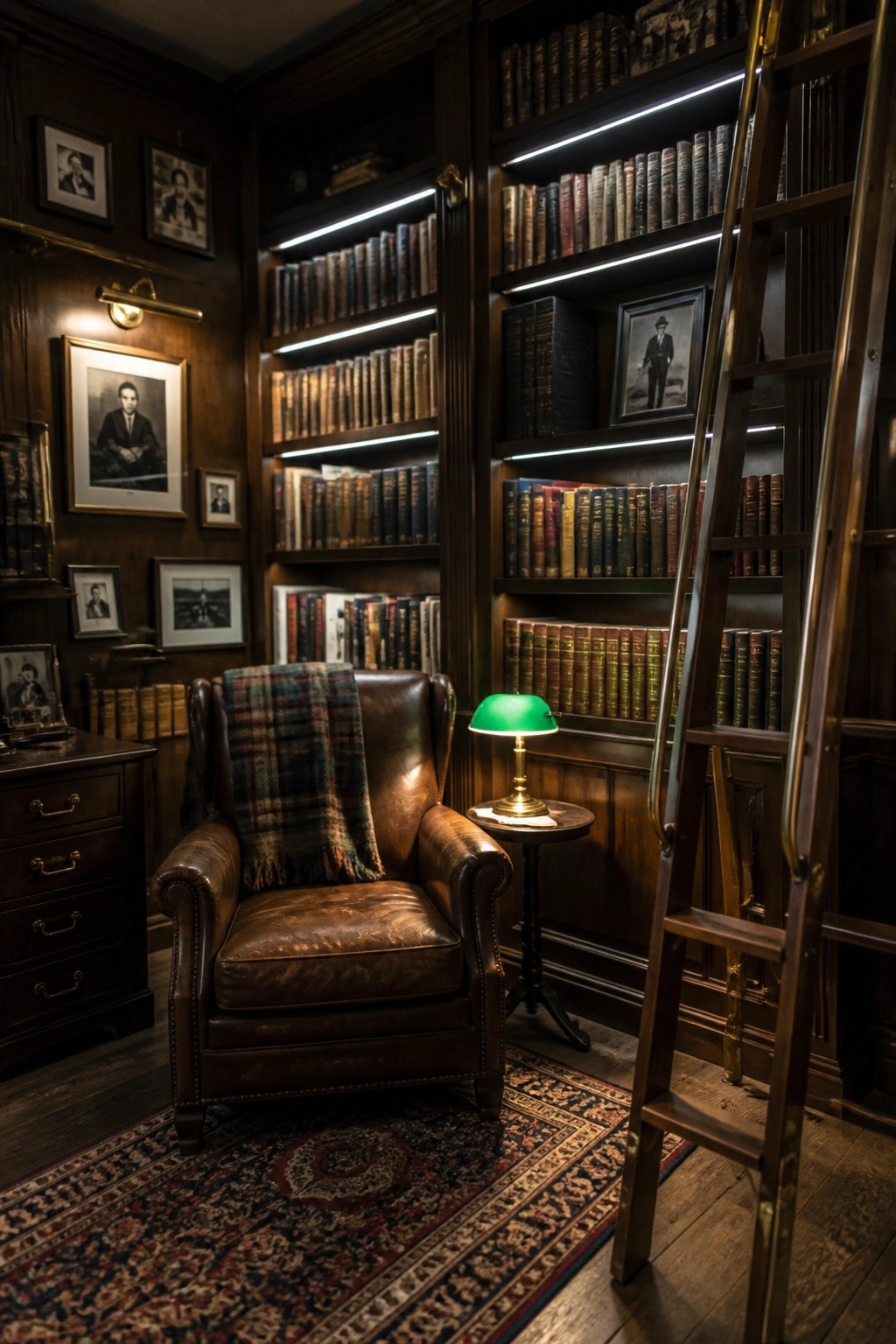
Built-in shelves with LED strips along the edges work well in a moody man cave because they light the books without flooding the room with overhead glare. The strips create a quiet glow that makes the space feel enclosed and calm.
This approach fits rooms with dark wood and heavy furniture. Place a small task lamp nearby for reading, and keep the rest of the lighting low so the shelves stay the main focus.
LED Strips Around Game Machines
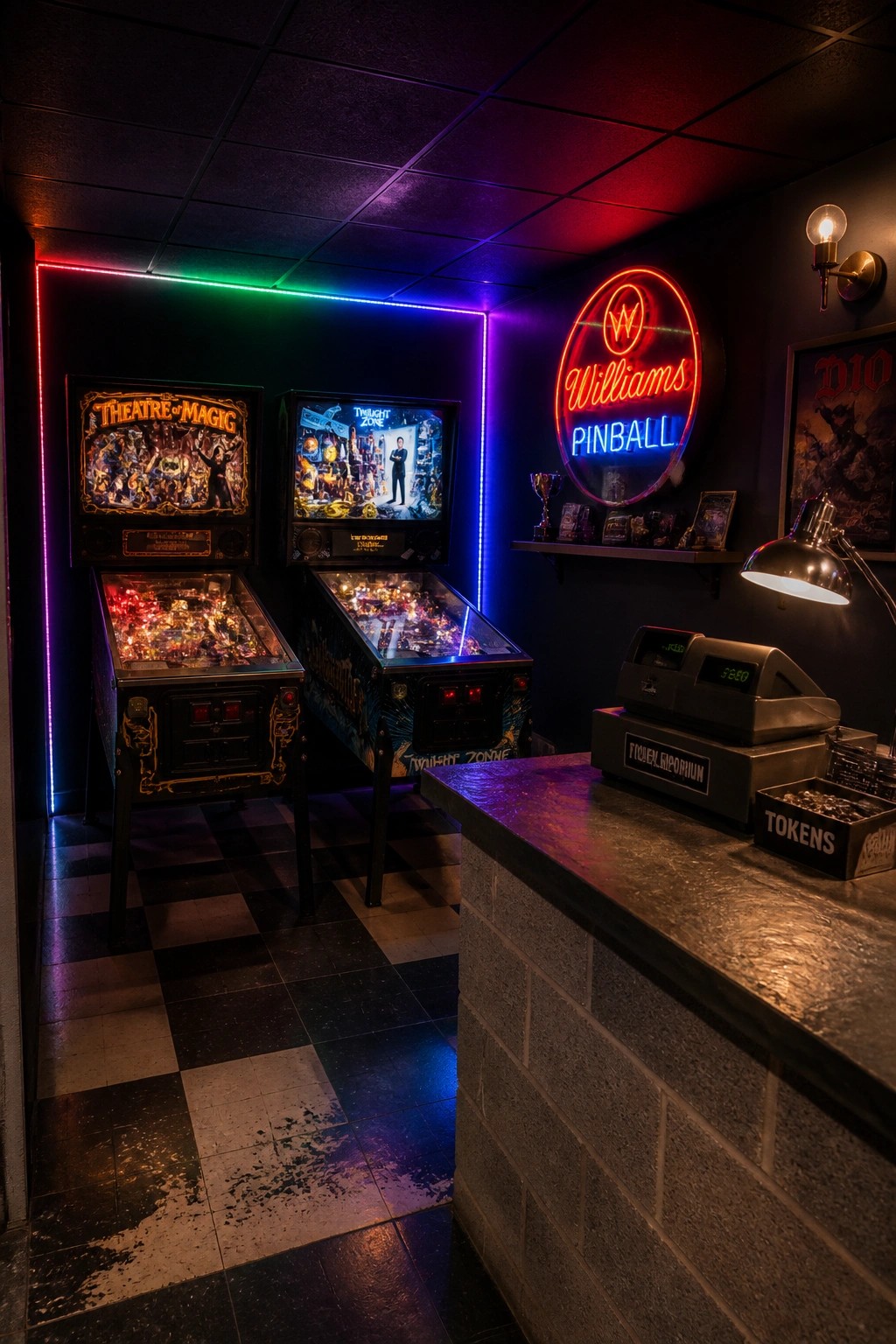
Running LED strips along the back wall and sides of a game setup gives the machines their own glow without filling the whole room with light. It keeps the space dark and focused while still making the games easy to see and play at night.
This works best in basements or small rooms where you already have a few machines clustered together. Stick with simple strips that let you change colors so you can match the mood without adding extra fixtures.
Wall Sconces Work Well Around a Game Table
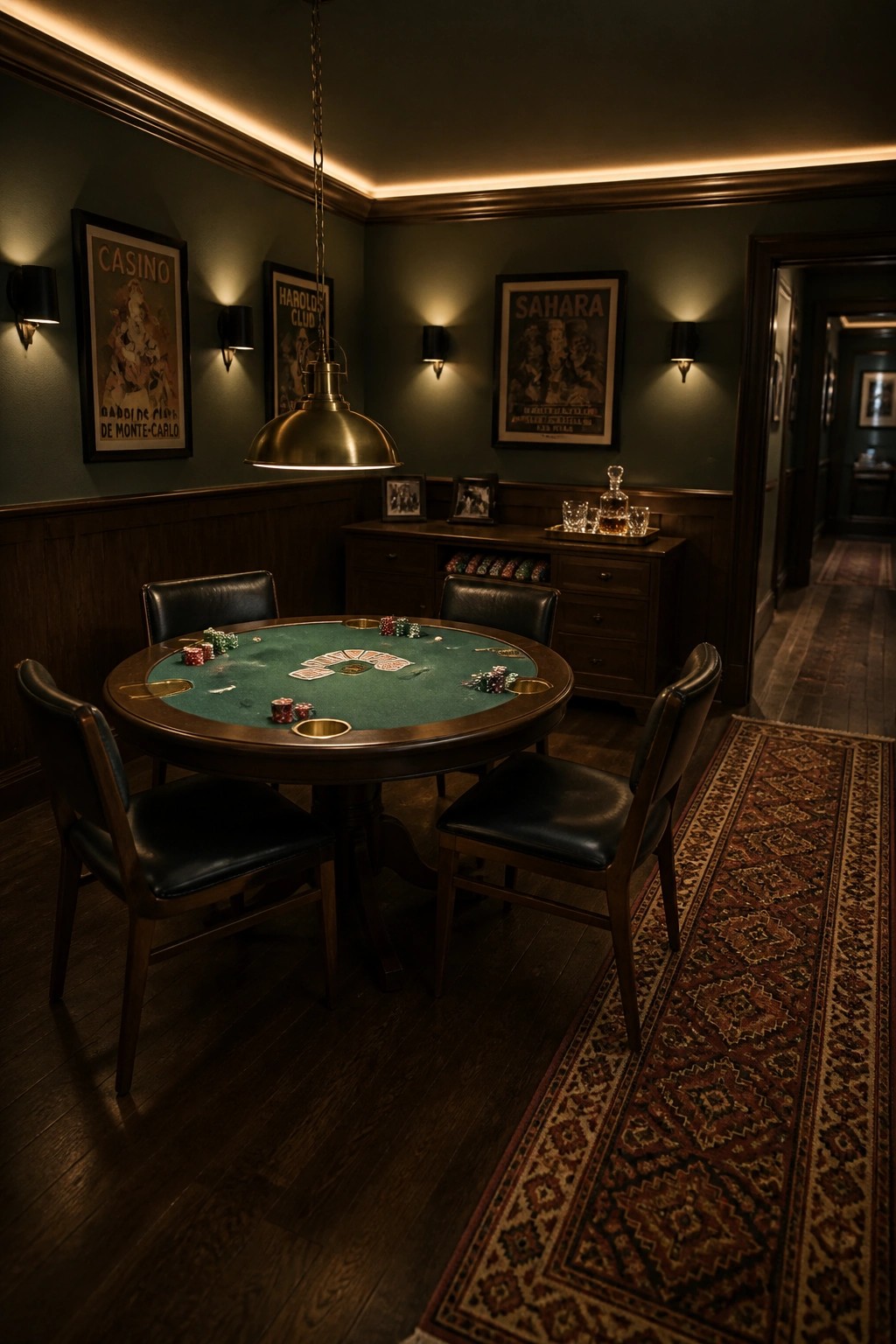
Wall sconces placed at regular intervals give a game room steady low light that feels warm without washing out the table. They keep the edges of the room visible while the main action stays centered, which helps the space feel enclosed and ready for play.
This setup works best in smaller rooms with dark walls and wood trim. Keep the sconces on dimmers so you can raise them just enough for card reading and lower them once the game starts. A single pendant or task light over the table does the rest.
Layer Sconces With LED Strips In A Man Cave
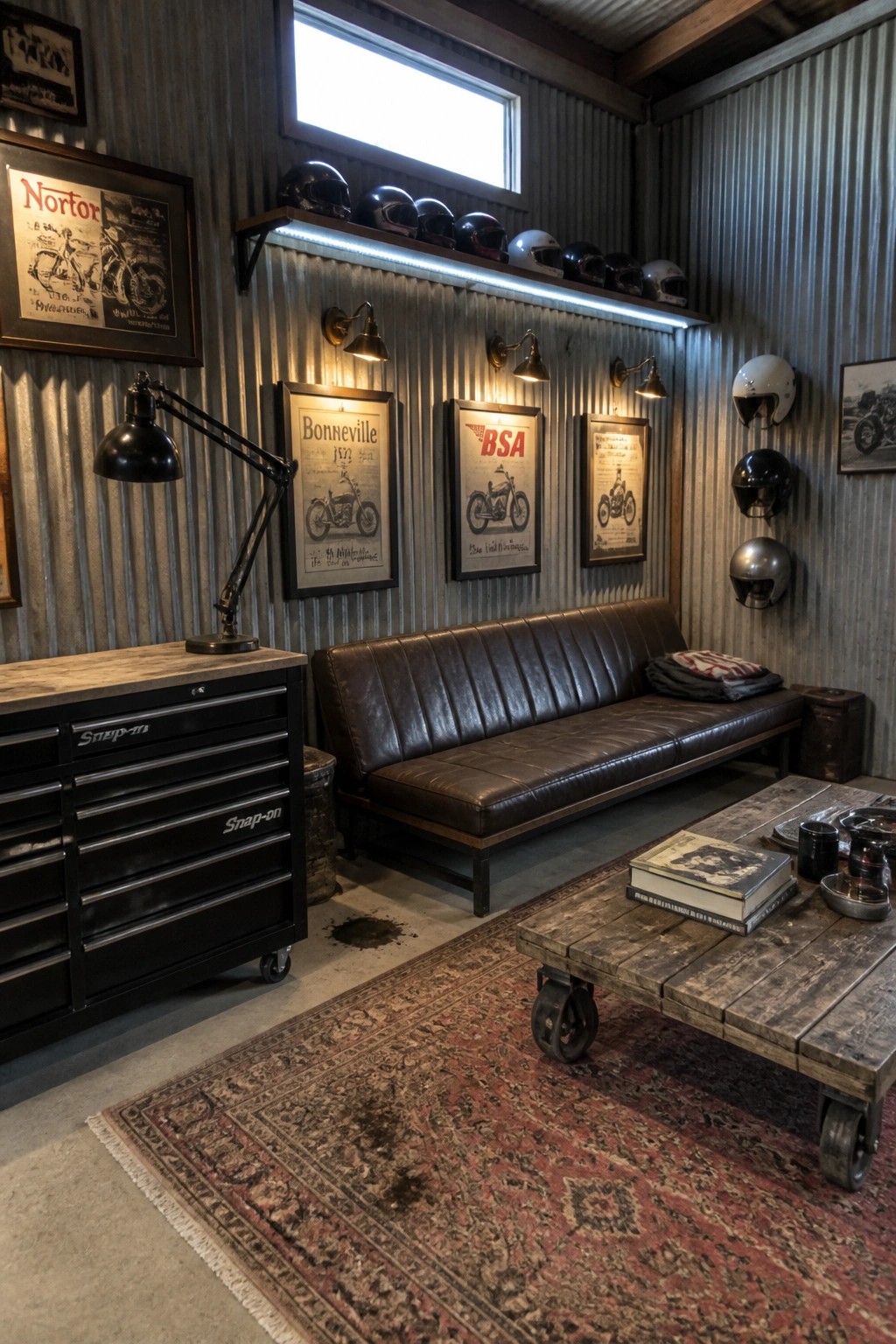
Mixing wall sconces and a low LED strip gives a garage-style room steady light without ever feeling bright or flat. The sconces throw warm pools onto the corrugated walls while the strip under the shelf adds a soft line that keeps the whole space from going dark at the top. A single task lamp on the workbench fills in the lower area when someone needs to see details.
This setup works best in smaller rooms with metal or concrete walls where overhead fixtures would feel too harsh. Place the sconces at eye level and run the LED strip along one long shelf so the light stays low and even. Skip anything too bright and let the different sources overlap a little.
Layer Sconces With LED Backlighting In Dark Rooms
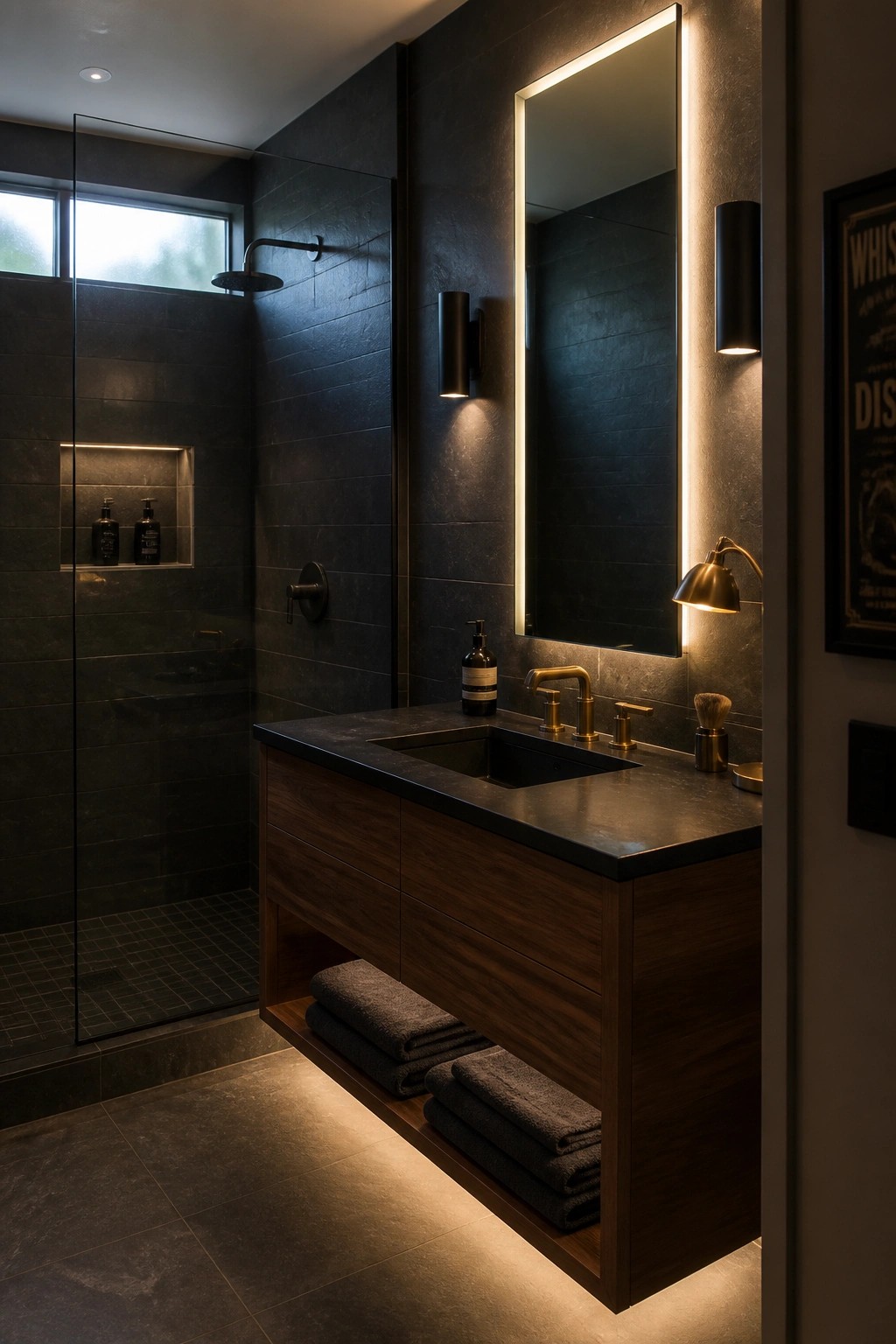
Dark walls absorb a lot of light, so single overhead fixtures often fall short. Adding wall sconces at eye level and a backlit mirror gives focused light without brightening the whole space too much. The mix keeps the room moody while still practical for daily use.
This setup works best in bathrooms or small man cave corners finished in deep tones. Keep the sconces simple and matte, then run LED strips behind the mirror or under a vanity to add a soft glow that does not compete with the darker surfaces.
Built-In Shelves With LED Lighting
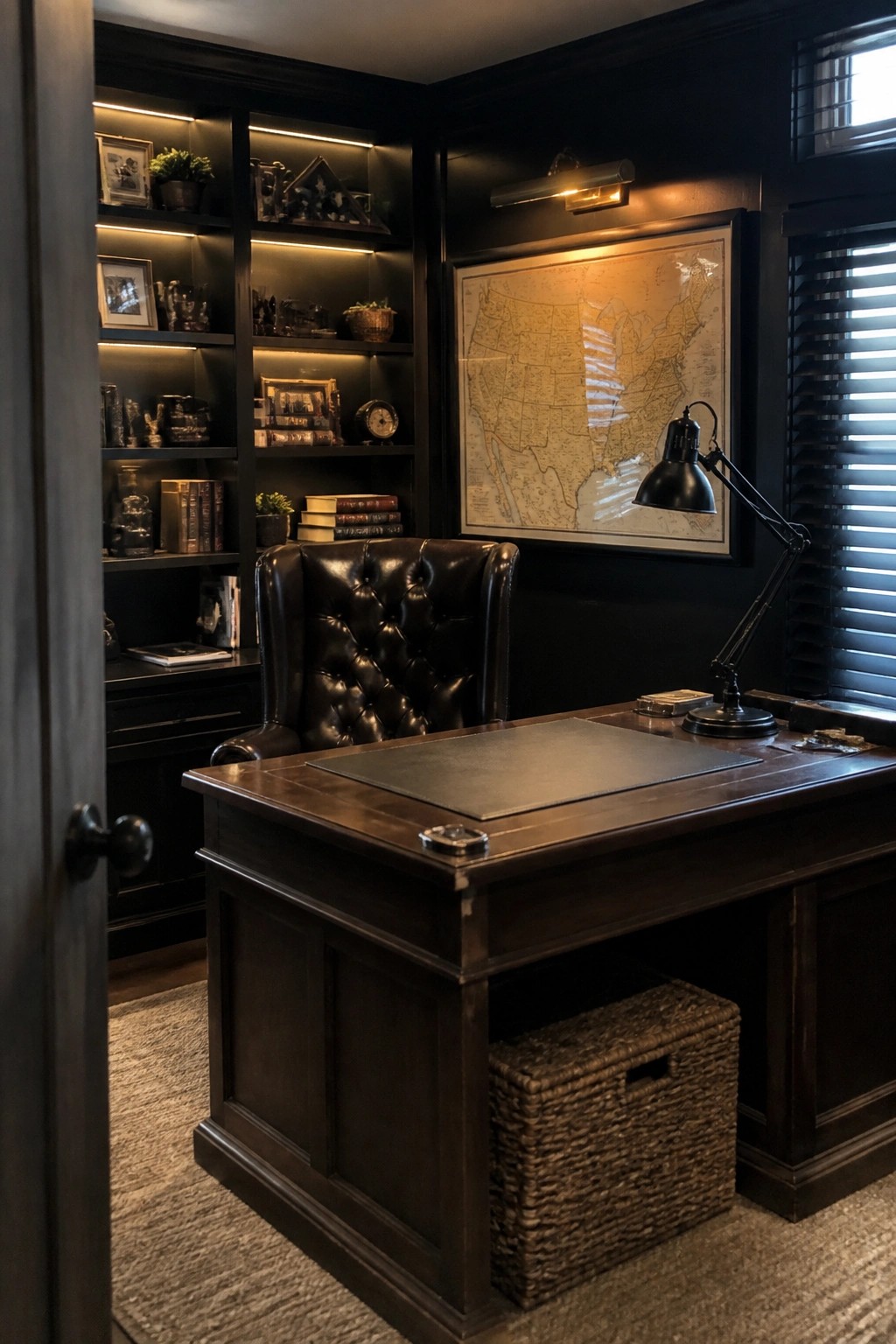
Built-in shelves with LED strips give a man cave a quiet sense of order without brightening the whole room. The light stays low and focused on what is stored, which helps the darker walls and wood tones feel intentional rather than heavy.
This setup works best in smaller offices or studies where you want storage that does not compete with the main seating area. Run the strips along the front edge of each shelf and add one adjustable task lamp on the desk for reading or work. Keep the rest of the lighting minimal so the shelves remain the main source of gentle light.
Built-In LED Lighting For A Game Table
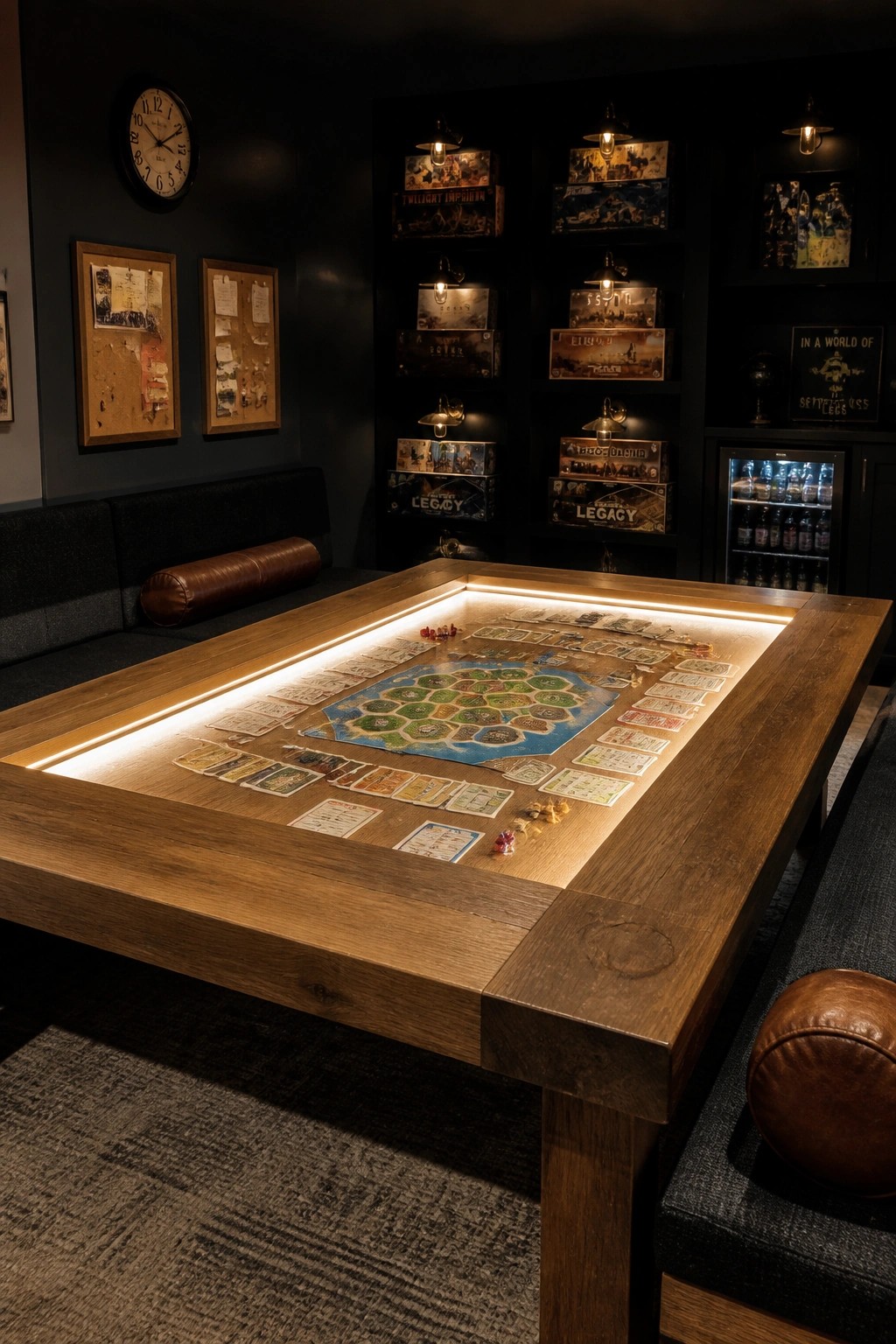
A game table with LED strips set into the edges gives players clear light right where they need it. The glow stays low and focused, so the rest of the room can stay dark and moody without anyone straining to see the board.
This works well in a space used mainly for games and hobbies. It pairs with dark walls and simple wood furniture, and it leaves room for sconces or other lights if you want more layers later.
Use Step Lighting With Wall Sconces
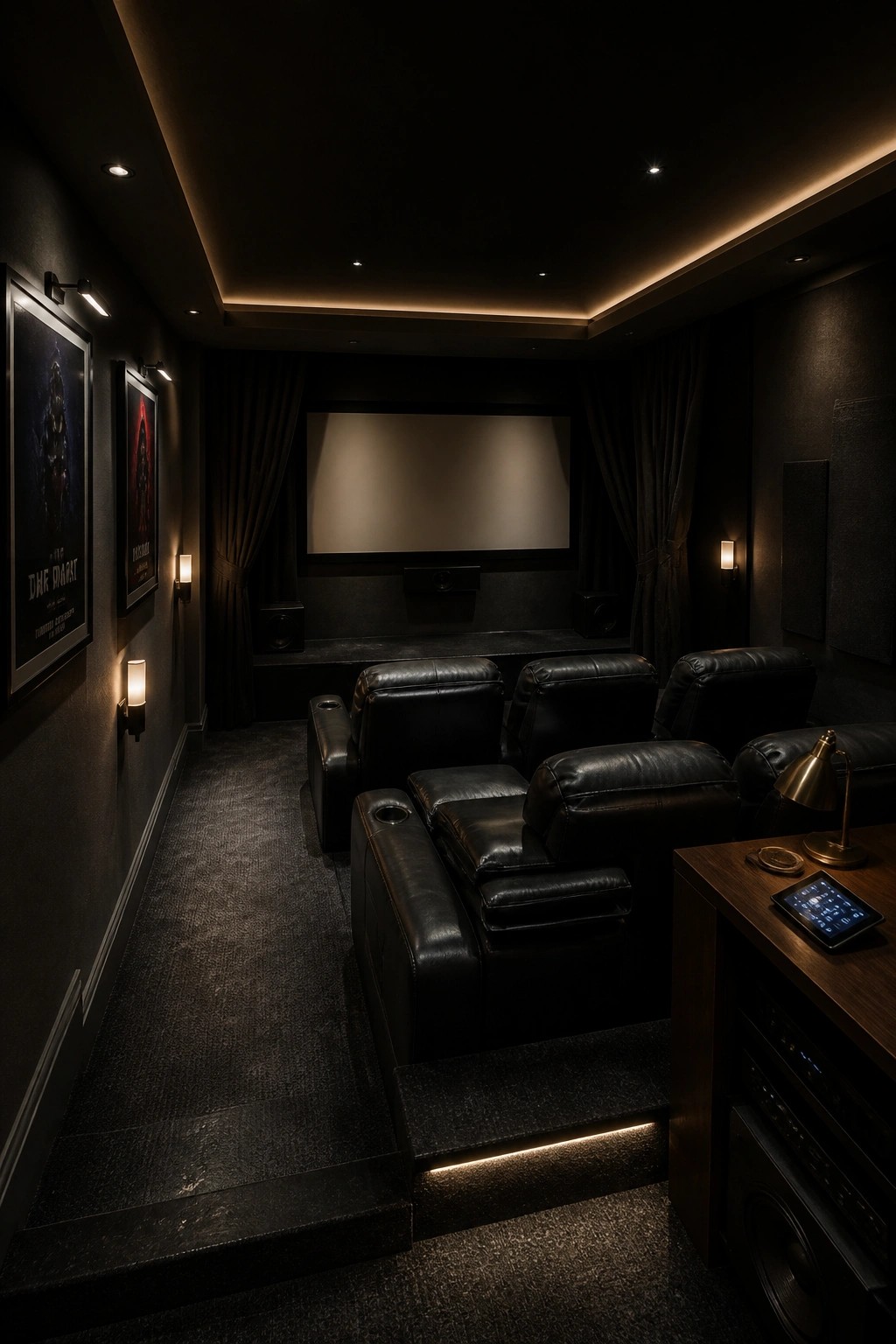
Layering low lighting along the floor and walls helps a home theater stay dark enough for movies while still giving people a clear path to their seats. The sconces provide a soft glow on the sides without shining directly on the screen, and the strips along the steps keep the room from feeling like a total cave when someone needs to move around.
This setup works best in basements or windowless rooms where you want full control over the light. Keep the sconces on dimmers and choose warm LED strips so the overall tone stays even. It suits smaller theaters especially well since it avoids overhead fixtures that would wash out the screen.
Built-Ins With LED Lighting For A Focused Workspace
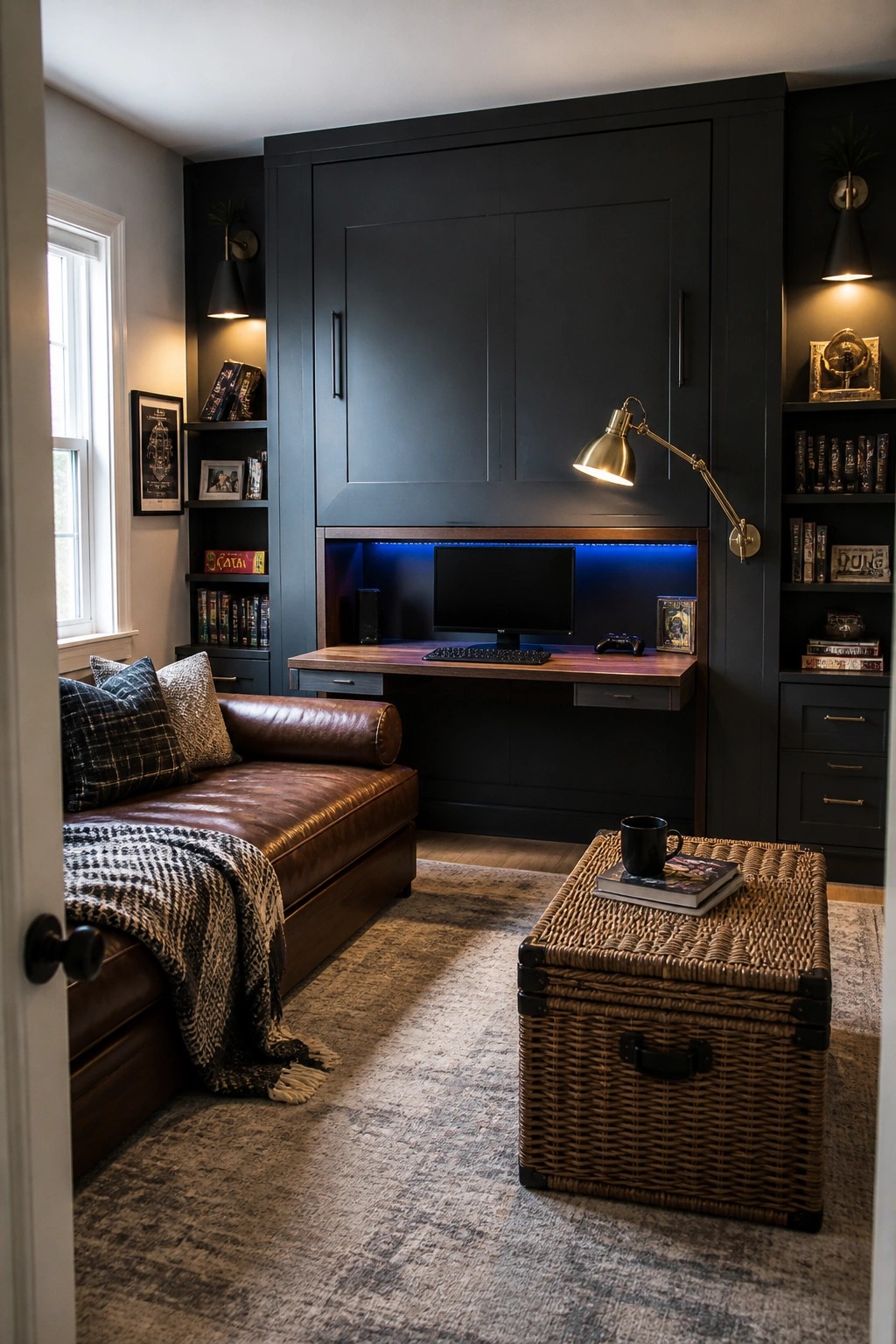
Built-in cabinetry with under-cabinet LED strips gives a small room a clean, contained workspace that still feels moody. The lighting highlights the desk surface without brightening the whole room, and a swing-arm task lamp adds a second layer when you need it.
This approach suits basements or spare rooms where you want storage, a desk, and seating in one spot. Keep the cabinet color dark and limit extra lights so the glow stays focused on the work area instead of turning the space too bright.
Frequently Asked Questions
Q: How do I stop the sconces from casting weird shadows on my TV screen? A: Mount them slightly behind the viewing area and angle them downward. This keeps the light off the screen while still giving the walls that moody glow. Test it at night before you commit to the spots.
Q: Can LED strips go behind the bar without looking cheap? A: Stick them under the edge of the countertop so only the glow shows. Pick a warm white color that matches your sconces. It adds depth without extra fixtures cluttering the space.
Q: Should I run task lighting only when I’m working on projects or leave it on all the time? A: Use it just for those focused tasks like building models or reading. The rest of the time let the sconces and strips handle the mood. And the room feels better that way.
