

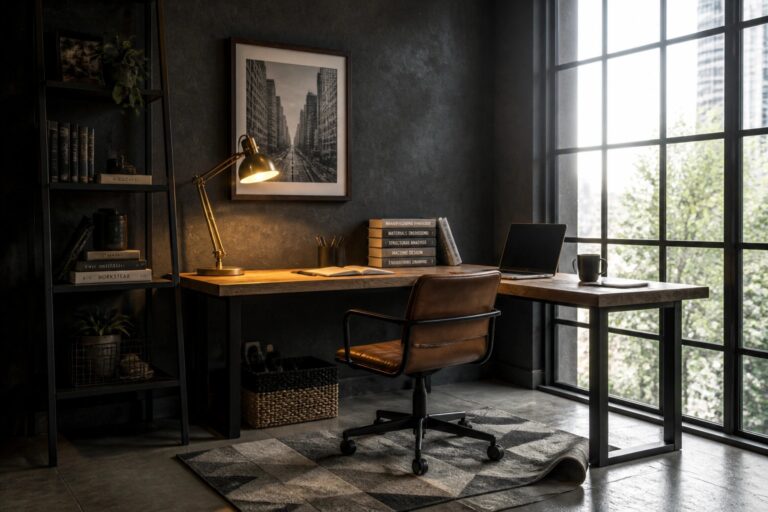
A home office layout starts to feel right once the desk sits where you can reach what you need without standing up every time.
I have watched how placing storage along one wall instead of behind the chair keeps the main path clear during a busy morning.
The difference shows up most when you actually sit down and try to move through a normal routine.
Some setups simply work better than others.
It helps to picture how each piece fits the way you already spend your hours at the desk before making any big changes.
Anchor Your Desk with a Large Rug
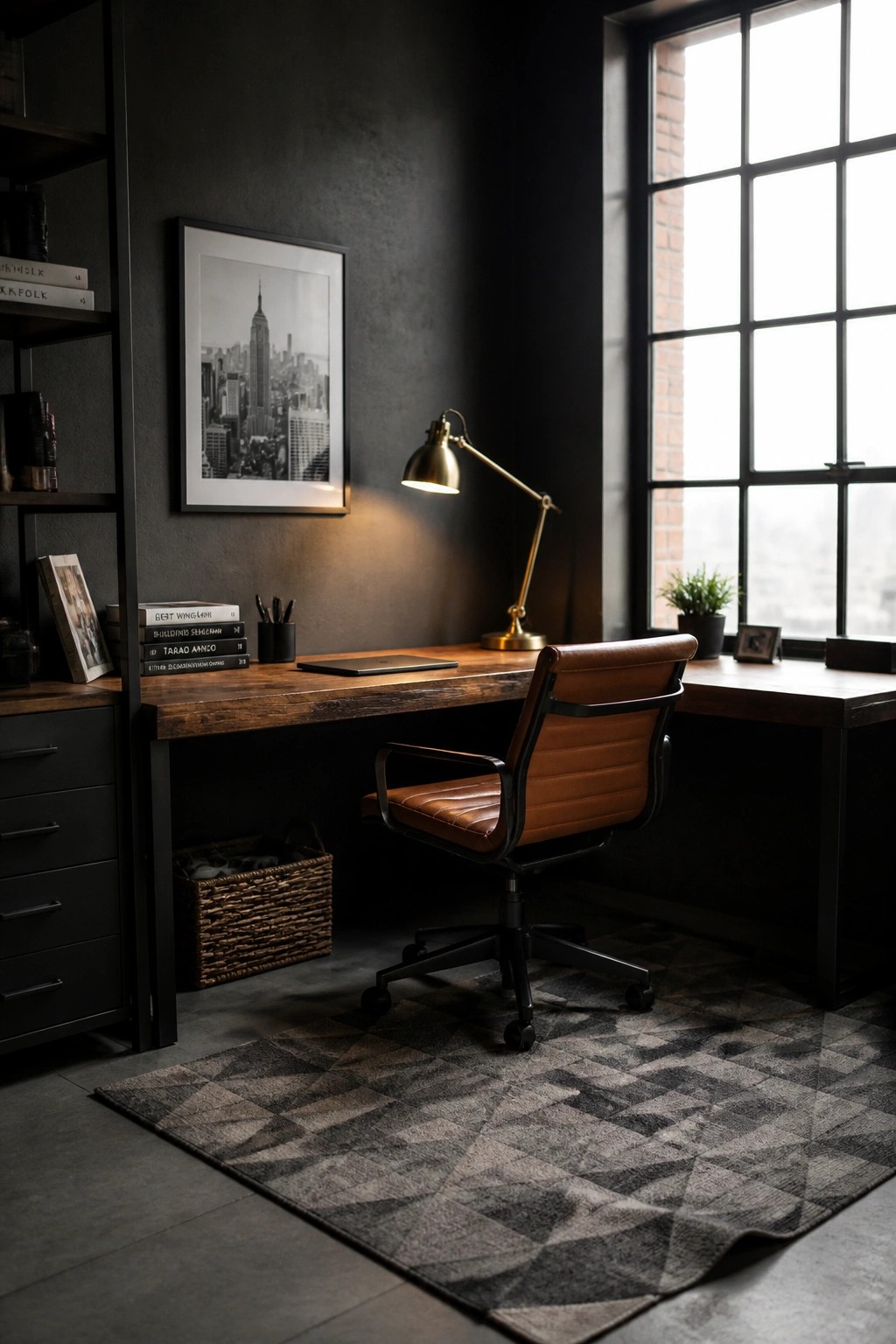
A large rug under the desk and chair creates a clear work zone that feels separate from the rest of the room. It adds a bit of comfort underfoot and helps the furniture stay in place during long work sessions.
This setup works best on hard floors where rolling chairs can slide around too easily. Pick a sturdy, flat-weave rug with a subtle pattern so it handles daily use without showing wear too quickly.
Float Your Desk Under A Window
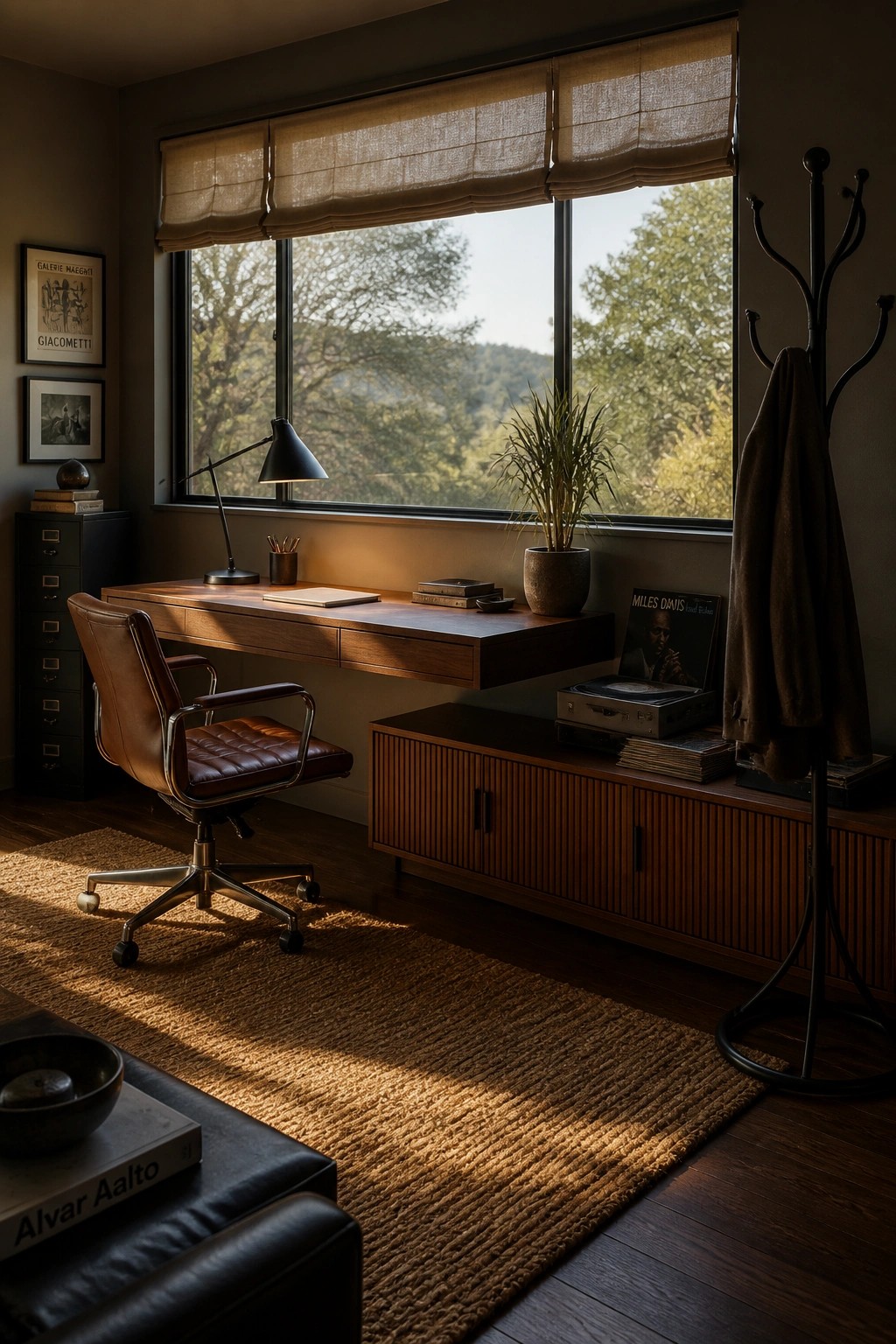
Placing the desk directly under a large window brings in steady natural light throughout the day and keeps the workspace from feeling boxed in. The setup works especially well when the desk is mounted or floated so the floor stays open underneath.
This layout suits smaller offices or rooms where you want to enjoy the view without losing floor space. Pair it with a low cabinet below for storage and a comfortable chair that can roll back easily when needed.
Center Your Office Around One Strong Desk
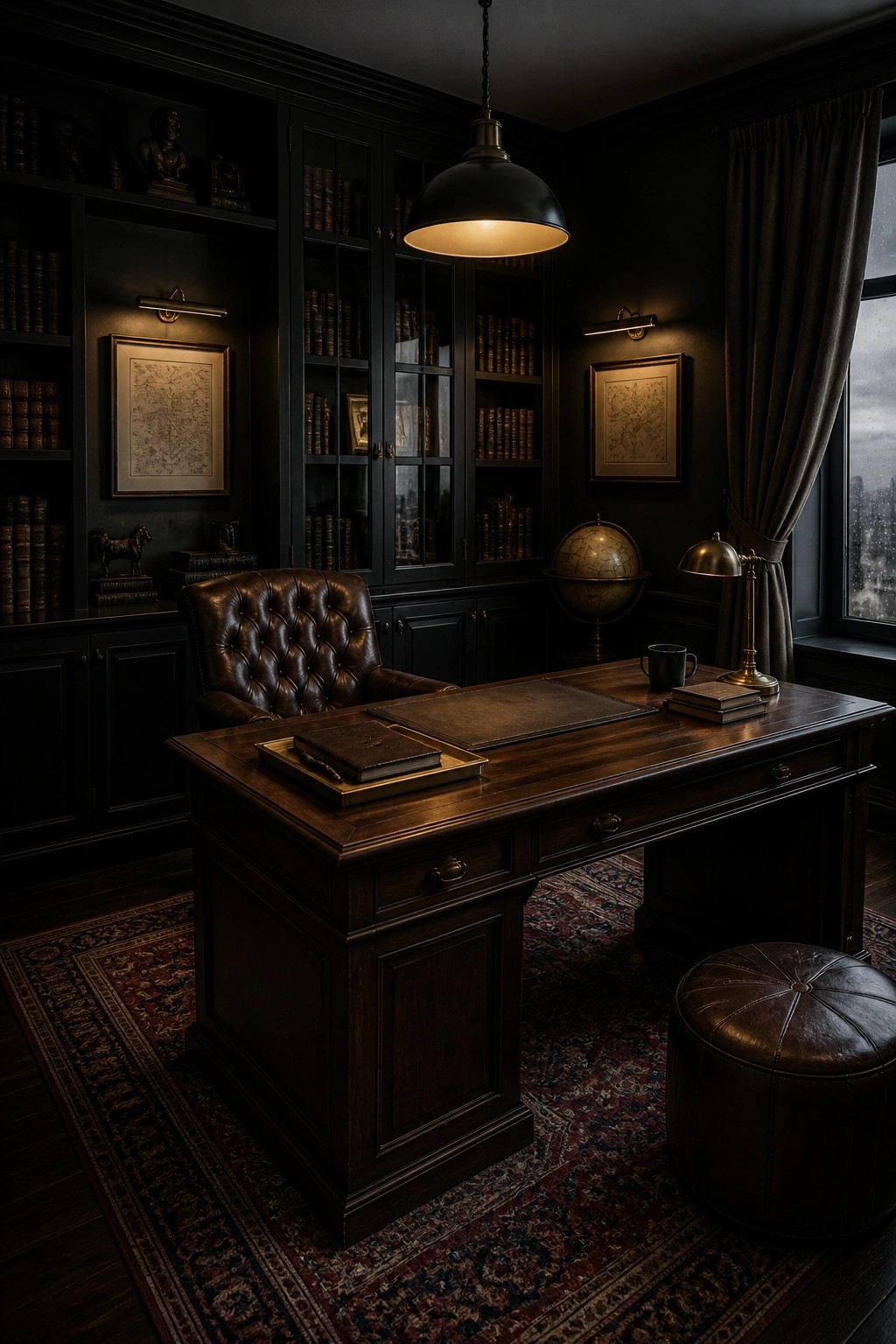
A large wooden desk gives a home office a clear sense of purpose. It becomes the main working surface and keeps the rest of the room from feeling cluttered or unfocused.
This layout suits rooms with enough floor space to move freely around the desk. Add a comfortable chair and wall storage so the setup supports long hours without crowding the room.
Mount A Long Desk Along One Wall
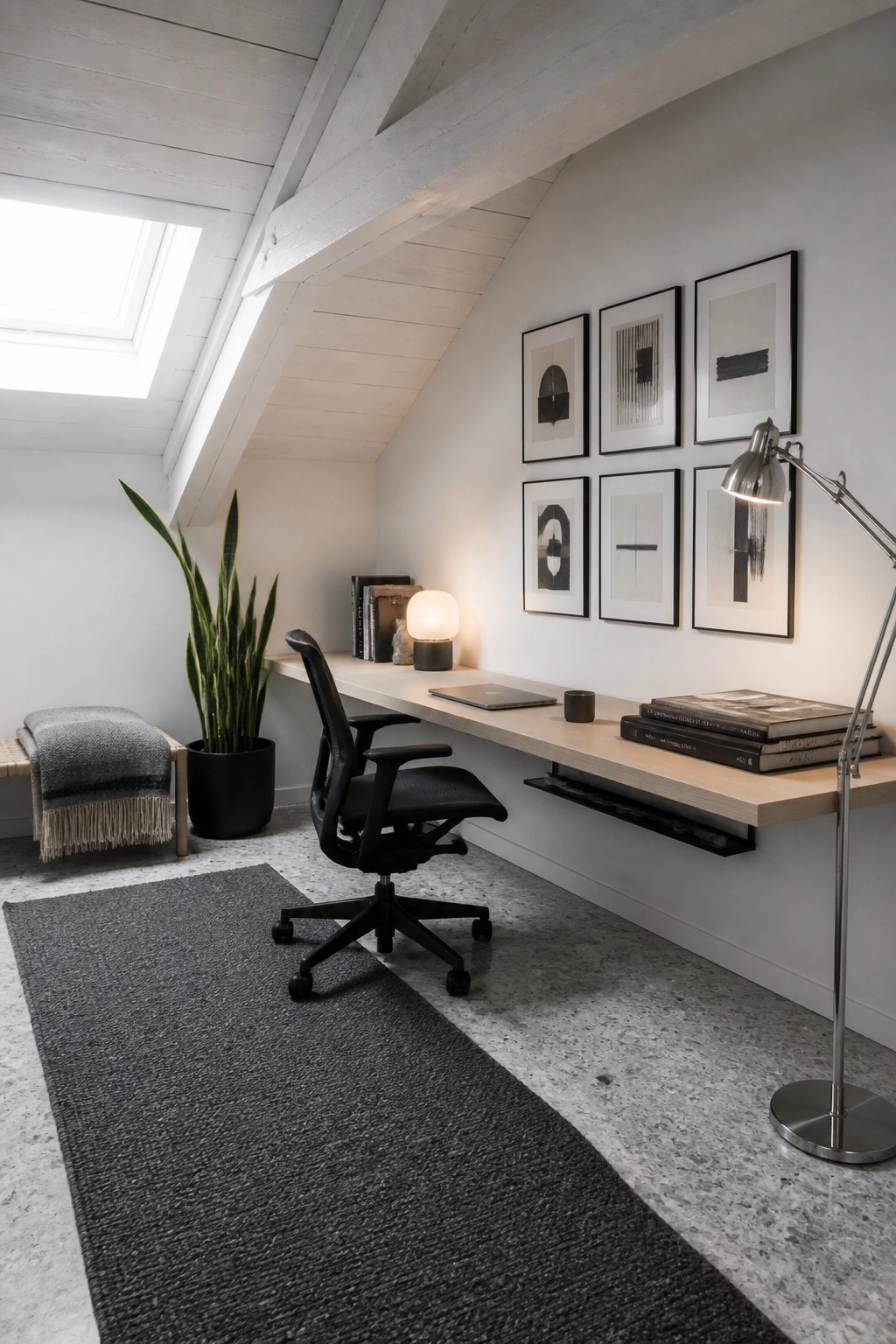
A long wall-mounted desk works well in smaller or oddly shaped rooms because it gives you plenty of surface area without eating into floor space. The setup keeps the room feeling open since there are no desk legs taking up room underneath, and it leaves more flexibility for the chair to move around.
This approach suits attic offices or any space with sloped ceilings where a standard desk might feel cramped. Keep the desk surface fairly clear and use the wall above for art or storage so the layout stays simple and functional.
Dark Walls Help Keep An Office Focused
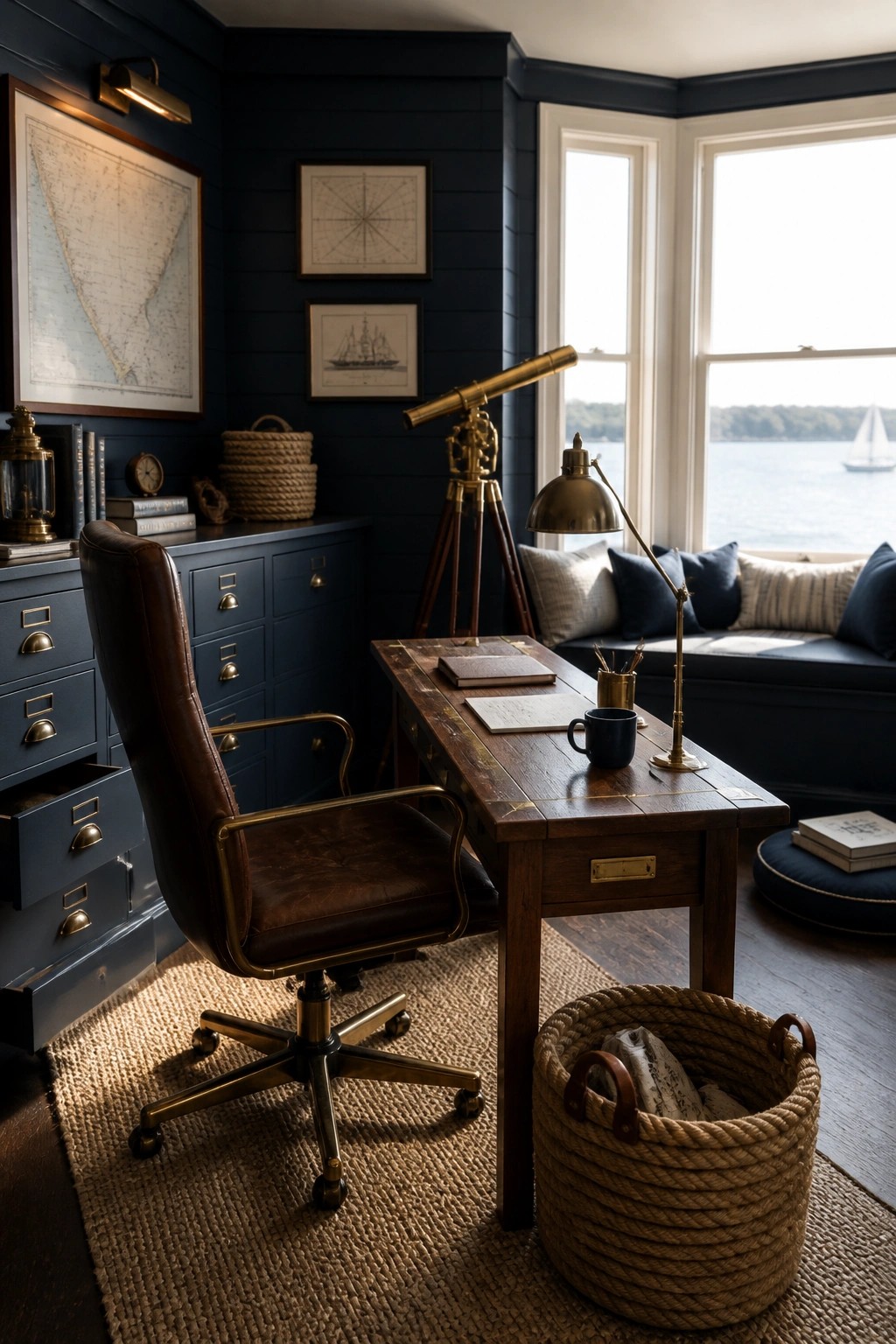
A deep navy on the walls turns an ordinary room into a space that feels contained and ready for work. The color reduces visual noise and makes it easier to stay with one task instead of letting the eye wander.
This approach suits smaller or medium rooms that get decent daylight. Pair the dark walls with a simple wood desk and a solid chair so the furniture stands out without competing. Keep extra pieces to a minimum so the room stays practical instead of crowded.
Mount A Floating Desk Along The Wall
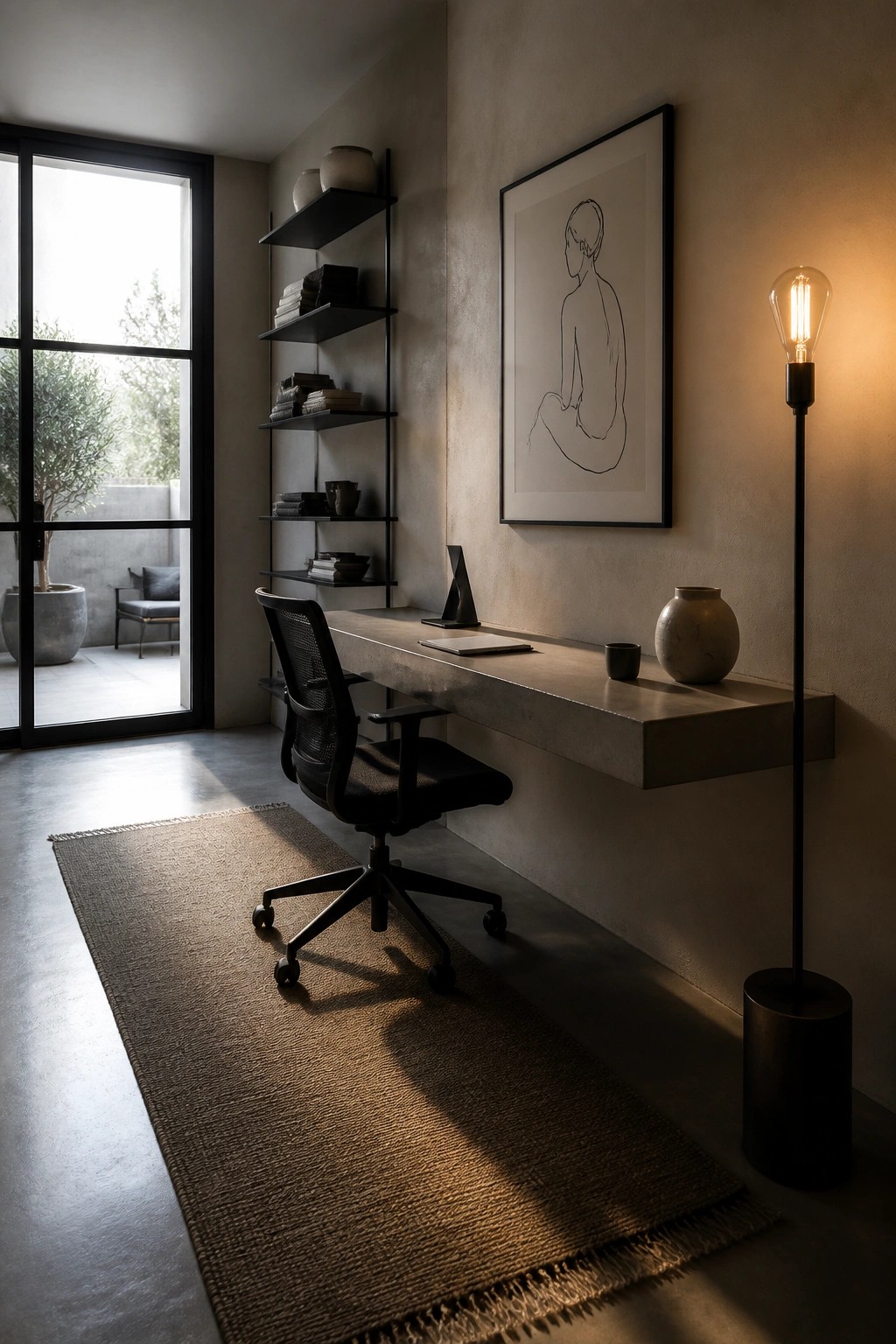
A floating desk keeps the floor open and makes the whole room feel less crowded. You get a solid work surface without the bulk of legs or a heavy base taking up space underneath.
This setup works best in rooms that double as something else or feel tight on square footage. Pair it with a simple chair and a rug to define the area without adding more furniture.
Use A Pegboard Wall For Tool Storage
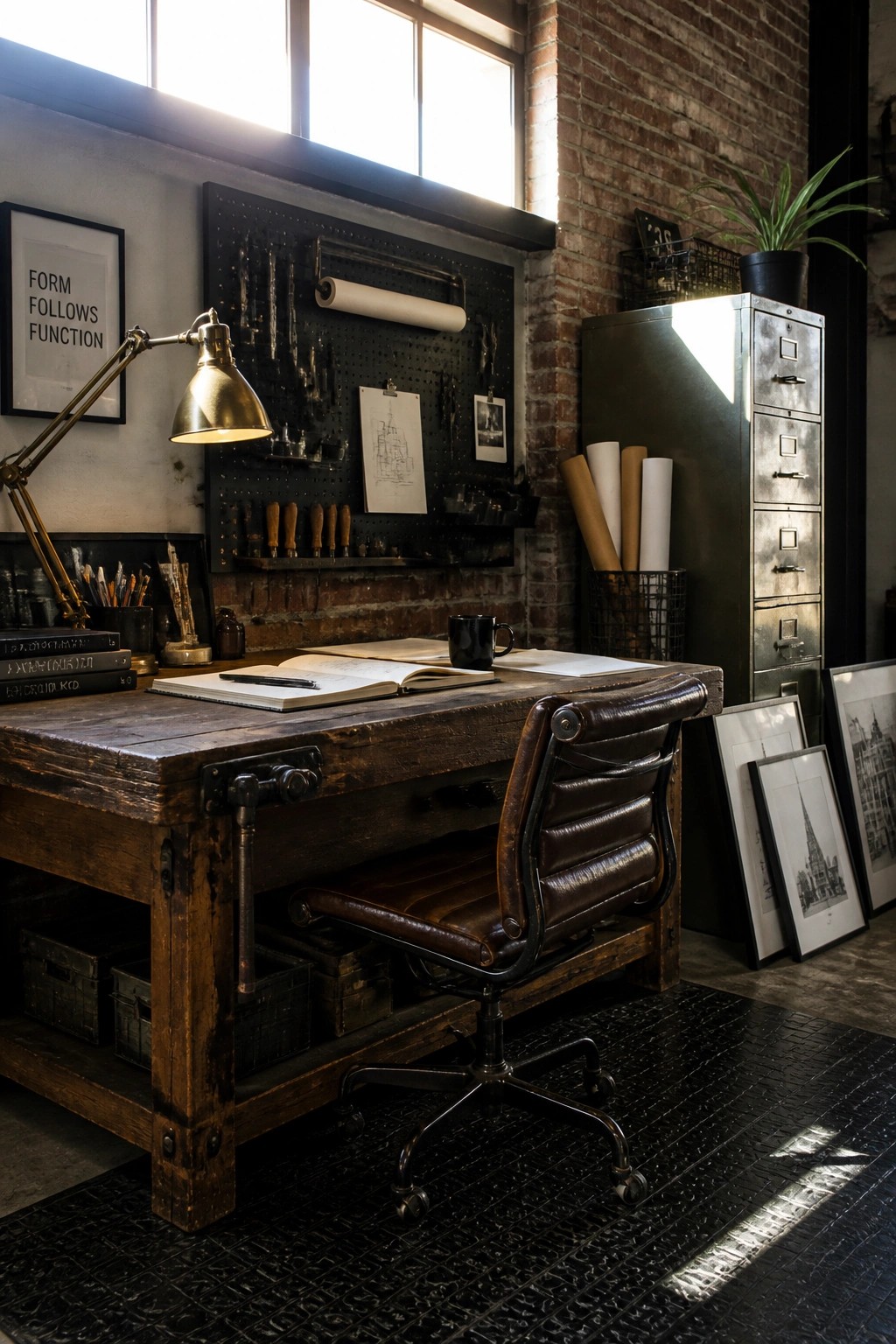
A pegboard wall right behind the desk gives you a spot to hang tools and supplies where you can see them. It keeps the work surface clear while still making everything easy to reach during the day.
This works best in offices that double as a light workshop or drafting space. Mount the board at a comfortable height and use it for items you grab often, but leave some open wall space so the setup does not feel crowded.
Built-In Desks With Integrated Storage
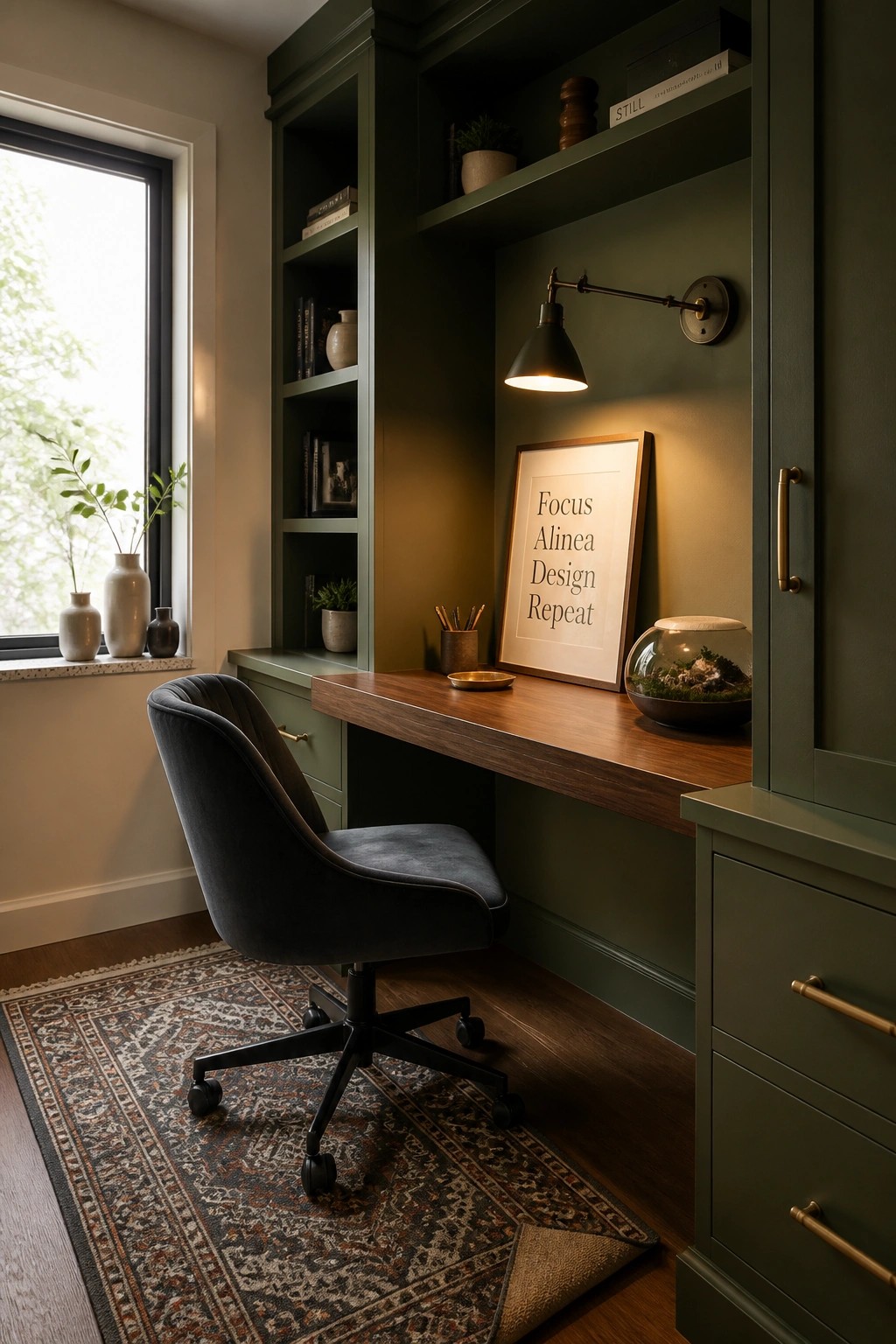
A built-in desk with surrounding shelves gives you a place for everything without needing extra furniture. The unit keeps books, supplies, and small items close at hand, which cuts down on daily searching and helps the room stay tidy.
This approach works best in smaller rooms or spaces where you want a clean, contained look. Choose a wood top for durability and paint the cabinetry a deep tone if you prefer a grounded feel. Just make sure the shelves are not too deep or they can start to feel heavy.
Turn A Narrow Alcove Into A Practical Office
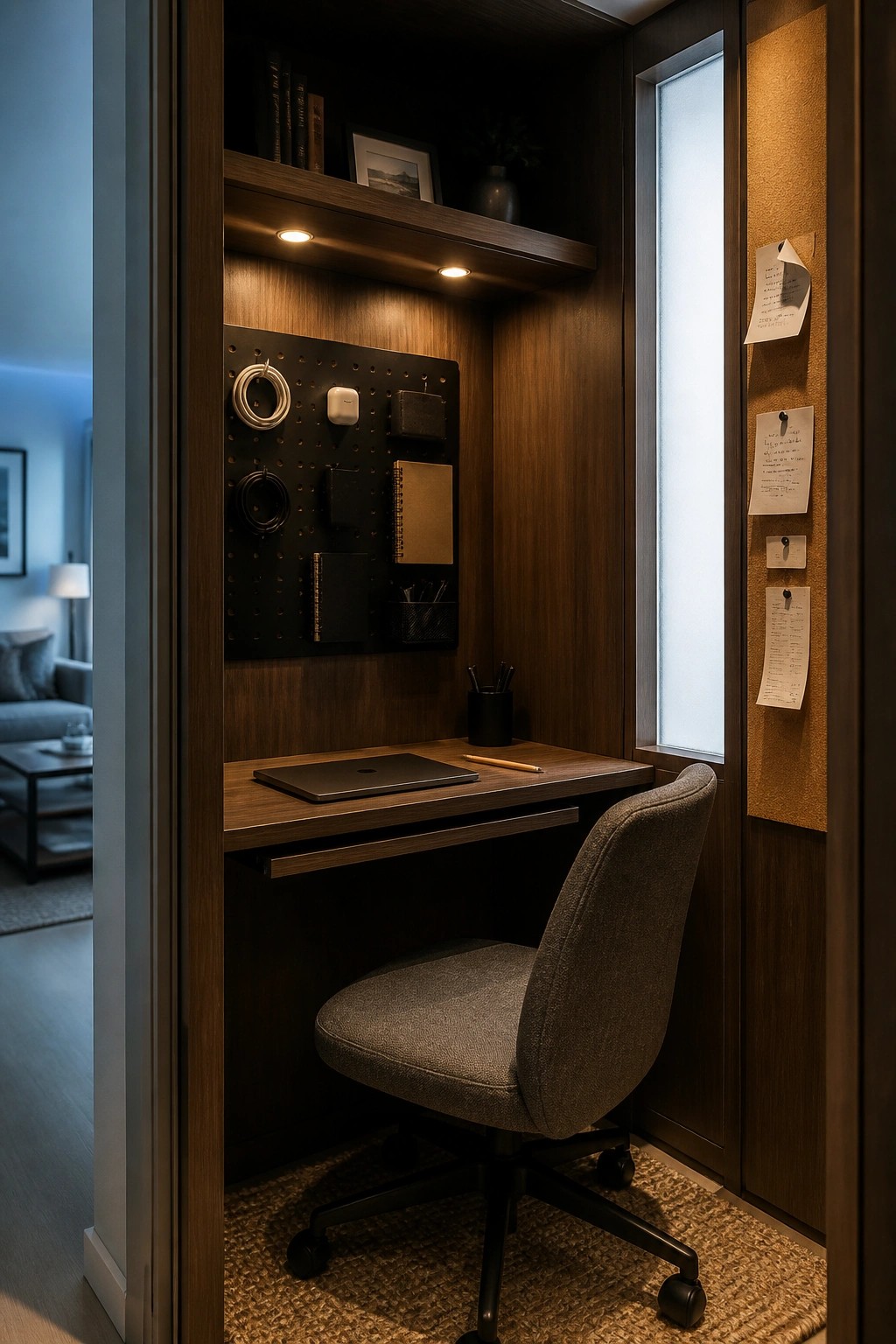
Many homes have small recessed spaces that sit empty but can become useful work areas. Turning one into a built-in desk keeps the office contained and helps separate work from the rest of the living space.
A pegboard on the back wall gives quick access to cables, notebooks, and small items without adding clutter to the desk surface. This approach works best in apartments or homes where every square foot needs to count.
Position Your Desk Facing A Window
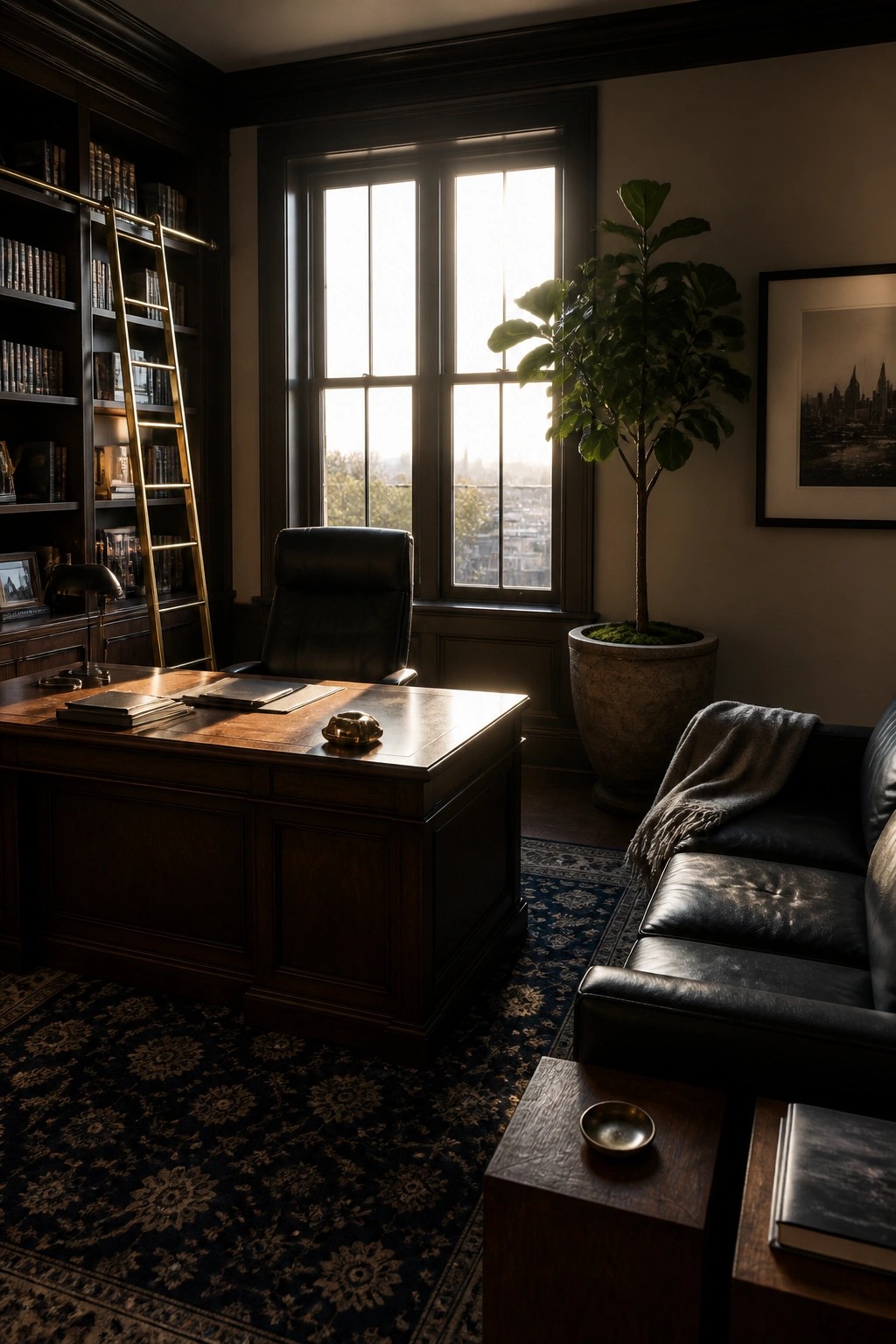
Placing the main desk right in front of a window gives the office a steady supply of natural light that makes long workdays feel less tiring. The view outside also breaks up the day without needing to leave the room.
This layout works best in rooms that get decent daylight and have enough depth to fit a full-size desk without blocking the window. Keep the chair centered so movement stays easy and avoid putting tall items directly on the sill that could cut off the light.
Use a Long Desk to Fit Two Workstations
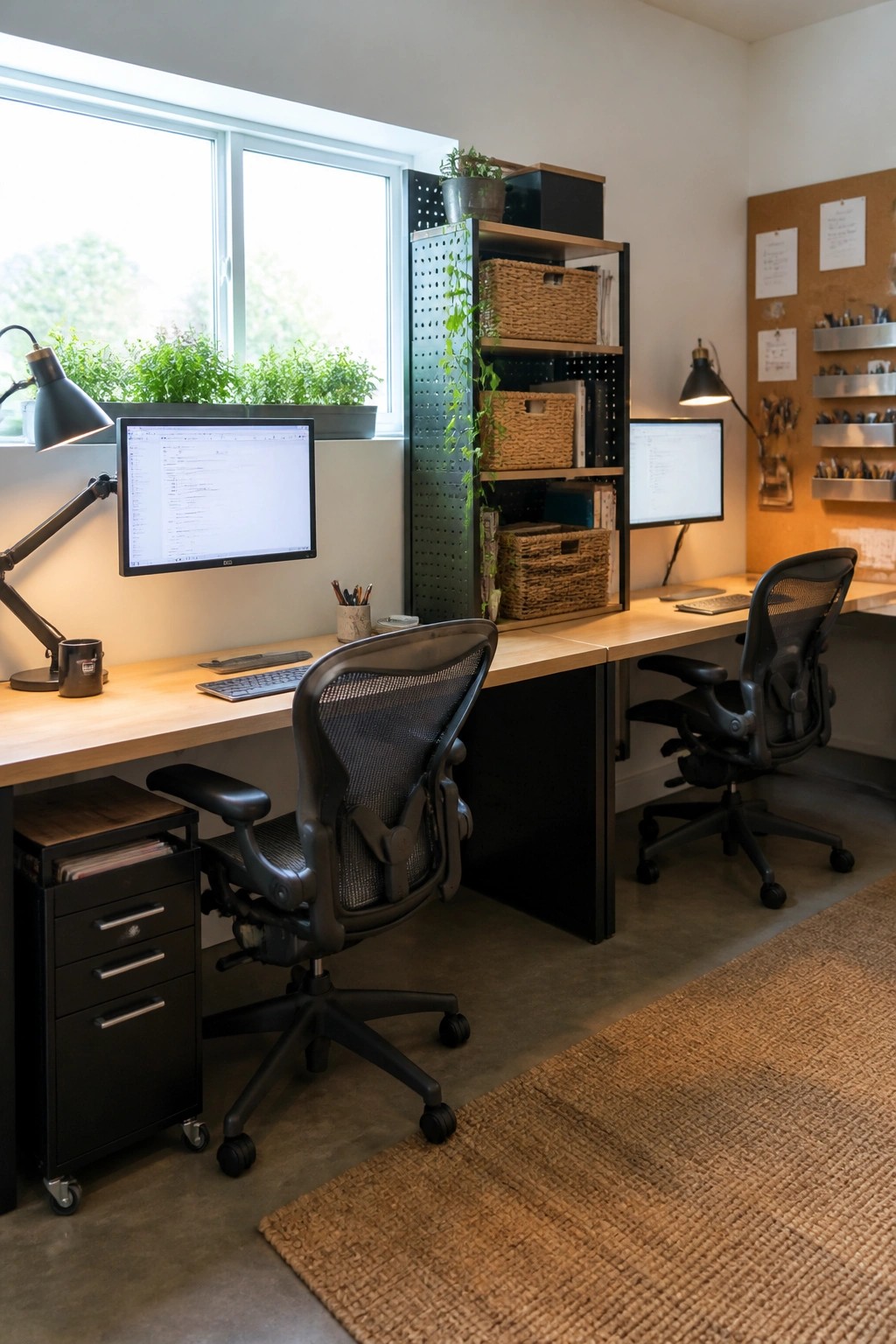
A long desk along one wall makes it easy to set up more than one station without wasting floor space. It keeps the room open and practical, which fits well in a masculine office where you want function first.
Place two chairs and monitors along the same surface, then add a rolling file cabinet on one end for quick access to papers and supplies. This layout works best in medium rooms with good natural light and helps maintain a steady workflow without extra clutter.
Add A Long Counter Along One Wall
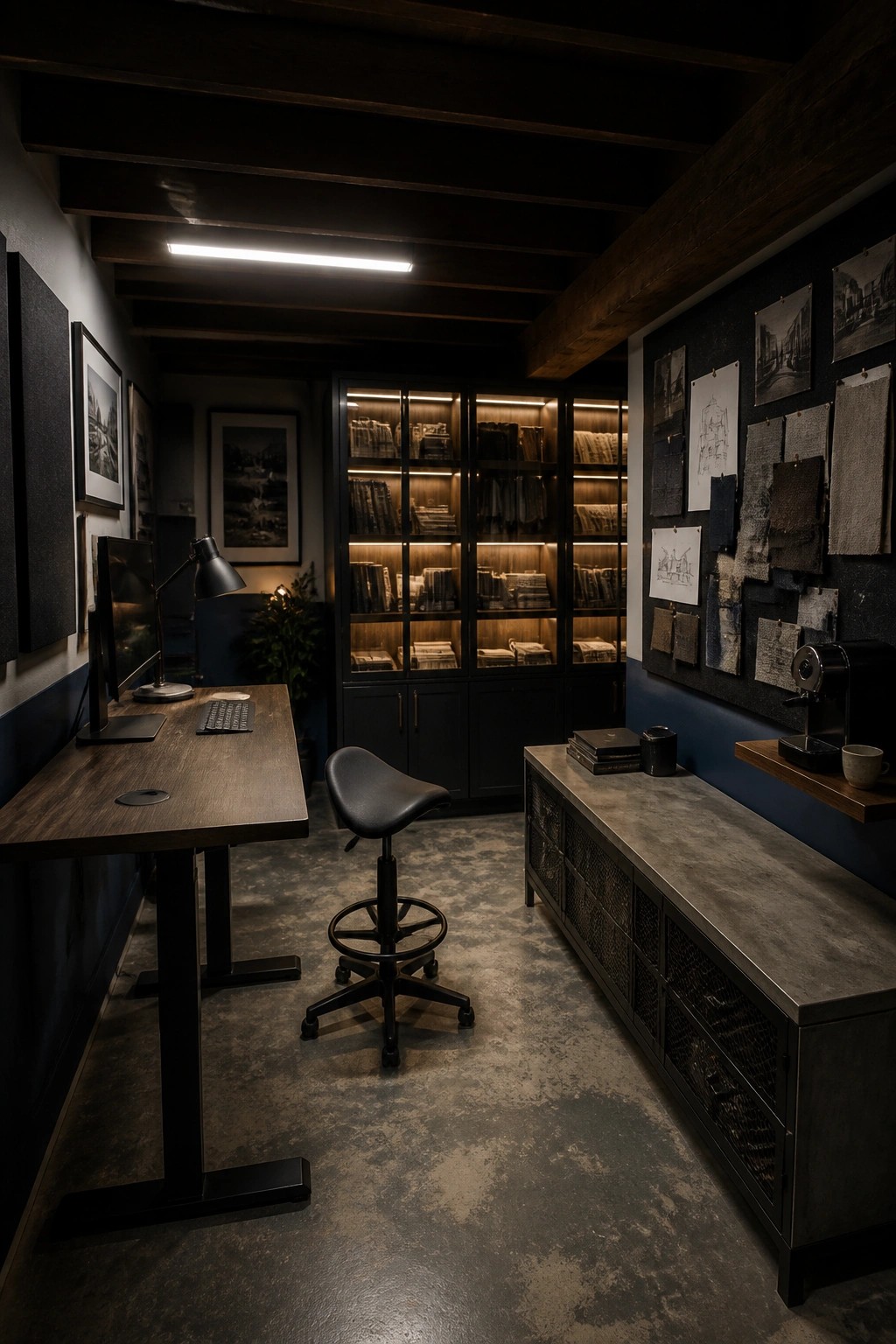
A single desk often runs out of room fast when you need space for notes, samples, or side projects. A long counter along one wall gives you that extra surface without crowding the main work area.
This layout suits narrower rooms where you want both a focused desk and a secondary zone for daily tasks. Keep the counter lower than a standard desk so it feels more like a workbench, and use the cabinets below for things you reach for often.
Built-In Shelving Keeps Your Desk Clear
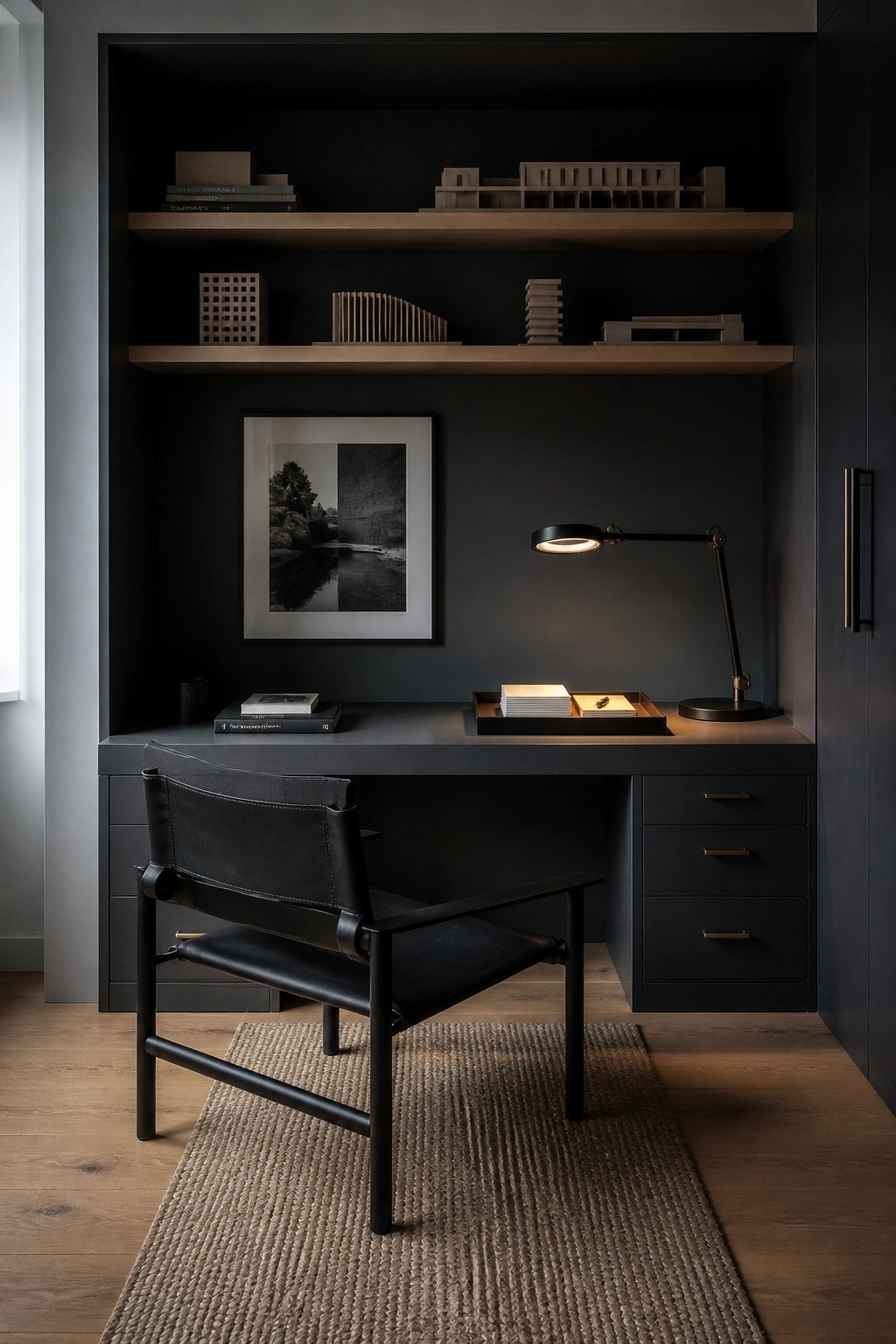
Built-in shelves above a desk give you storage without eating into floor space. You can keep books, files, and a few display pieces up high so the work surface stays open for daily tasks.
This approach works best in smaller rooms or when you want the office to feel contained rather than scattered. Place the unit along one wall and add drawers below the desk if you need extra hidden storage.
Define the Desk Area With a Large Area Rug
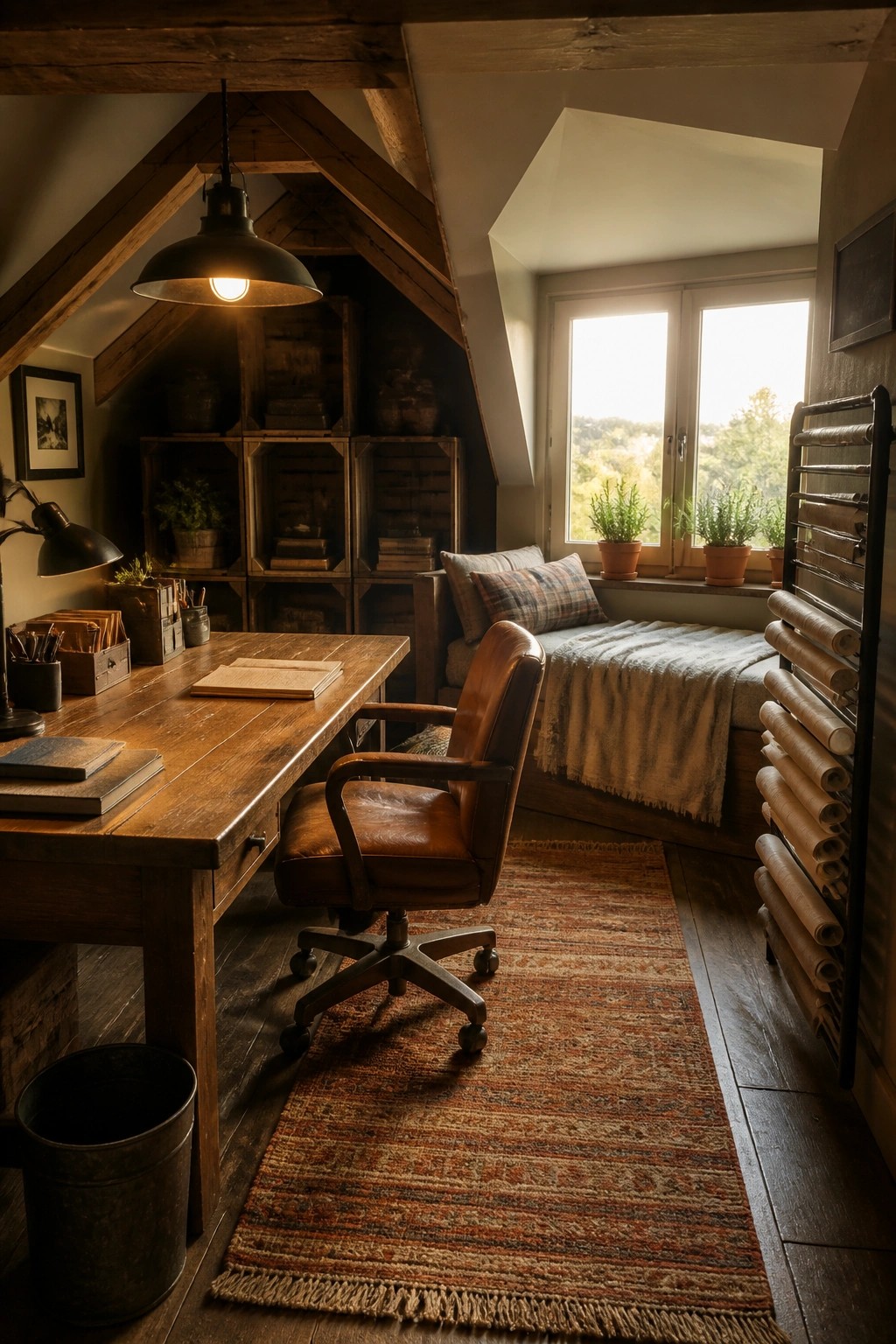
A large rug under the desk and chair helps mark out the workspace clearly, especially in rooms with odd angles or limited floor space. It keeps the main work zone feeling separate from the rest of the room while adding some softness underfoot during long hours.
This setup works well in attic offices or smaller studies where you need the layout to feel intentional without building walls. Choose a rug that is big enough for the chair to roll fully within its borders, and keep the pattern simple so it does not compete with the wood and leather furniture.
Use Rolling Storage Under A Wall Desk
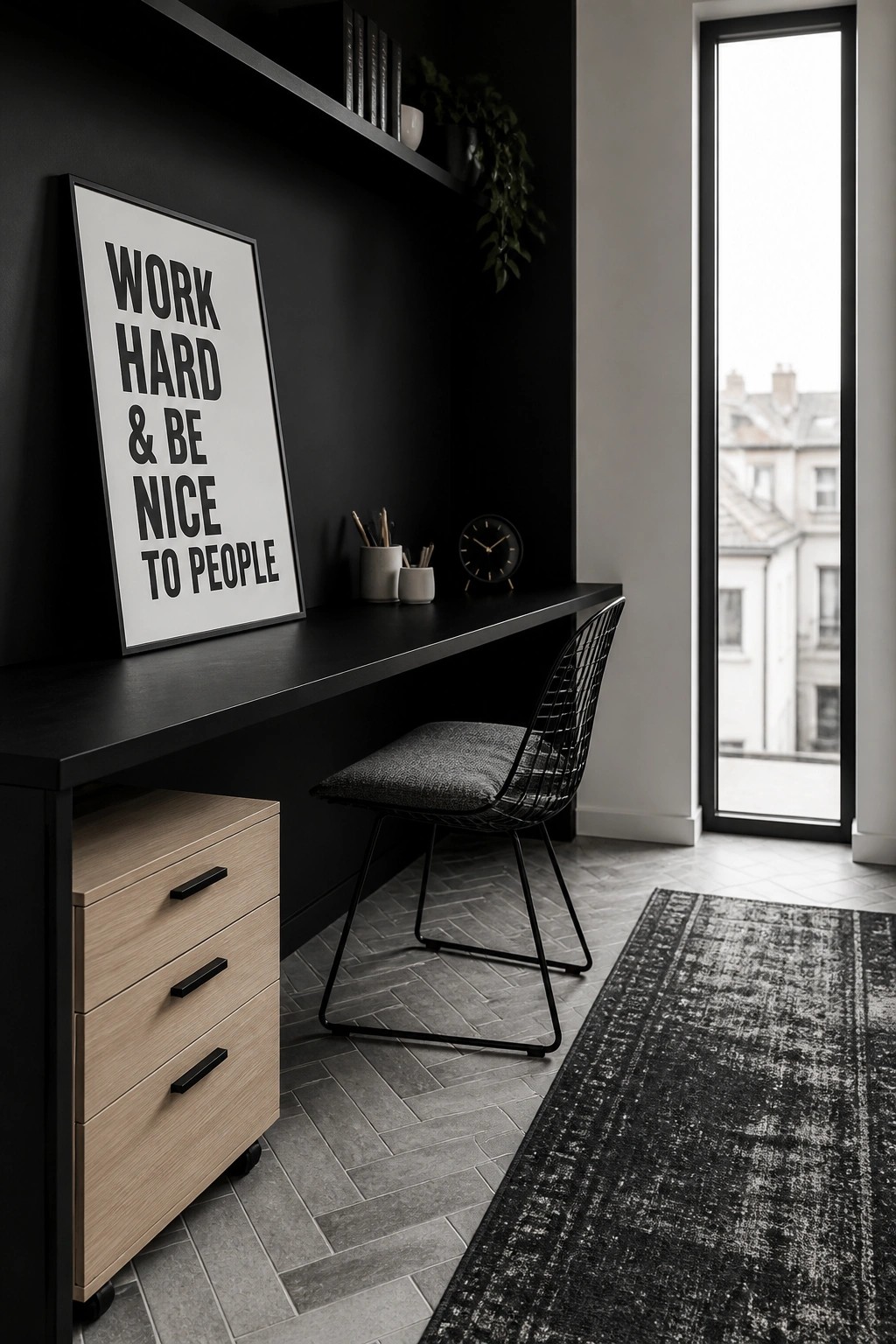
A long desk against the wall works best when you can move the storage around. Rolling drawers let you shift things as needed without rearranging the whole room.
This approach suits smaller offices or rooms that need to stay flexible. Keep the drawers on one end during the day and tuck them away when you want more legroom.
Layer Rugs to Mark Off Different Zones
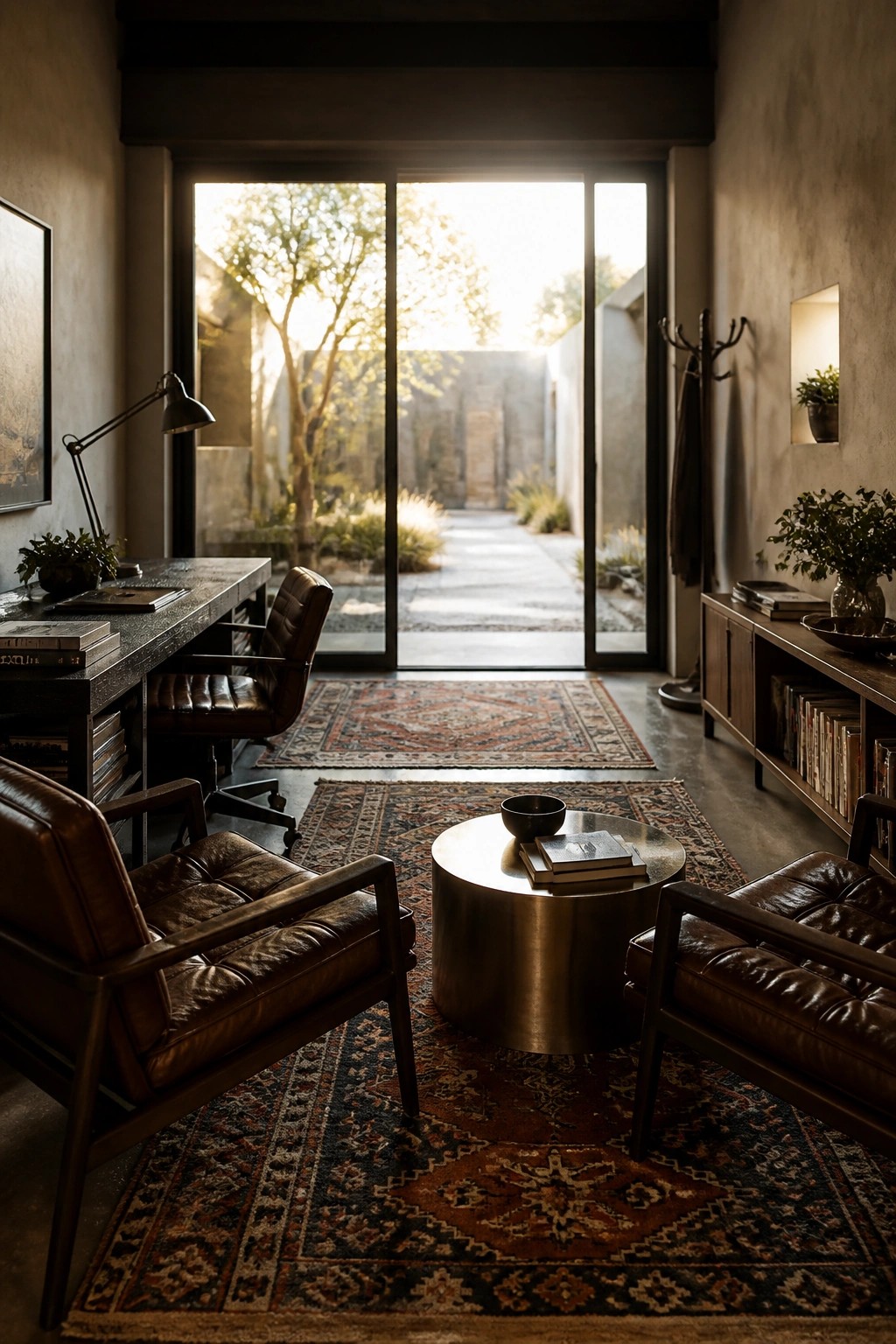
Rugs can do more than just cover the floor. In an office like this one, two overlapping rugs create a clear boundary between the desk area and the seating spot in the middle. That separation keeps the workspace feeling organized even when the room stays open and connected to the rest of the house.
Place the rugs first, then arrange the seating around a low table. This setup works well in larger home offices where you need both focused work time and a place to step away for a quick call or meeting. Keep the rugs similar in tone so the zones feel connected rather than chopped up.
Narrow Desk Setup For Tight Spaces
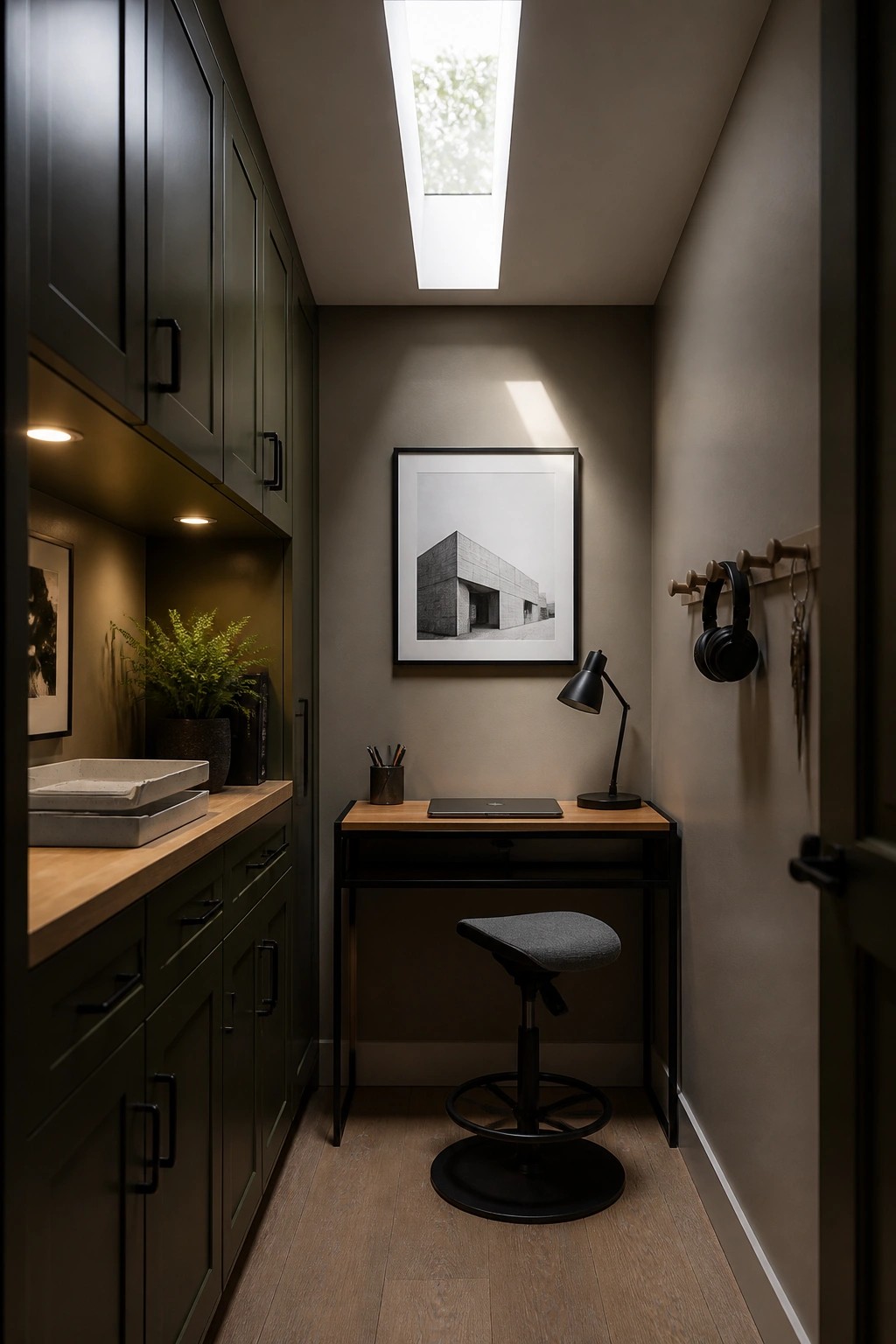
A narrow room can still work well as a home office if you keep the furniture simple and low profile. Placing a slim desk across the width leaves room to move around while the side cabinets handle all the storage without crowding the floor.
This approach works best in older homes or apartments where leftover hallways or small rooms need a purpose. Stick with a basic stool that tucks away and avoid anything wide or bulky so the space stays open and easy to use.
Adding a Visitor Chair Across from the Desk
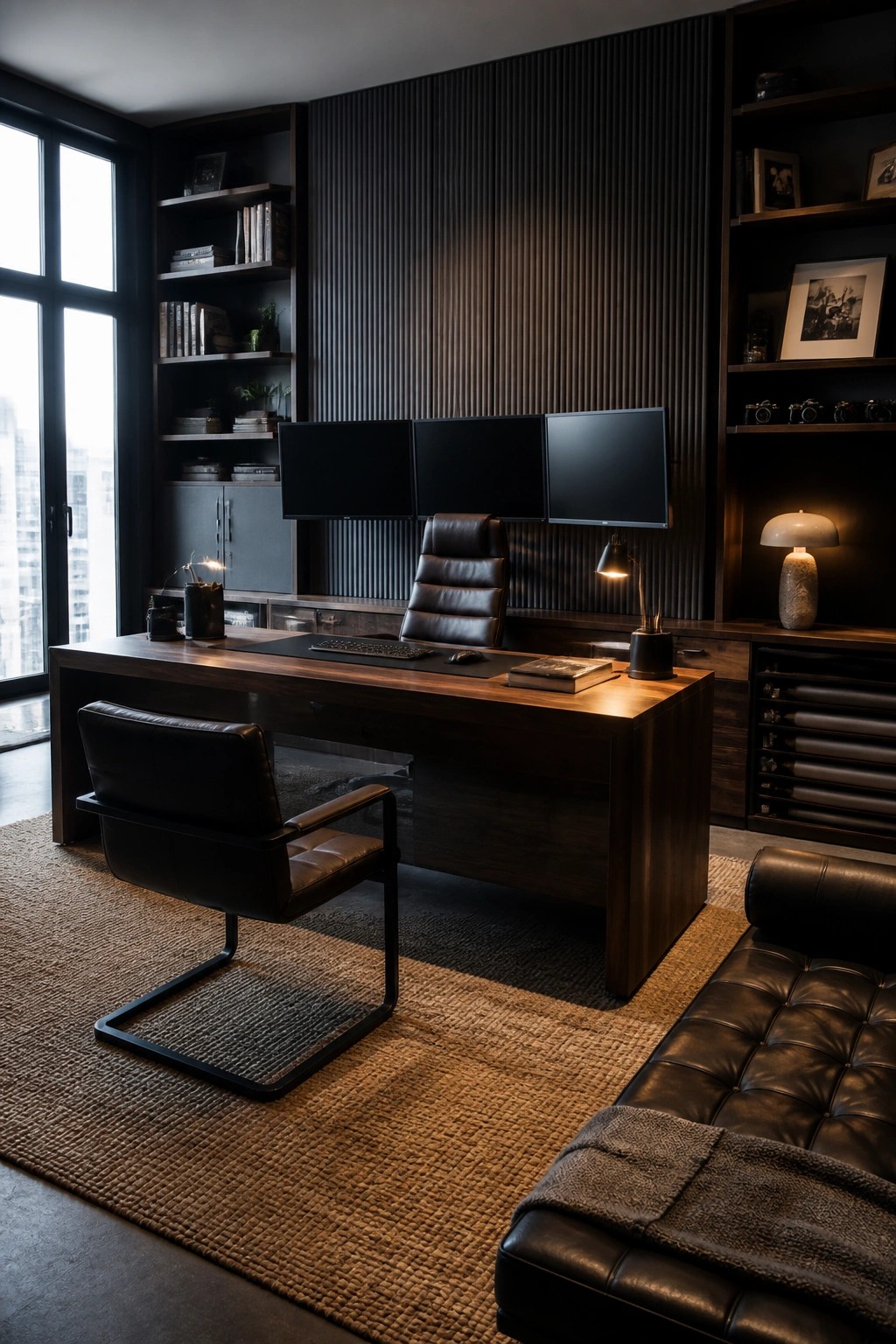
A guest chair placed directly across from the main desk turns a standard workspace into something more useful. It creates a clear spot for quick meetings, client chats, or even just a second person to sit without pulling up an awkward extra seat. In a masculine home office this simple addition keeps things practical without adding clutter.
This setup works best in rooms that handle both focused work and occasional conversations. Keep the chair sturdy and in scale with the desk so the space still feels balanced. Avoid crowding the area with too many extra pieces since the goal is easy movement and clear function.
Built-In Bookshelves Add Practical Storage
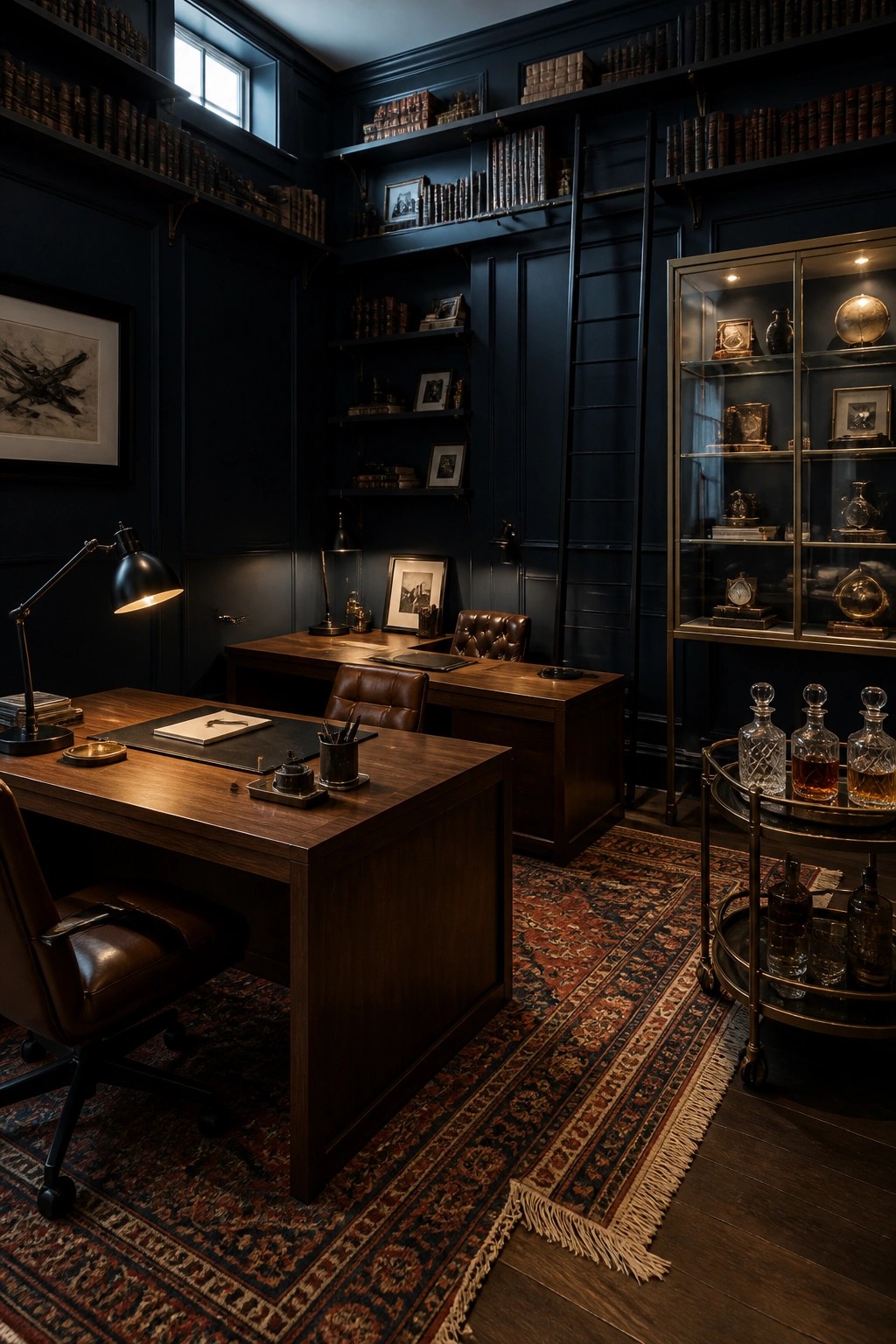
Built-in bookshelves turn an ordinary office into a space that actually supports daily work. They keep books, files, and reference materials off the desk and within easy reach, which helps reduce clutter and keeps the focus on the task at hand. In this layout the shelves run along most of the wall space, creating a quiet, enclosed feeling without making the room feel small.
This approach works best in rooms that can handle full-height shelving on at least two walls. It suits anyone who keeps a lot of physical materials or simply prefers a calm, orderly environment. Make sure to leave enough open wall for a desk and chair so the room does not feel closed in.
Choose A Height Adjustable Desk
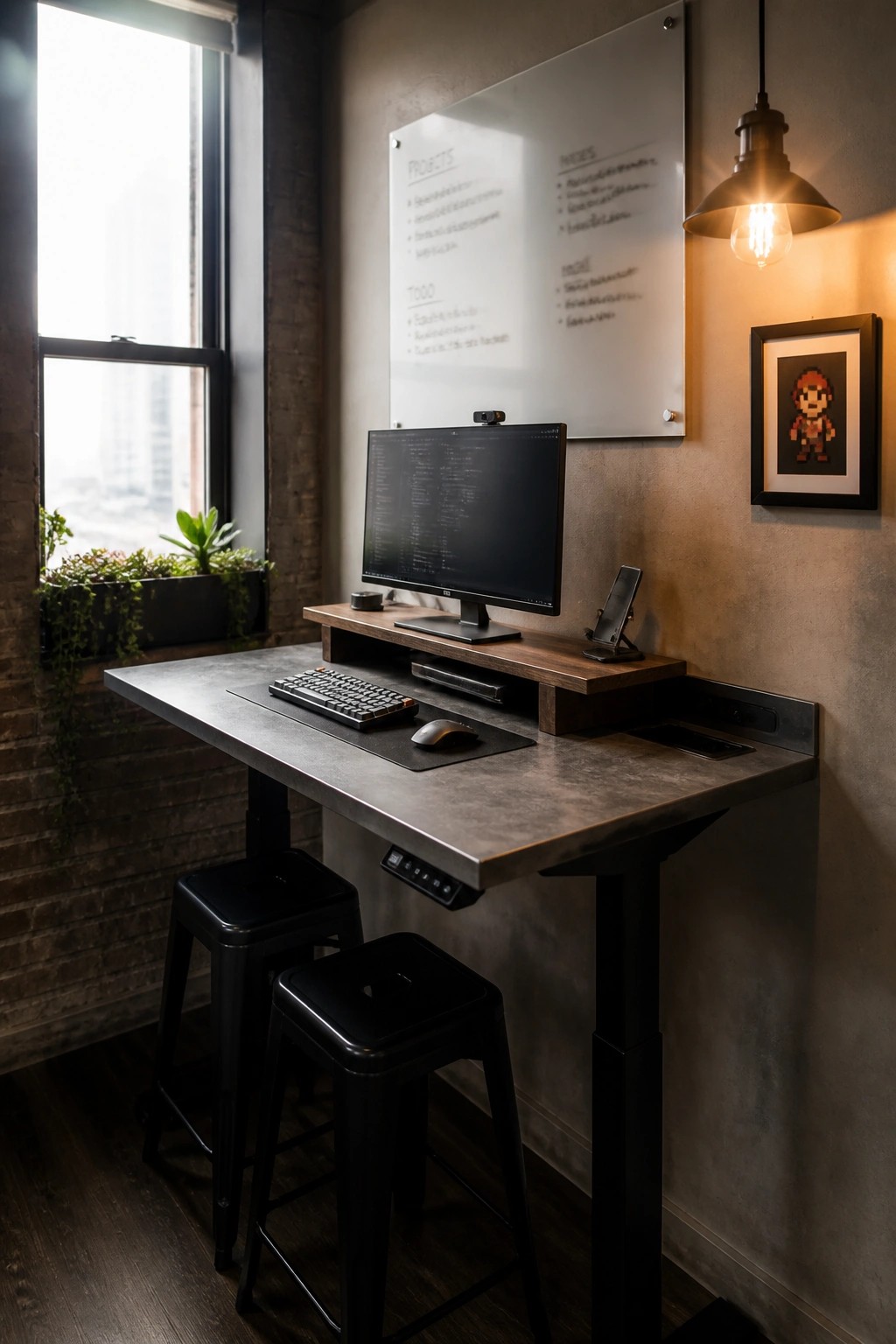
A height adjustable desk makes it easier to move between sitting and standing without rearranging the whole room. Many people find they stay more alert and avoid the stiffness that comes from staying in one position too long. The simple frame and solid top shown here keep the look clean while still giving real function.
Set the desk at the right height for your monitor and keyboard, then keep a couple of stools nearby for quick switches. This approach works best in smaller offices or rooms that need to stay practical rather than overly styled. Just make sure the floor is level so the mechanism stays reliable over time.
Run a Bench Over Open Shelving
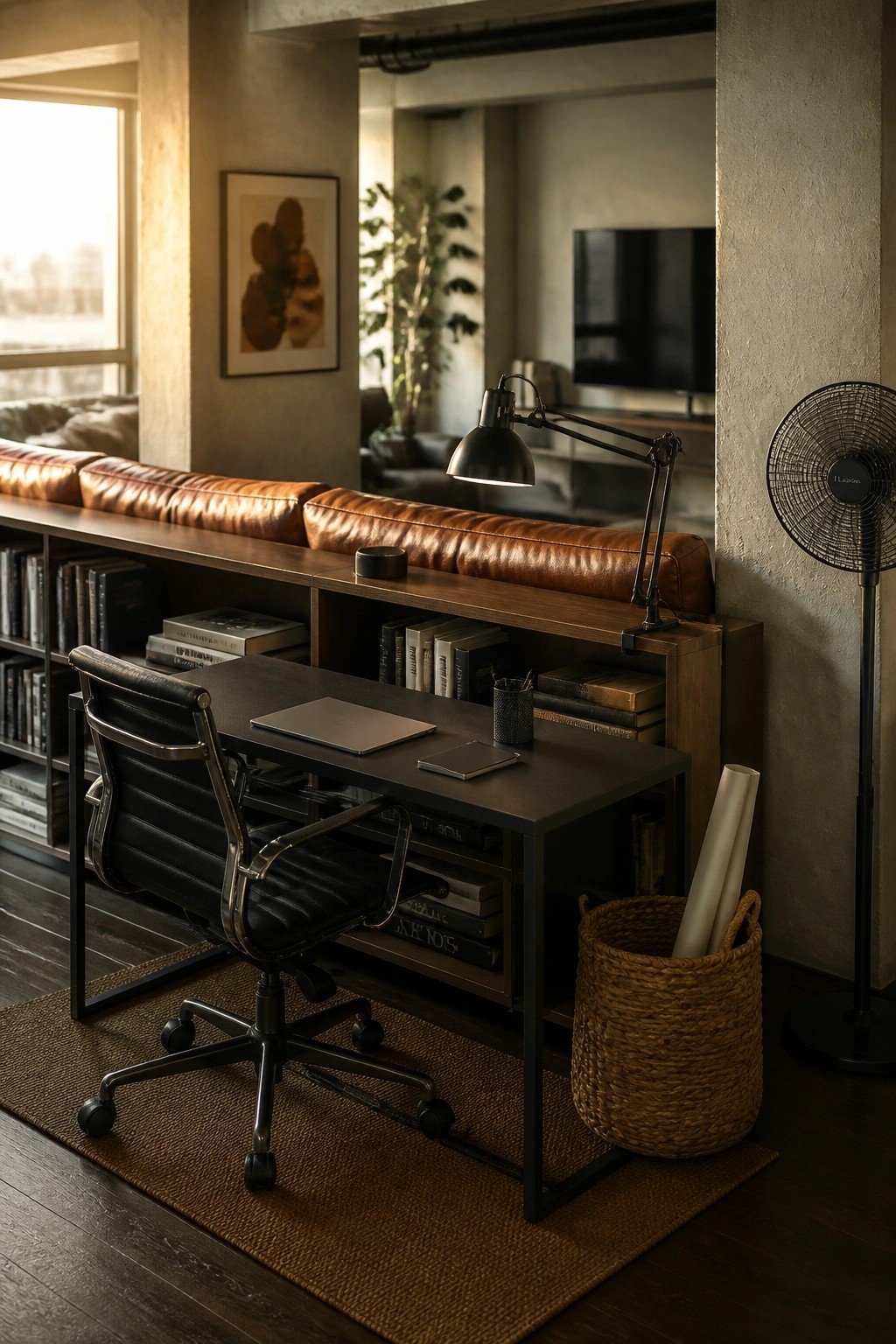
Placing a long bench seat right on top of low shelving gives you extra storage and a place to sit without adding more furniture. It keeps the desk area practical and open while making use of the wall space behind it. The leather cushion adds comfort without taking up floor room.
This setup works well in smaller offices or rooms that double as guest spaces. Keep the shelves low enough for the bench to sit steady, and leave enough clearance under the desk for your chair to move freely. Avoid overloading the lower shelves so the whole unit stays stable.
Add A Recessed Tray To Your Desk
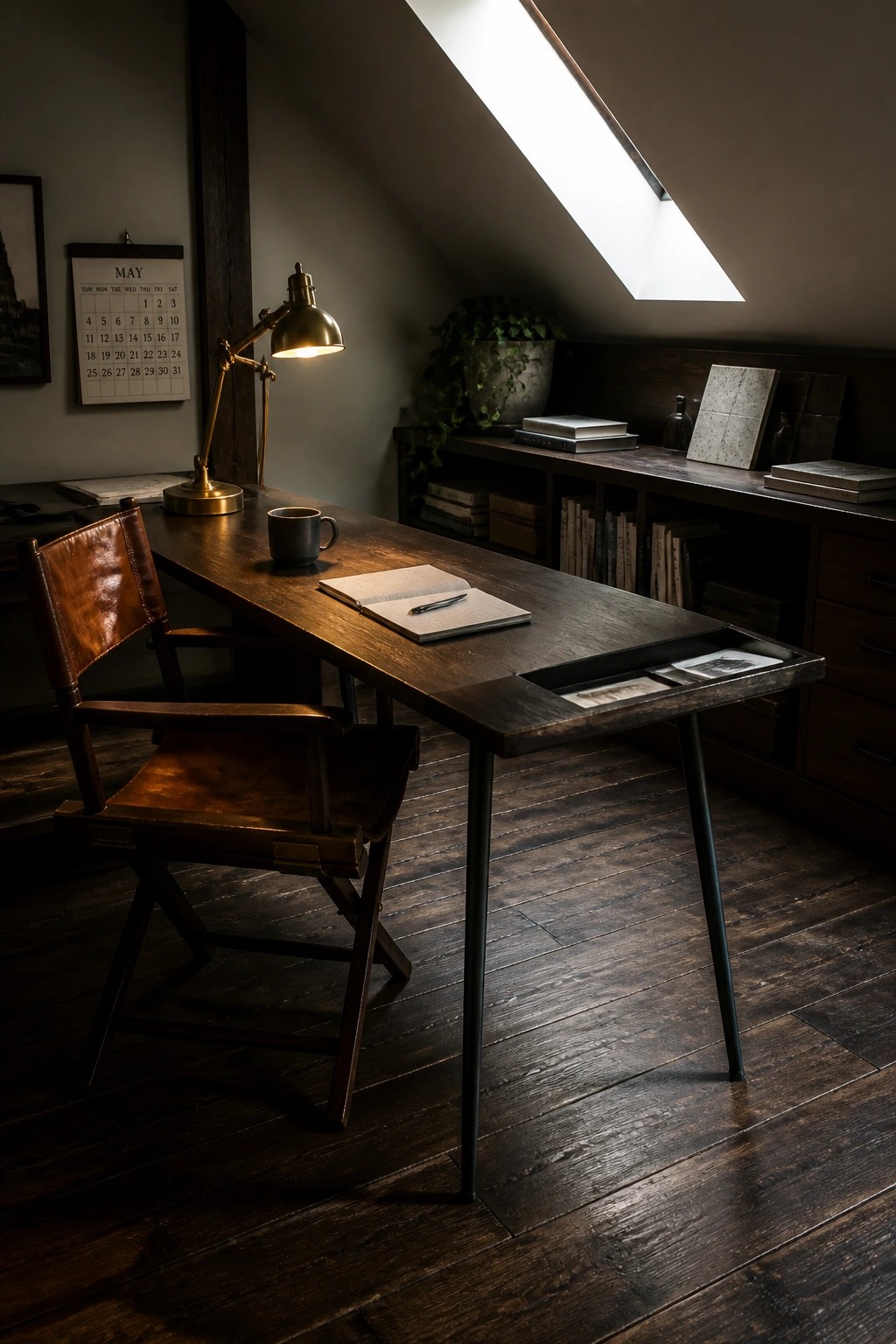
A recessed tray built into the desk surface gives you a place to drop loose papers, reference photos, or notes without letting them spread across the whole top. It keeps the main work area clear while still letting you reach what you need quickly during the day.
This works especially well in smaller offices or attic setups where storage space is limited. Just make sure the tray sits low enough that it does not interfere with writing or using a keyboard.
Frequently Asked Questions
Q: What if my space is too tight for a big desk setup? A: Measure your area first and pick a narrow desk that sits against the wall. Place your chair so you face the room instead of a blank wall. This keeps movement easy during your workday.
Q: How do I add a spot to stand without buying new furniture? A: Stack sturdy crates or a low shelf under your desk to raise your monitor and keyboard when needed. Switch to standing for an hour after lunch. Your body stays active and your routine flows better.
Q: Cables always end up everywhere no matter what I try. A: Run them behind the desk leg with simple Velcro ties. Plug everything into one power strip mounted on the wall. The floor stays clear so you move around without tripping.
